What Can Go Wrong
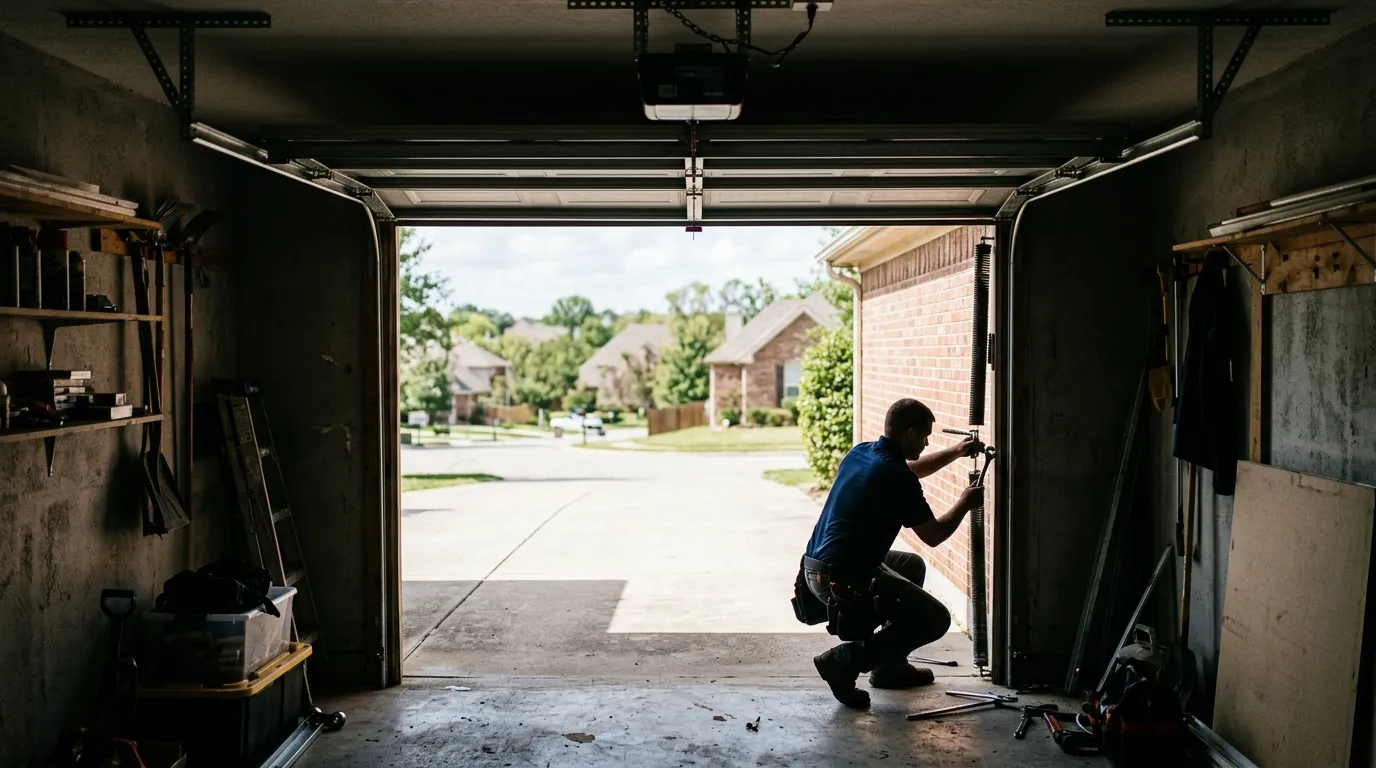
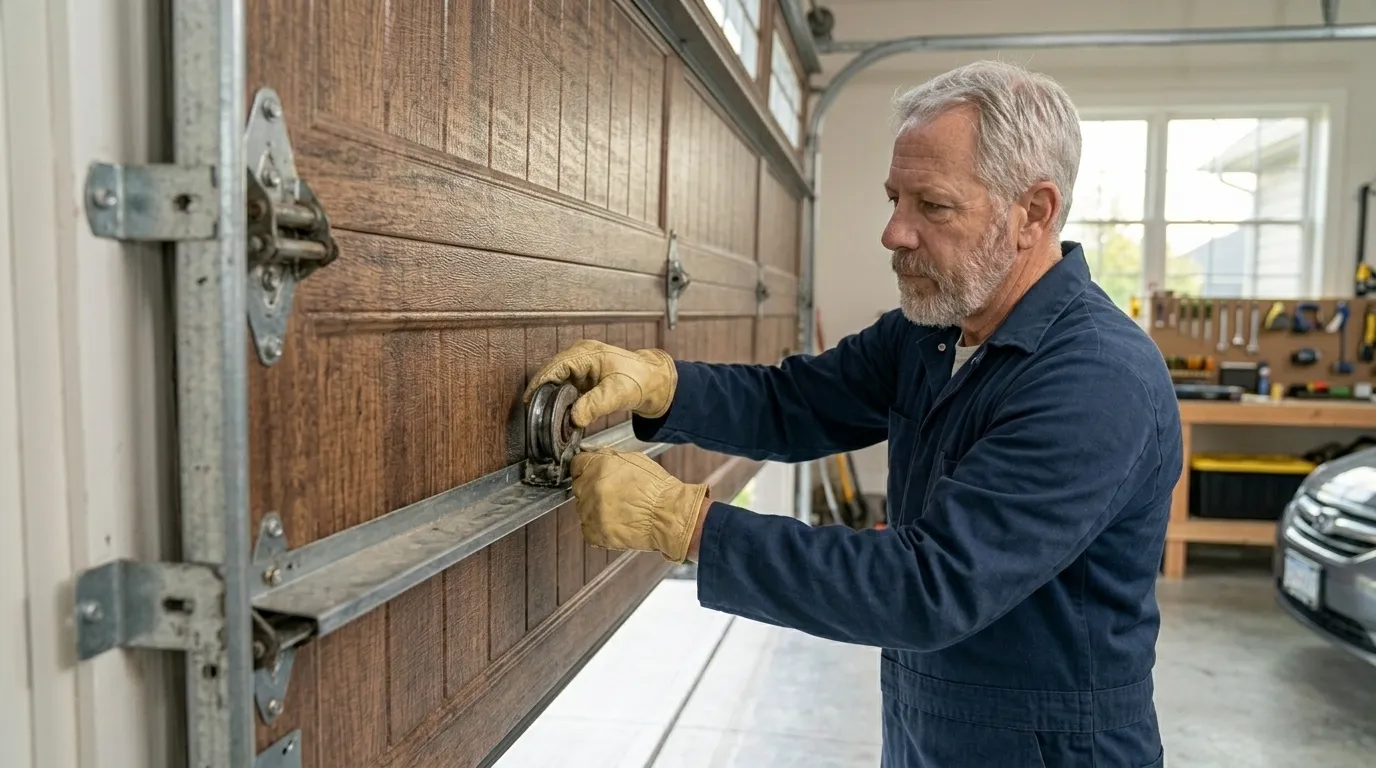
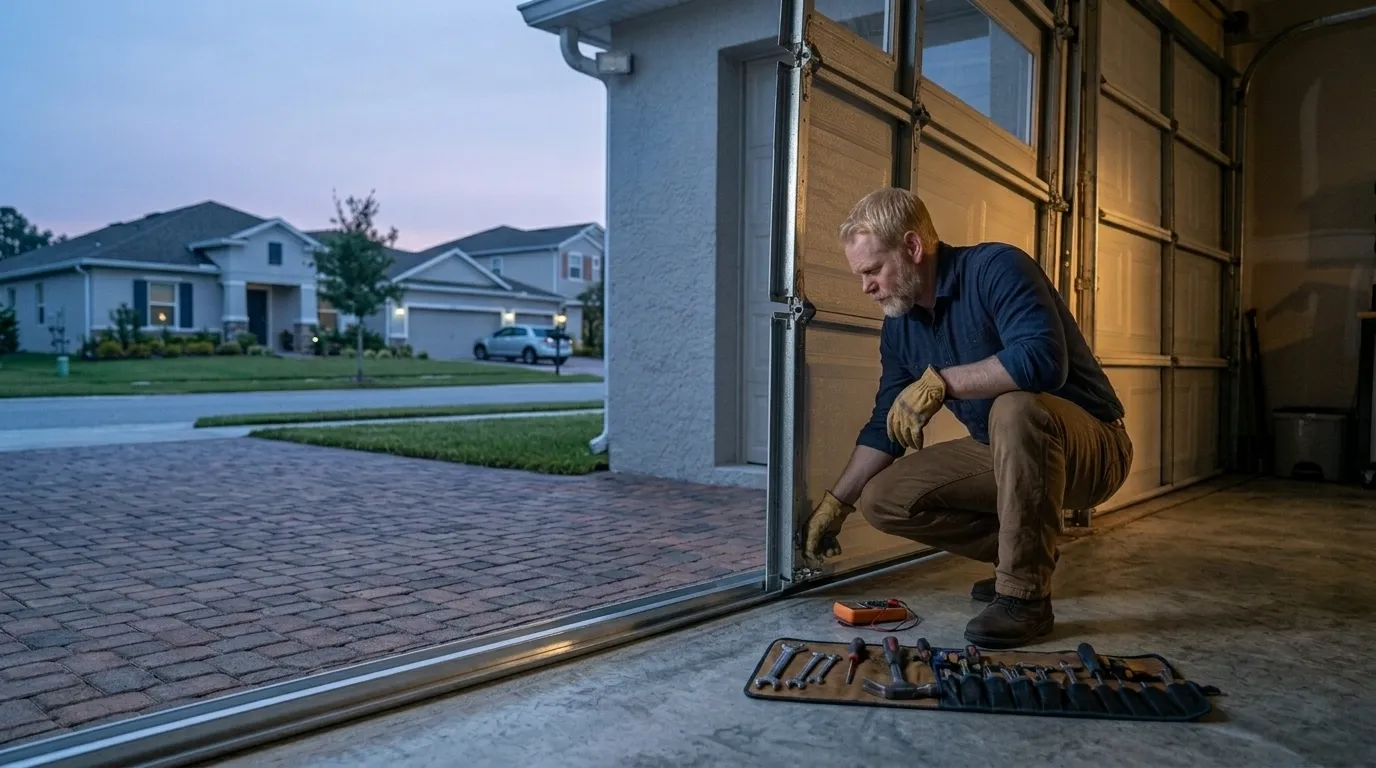
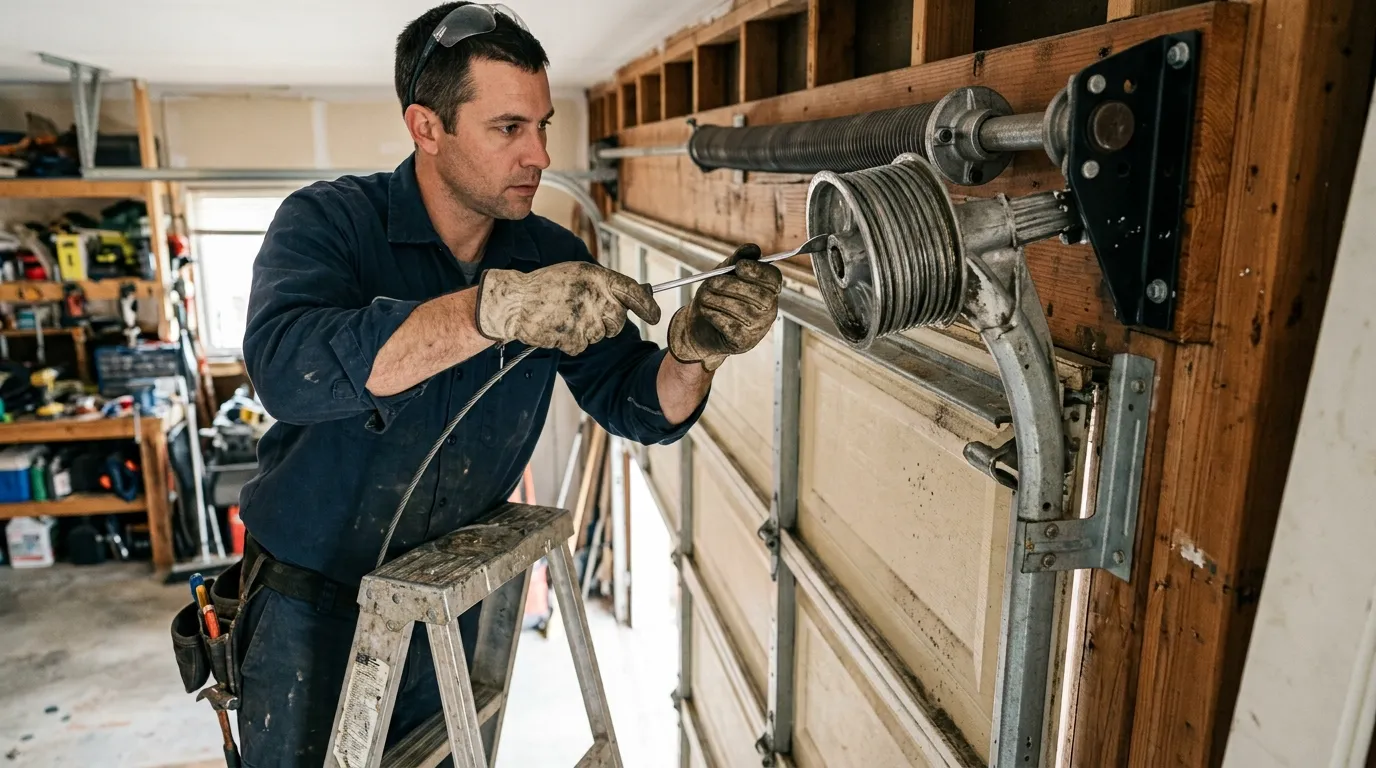
A garage door cable does one job: it pulls its side of the door up evenly while the springs carry the weight. When it fails, it fails in one of three ways. The cable frays where it wraps the drum, usually from years of the same three or four inches of wire taking the load on every cycle. It jumps the drum groove, which throws the door off-level and can bend a track in a hurry if nobody catches it. Or it snaps outright, usually at the bottom fixture where road salt and moisture sit longest.
On the builder-grade doors common across this area - installed mostly through the 1980s and into the mid-90s - the original cables are galvanized steel sized for the door as shipped, not upgraded to match any added insulation or panel weight since. That's a specific mismatch we see a lot: a heavier retrofit door running on a cable and drum sized for a much lighter original. It's not a defect, it's just a door that got heavier than its hardware.
We don't recommend patching one cable and leaving its mate on the other side untouched if both are original - they're the same age and under the same load, and a second failure a few weeks later is common enough that we say so up front.
What It Costs
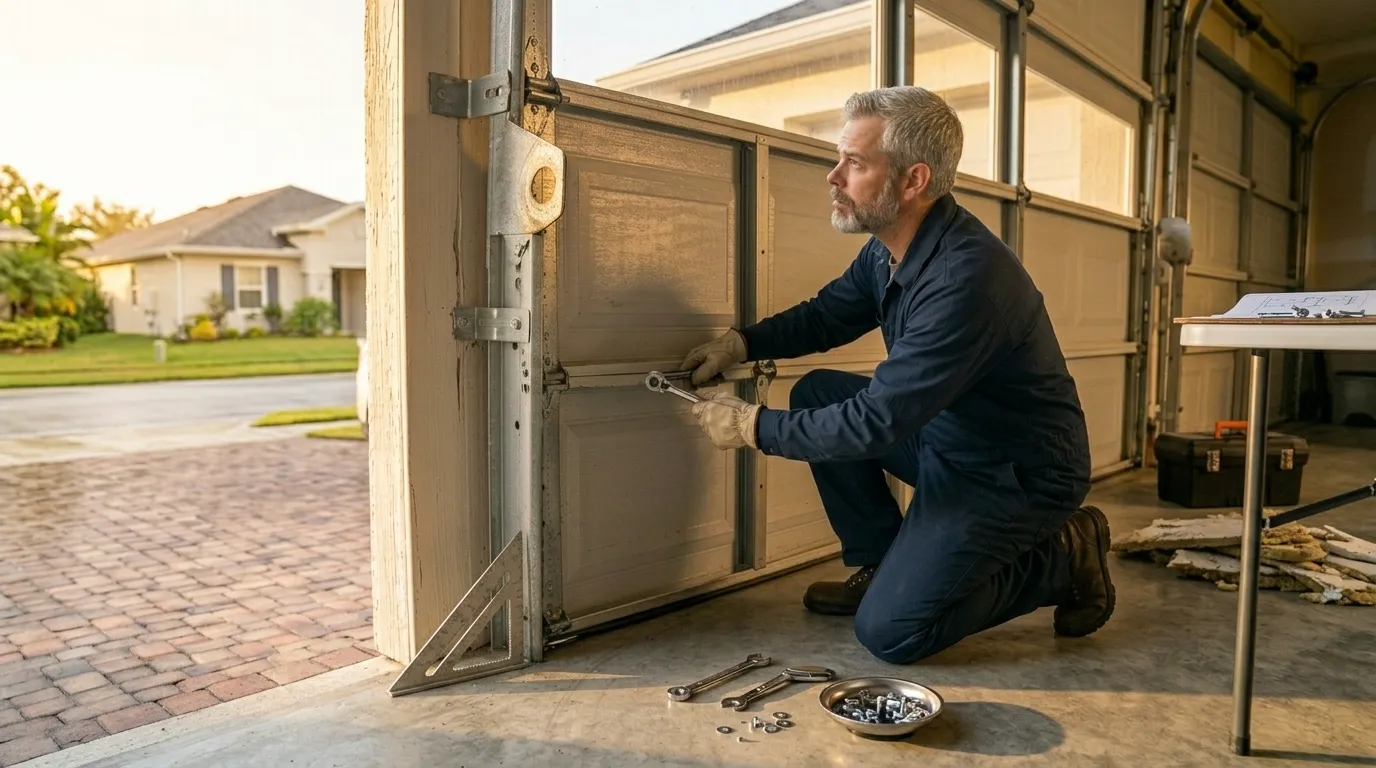
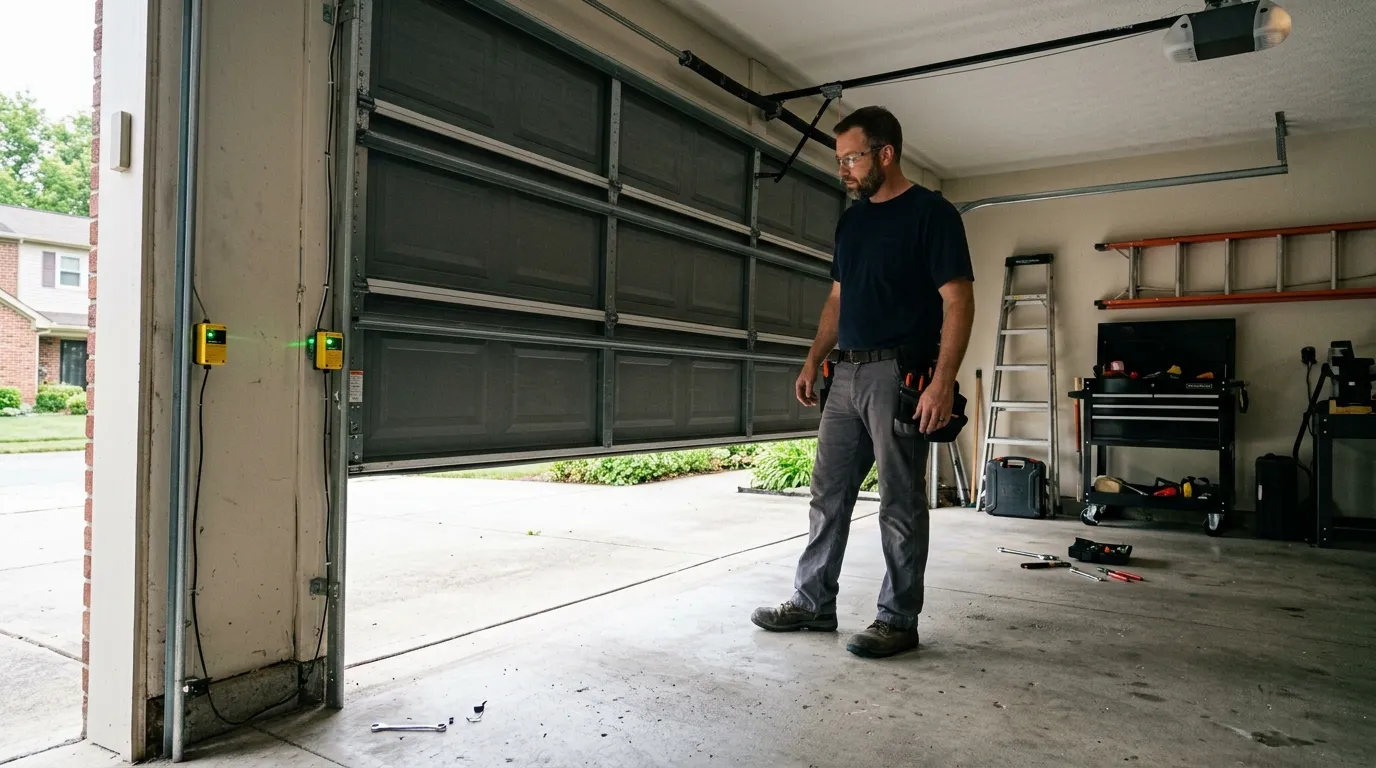
Cable repair costs depend on whether it's a straight cable swap or whether the drum, and sometimes the spring, went out with it. A cable that jumped the drum without snapping is usually the simpler job. A snapped cable that let the door drop and twist in the track is a different call, because now we're checking rollers, hinges, and track alignment too, not just the cable.
We quote the job after we look at it, not before, because guessing over the phone on a cable job means either lowballing you or padding the number to cover what might be wrong. Given that the median household income across the service area sits at $43,811, we know a garage door repair isn't a line item people want to pad, and we don't build a callout fee into a job that turns out to be a ten-minute cable swap.
One limitation worth stating plainly: if your door is an older imported model with a nonstandard drum, we may need to order that part rather than pull it off the truck, which adds a day or two. We'll tell you that on the spot, not after we've already started.
Why It Happens Here
Across this service area, the housing stock runs mostly 1975 to 1997, with the median build year around 1982, and that generation of garage door came with standard-duty galvanized cable sized to the doors of that era. Thirty-plus years on, a lot of that original hardware is still in service, either because the door itself never failed or because a previous repair replaced the opener or springs but left the original cables alone.
The climate here is cold-moderate, not the deep-freeze conditions that crack steel, but enough seasonal swing that grease on the drum and cable stiffens up in winter and dries out in summer, and that cycle accelerates wear at the exact spot where the cable flexes around the drum. Combine 40-plus-year-old wire gauge with a door that's seen a few thousand more open-close cycles than it was rated for, and cable failure becomes one of the most common calls we get, not an outlier.
Across the roughly 6,049 households and 2,979 owner-occupied houses in this area, that older housing stock means a lot of original hardware is due, whether or not it's shown symptoms yet.