What Can Go Wrong
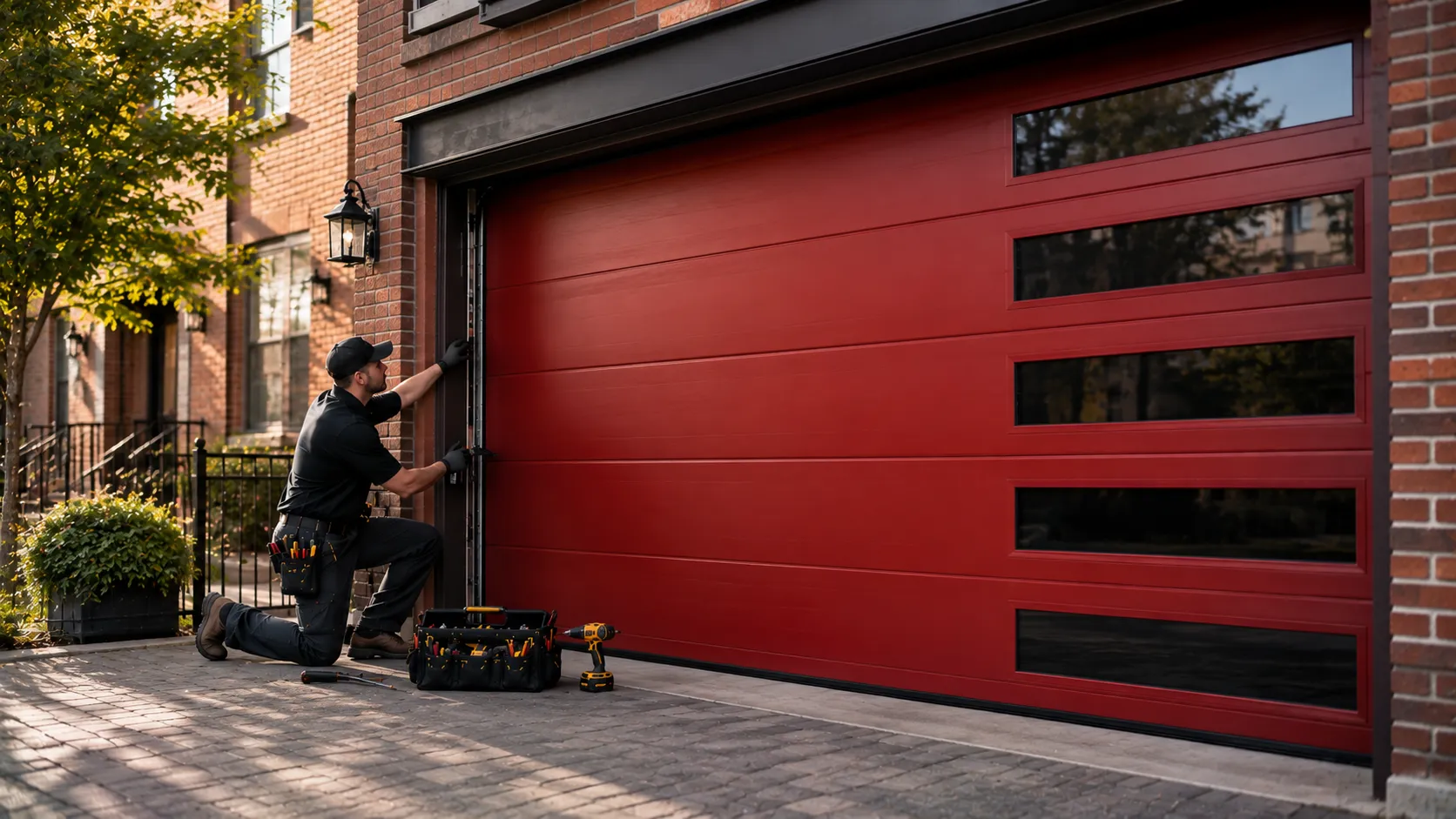
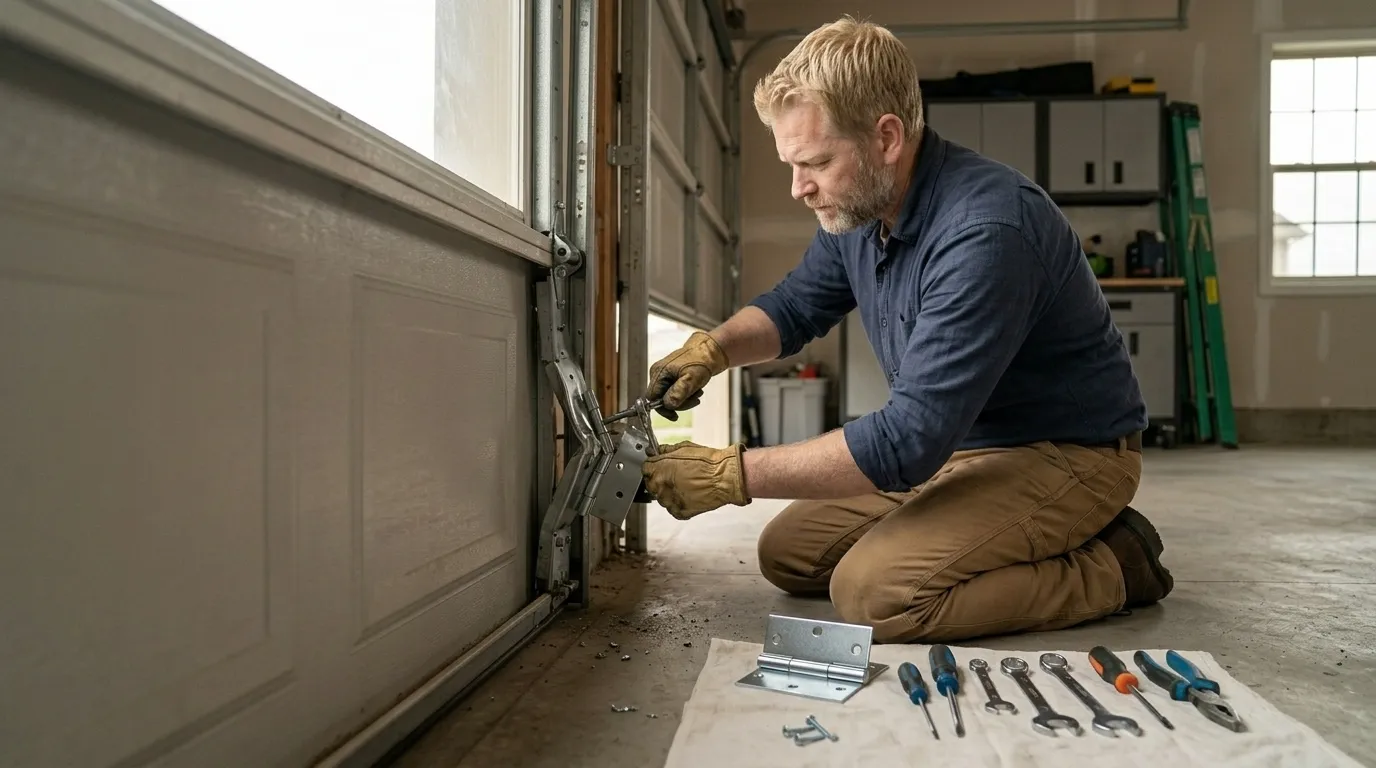
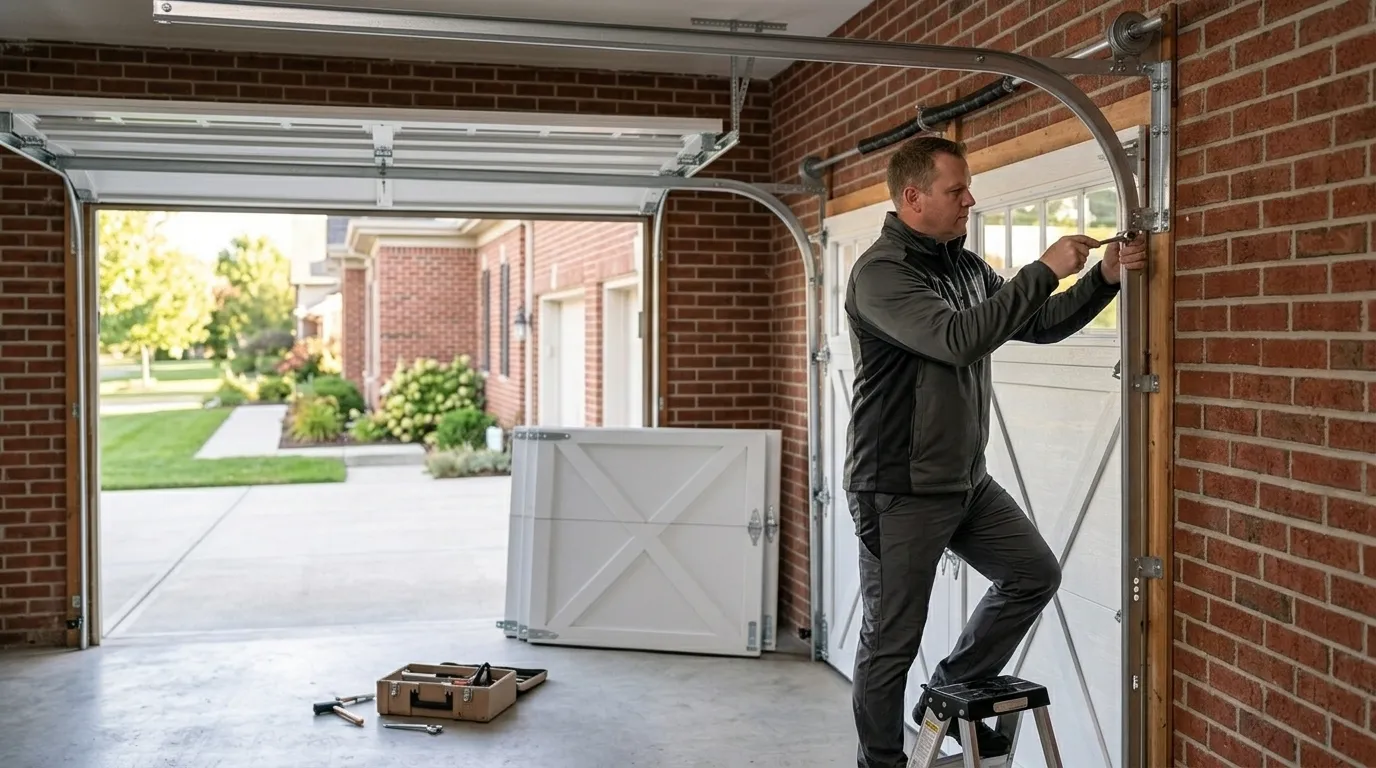
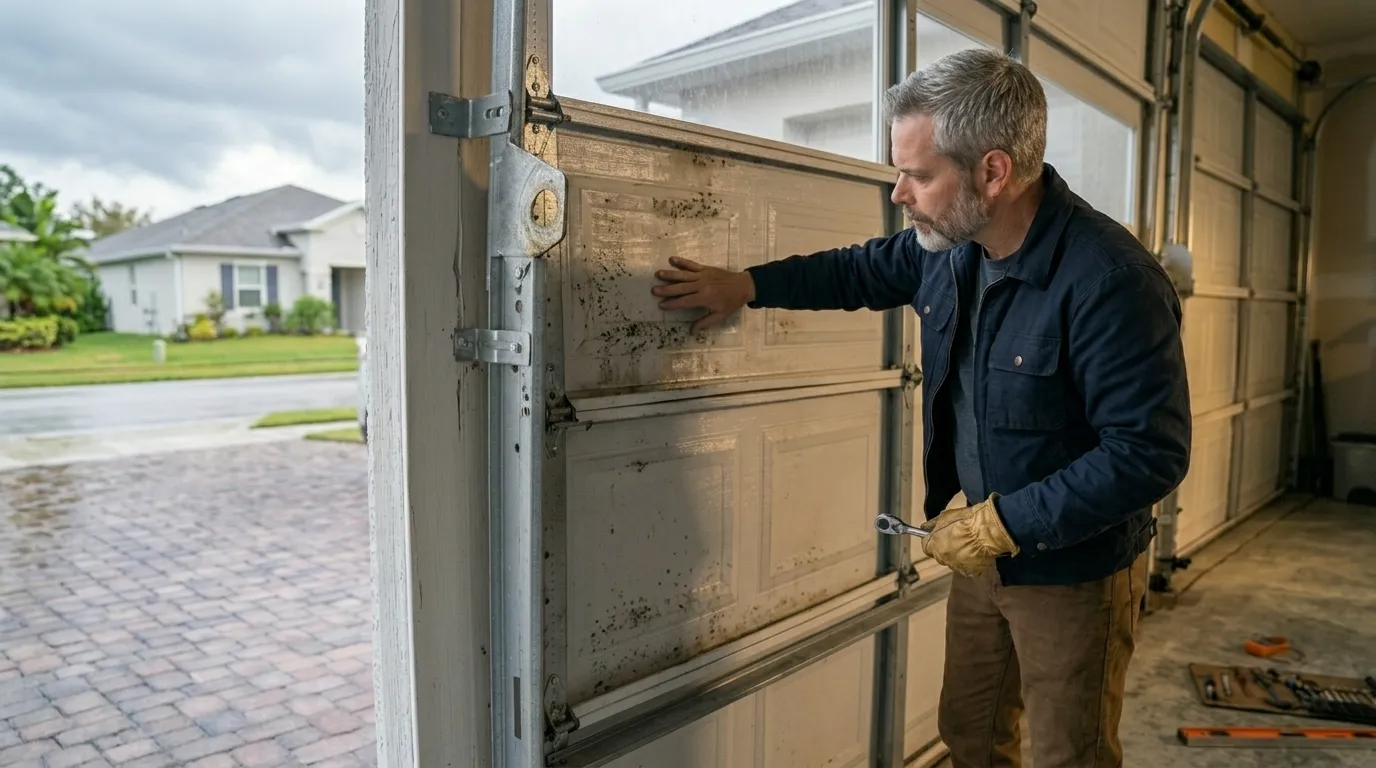
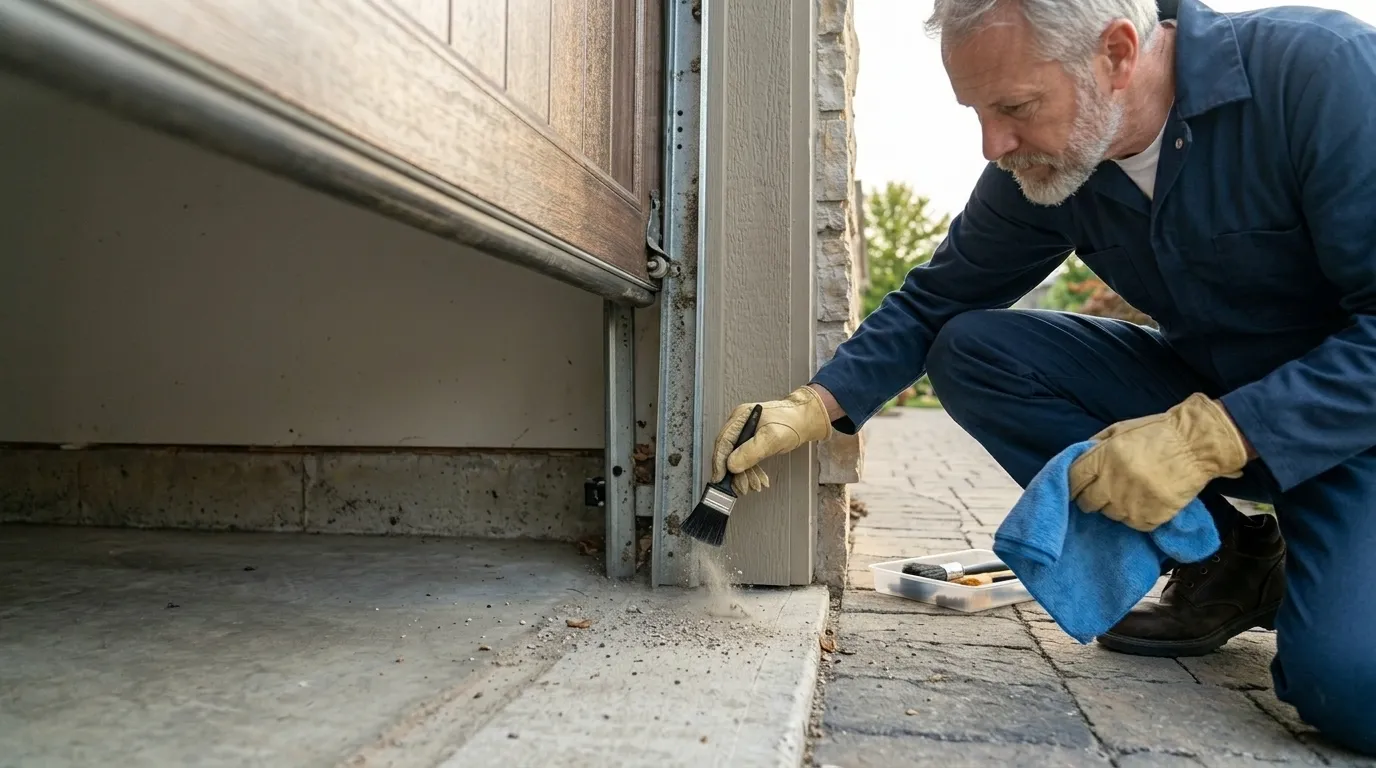
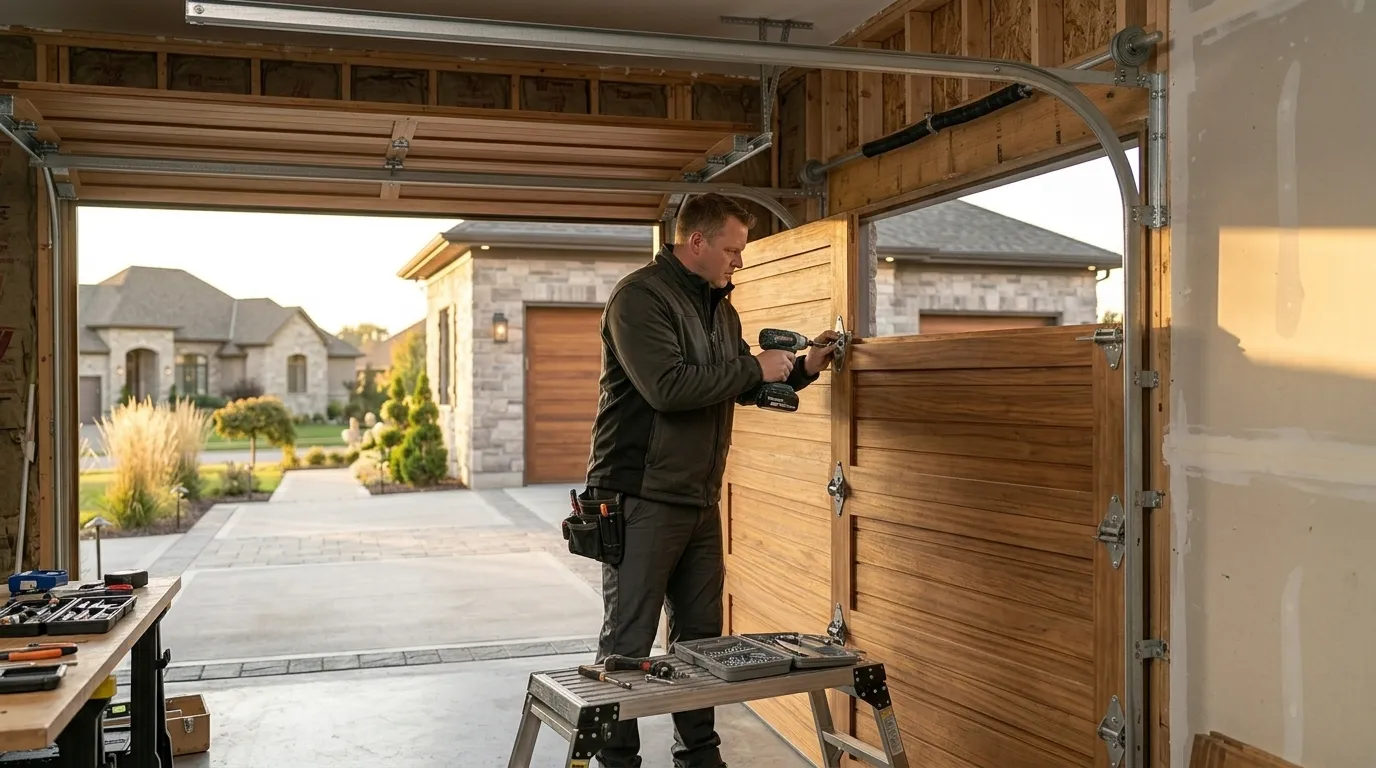
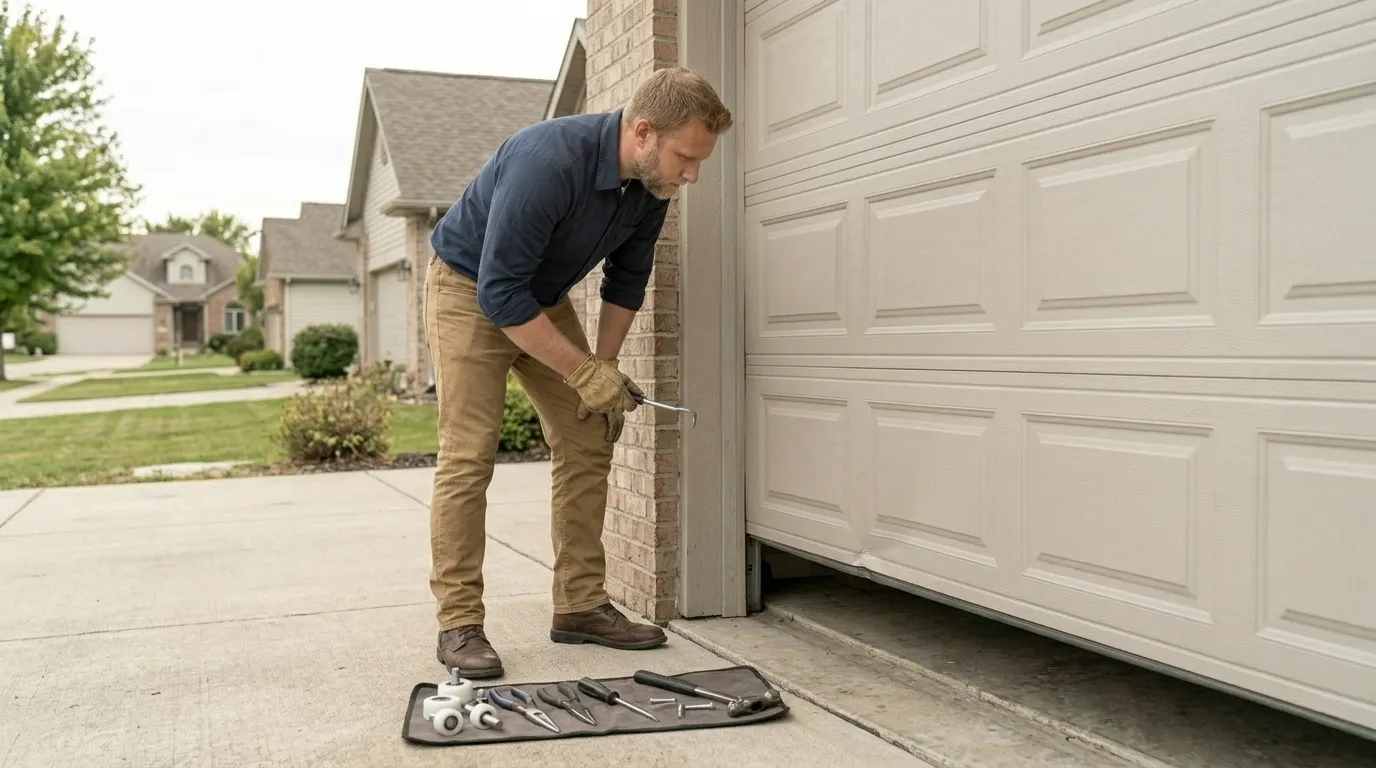
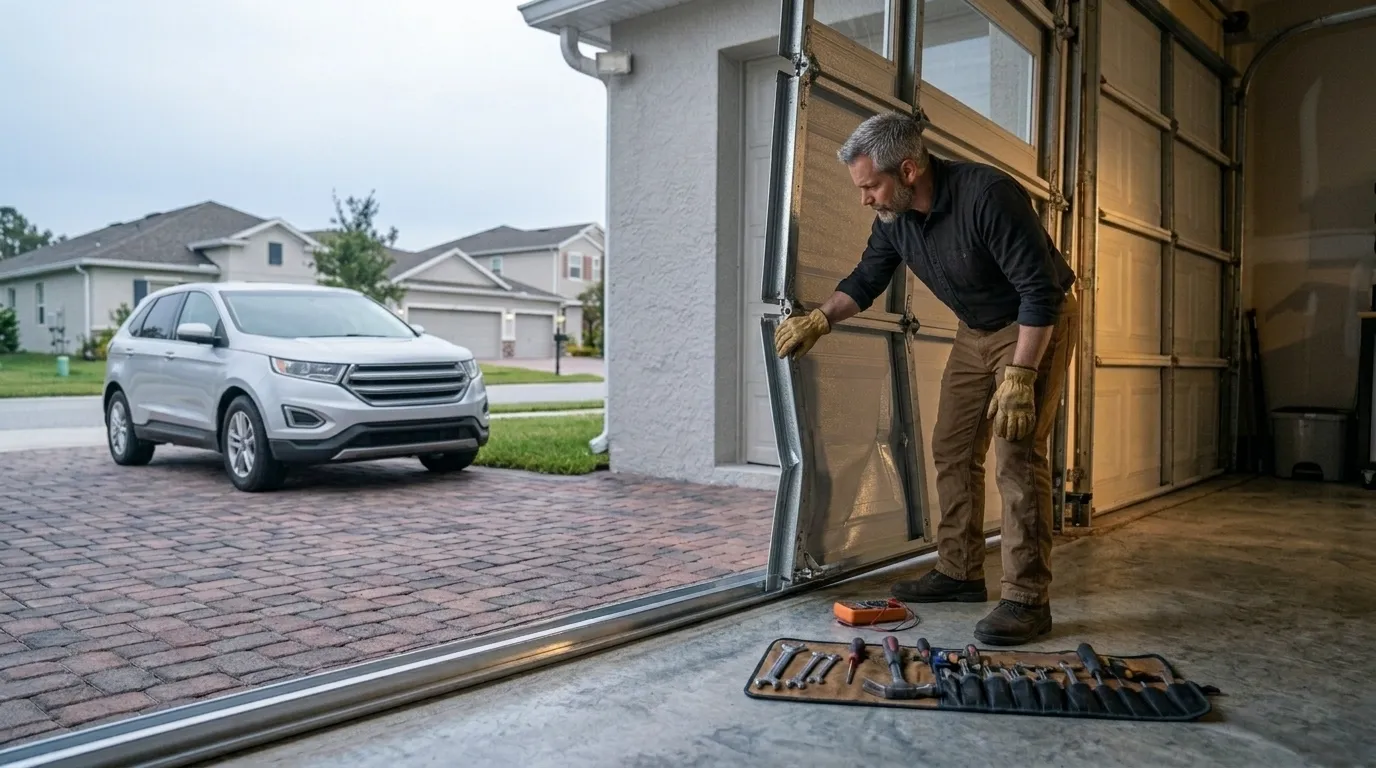
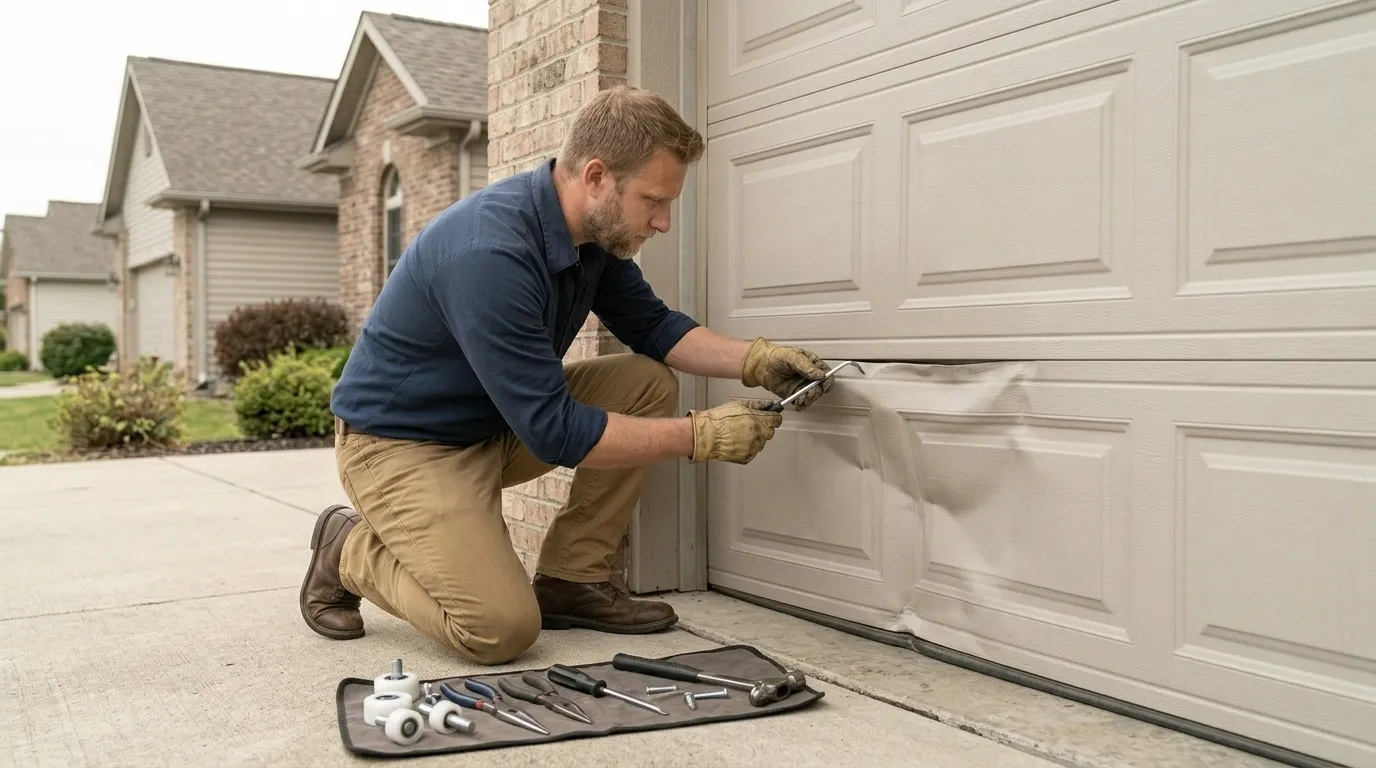
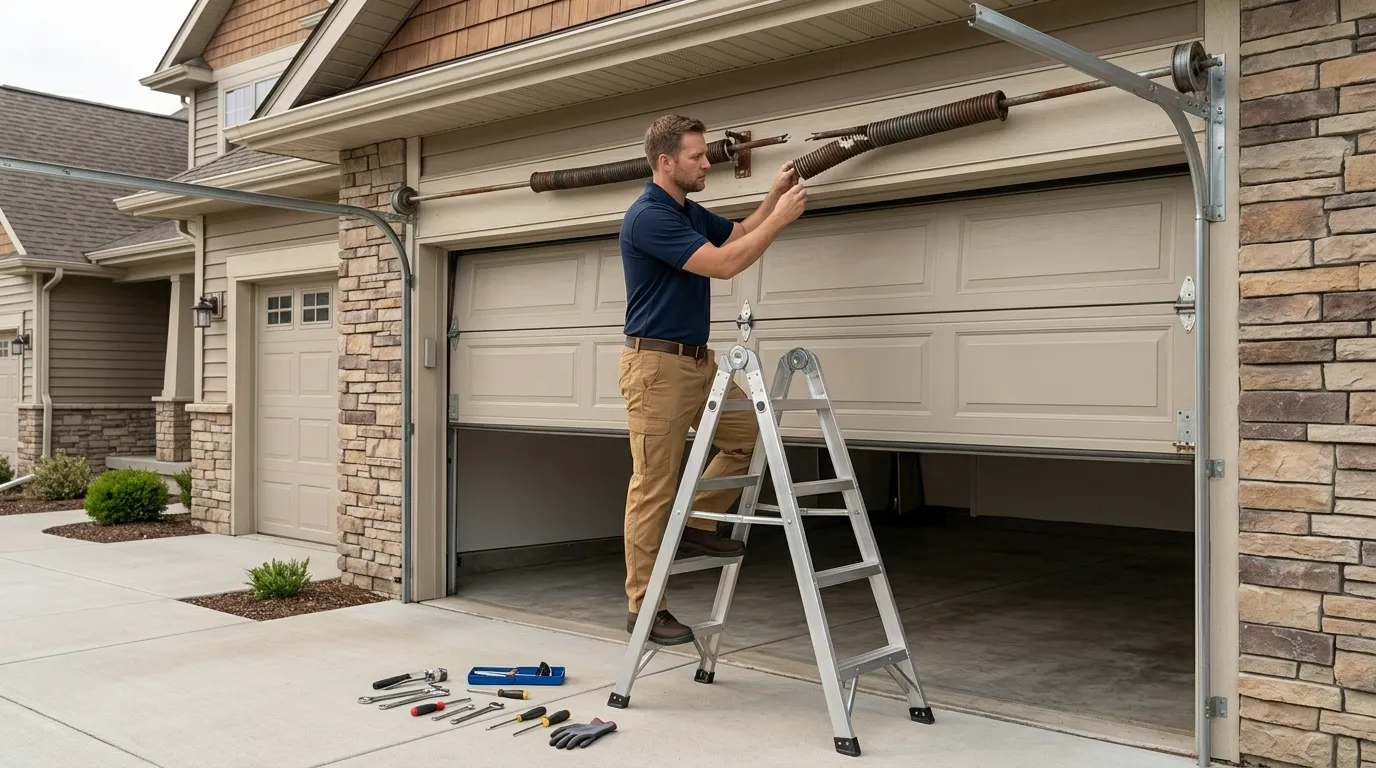
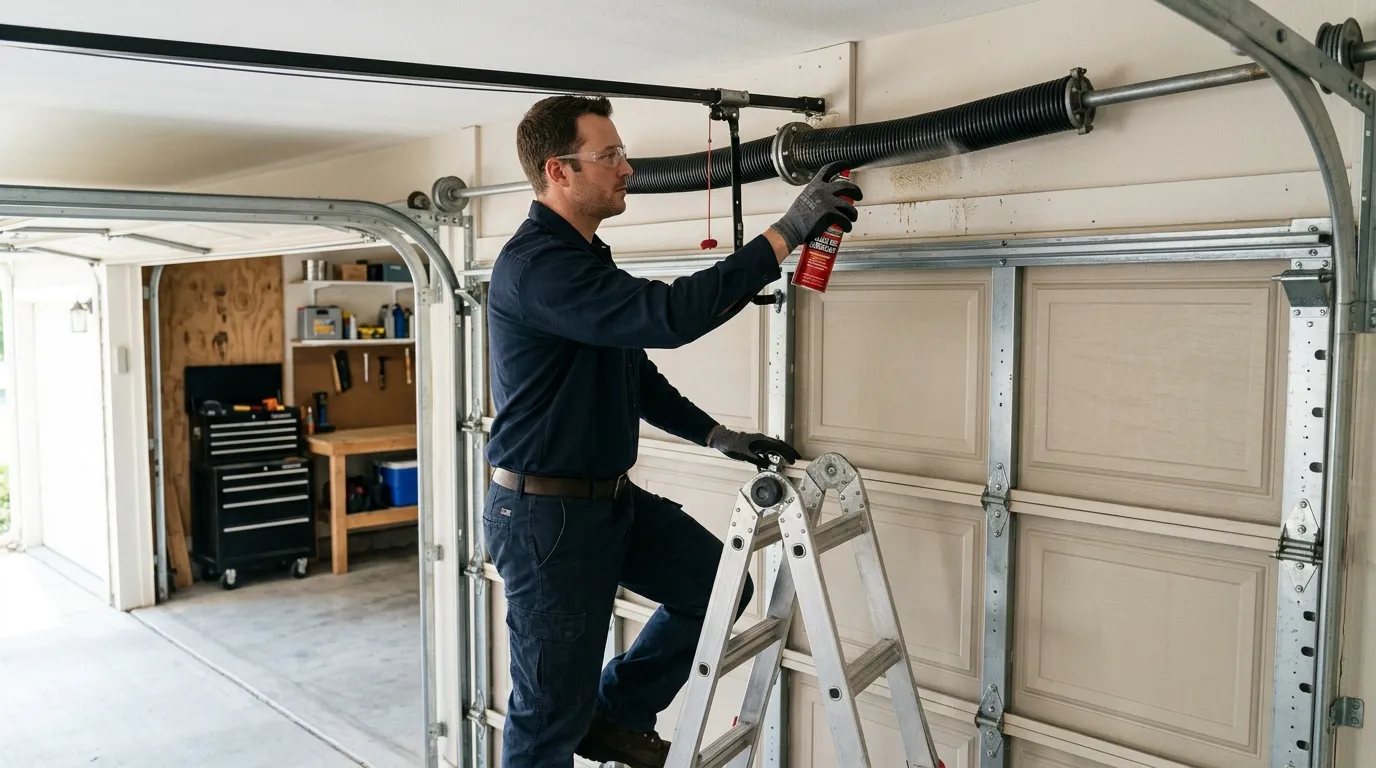
A dented or cracked panel almost never means the whole door is bad. Most of the time it's one section - usually the bottom panel that took a hit from a car bumper or a trash can, or a middle panel that's buckled from years of the door racking slightly out of square. On the steel doors that went up on most Searcy houses through the 1980s and into the 90s, the panel skin can rust through at the bottom seam where snowmelt and rain sit against the weatherstrip. Insulated doors from that era sometimes show a different failure - the foam core delaminates from the steel skin and the panel bows, which throws off the whole roller alignment even though nothing looks broken from the driveway. Wood-look composite panels, less common but still around on some of the nicer builds, crack along the panel seam when the door's been forced through a bent track. None of these need a full door swap if you catch them early. Wait too long, though, and a bowed or rusted-through panel starts pulling on the hinges next to it, and then you're replacing two or three sections instead of one.
What It Costs
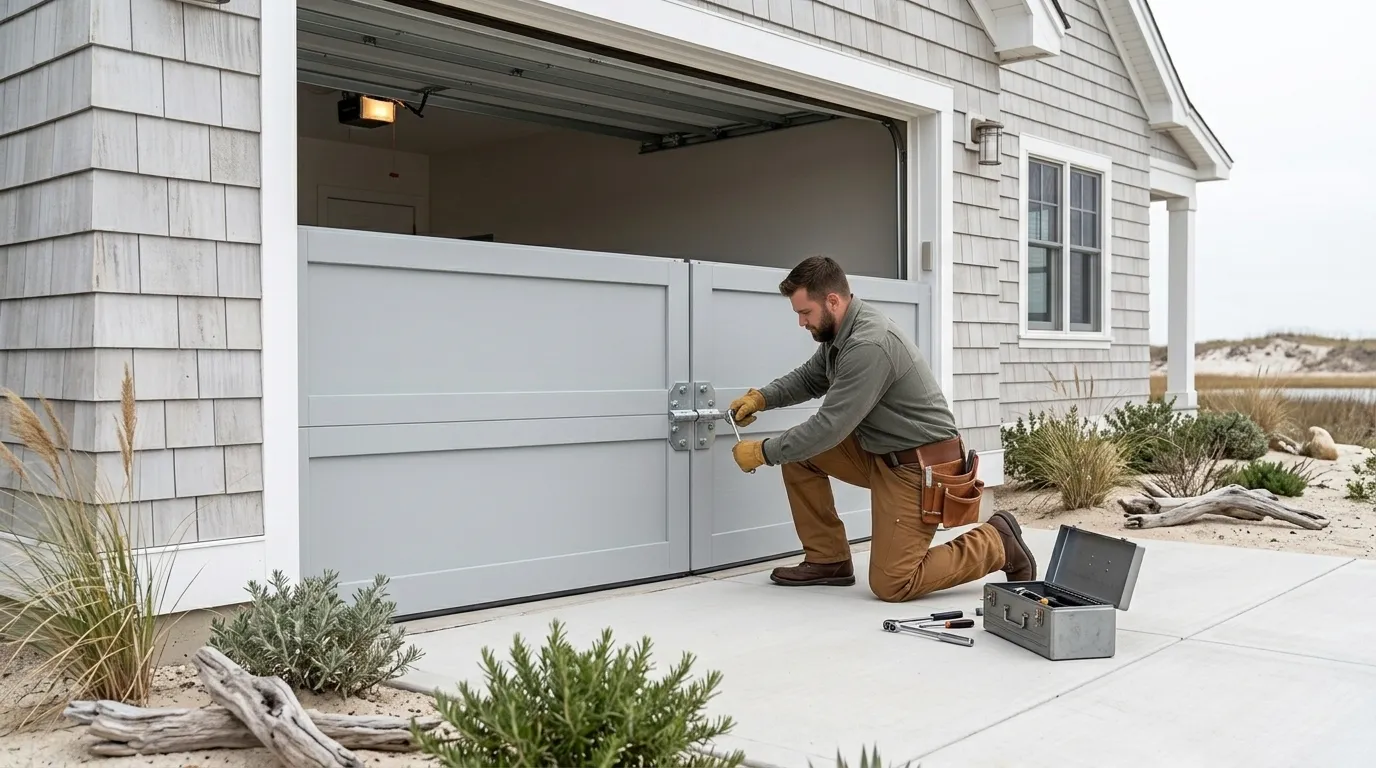
Panel replacement pricing comes down to three things: how many sections need swapping, whether the door is a common width that a supplier still stocks parts for, and whether it's insulated or a plain single-skin steel panel. A single non-insulated panel is a straightforward swap. Insulated panels cost more because you're matching foam thickness and skin gauge, and if the door is an odd color or an older discontinued line, the new panel may not match the rest of the door exactly - that's a real limitation and we tell people that up front rather than let them find out after the job. We don't quote a number here because it depends on the door in front of us, but we'll give you a firm price before any work starts, not an estimate that moves once we're on site.
Why It Happens Here
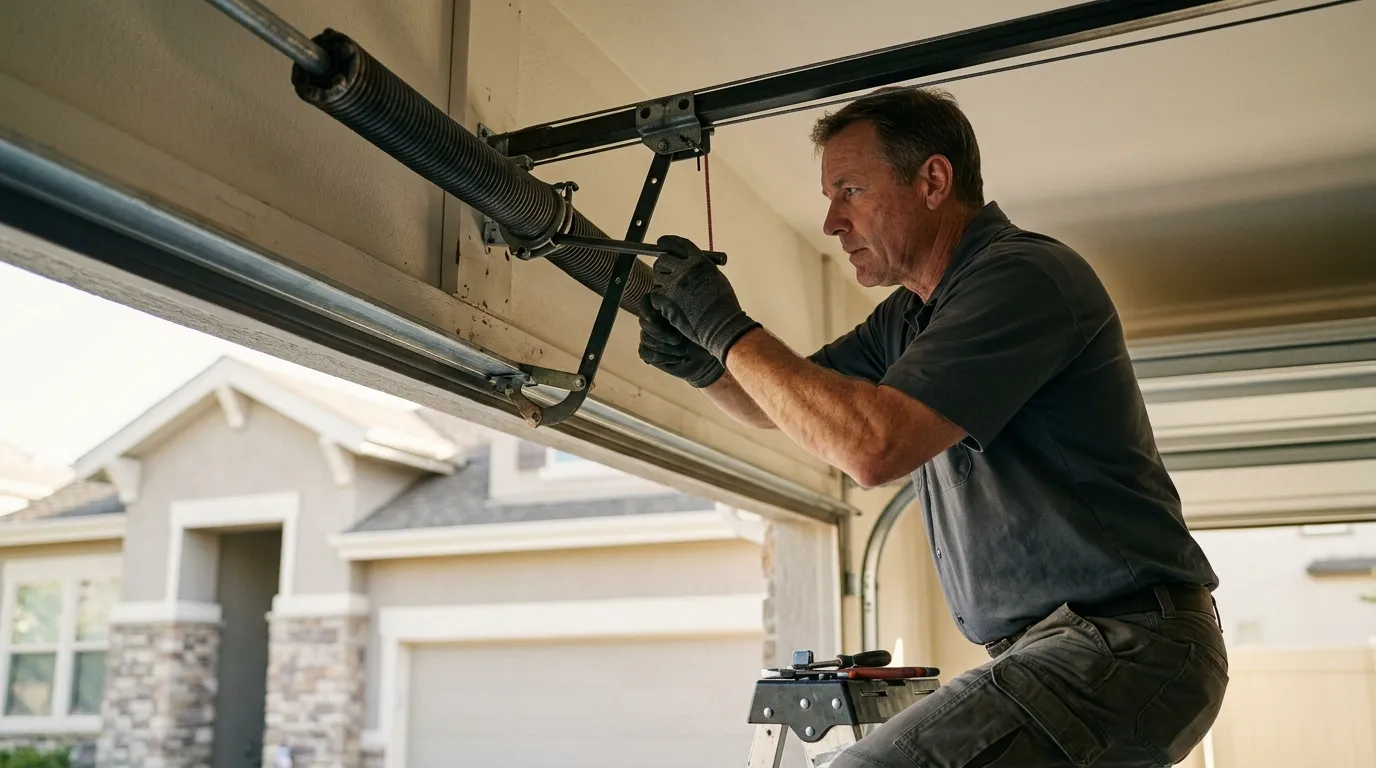
Housing across the Searcy area was mostly built between 1975 and 1997, with the bulk going up in the 1980s and 90s across the five main residential areas in town. That means a lot of doors out there are original steel sectional models from that build window, now decades past their expected panel life, running on hardware nobody's touched since the house was framed. The climate here is a cold-moderate band - not brutal, but enough freeze-thaw cycling each winter that seams flex, seals crack, and rust gets a foothold at panel edges where water sits. In a housing stock this age, panel failure is one of the most common calls we get, right alongside spring and opener issues, simply because the doors themselves are old enough for metal fatigue and foam breakdown to catch up with them.