How Long You Are Without the Door
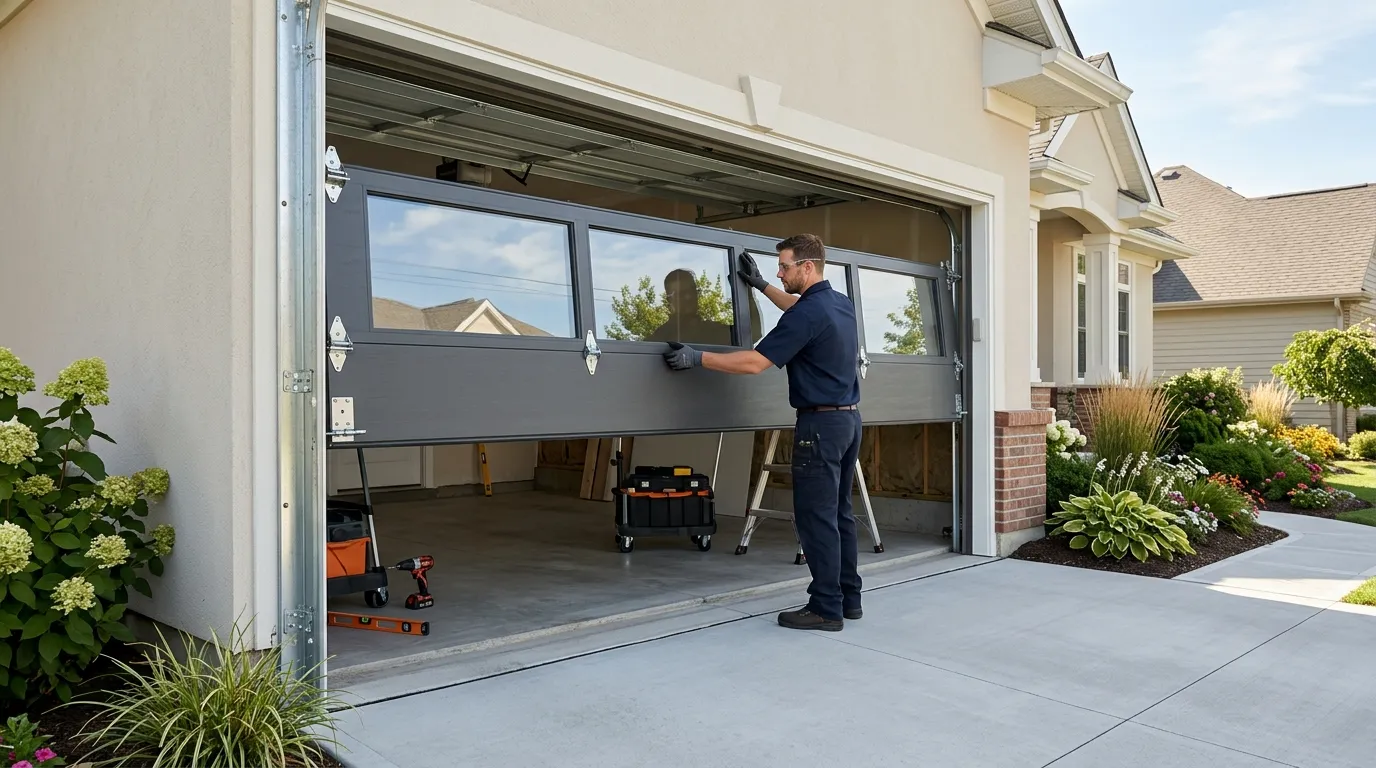
We work out of Searcy, and Kensett sits about 4 miles down the road, so there's no depot or drop box here, just a truck that comes to you. Because the town's houses cluster tighter in age than the wider service area - median build year here runs around 1976, a bit earlier than the 1982 median across our five-town coverage - a lot of the doors we open in Kensett share the same bones. That's useful for us: if we've seen one 1976-vintage door on a street, we've usually seen the failure mode before it happens on the next one. What that doesn't mean is a guaranteed same-day slot. We don't operate a branch in Kensett, and travel time from Searcy is part of every booking here, same as it is for Judsonia or Kensett's other close neighbors. We tell people straight when a job needs a part we don't have on the truck that day, rather than promise a fix we can't deliver on the spot. With roughly 731 households in Kensett itself, we're not running multiple crews through town at once - one job gets our attention until it's done right, then we head to the next call.
Booking a Visit
Tell us the door's age if you know it, or just the decade the house was built - for Kensett that's often mid-to-late 1970s, and it changes what we bring on the truck. A door original to a 1976 build is not hardware-compatible with the torsion-spring setups that became standard through the 1980s and 90s across the rest of our area, so knowing which era you're in saves a wasted trip. We book by phone, ask a few questions about the door's behavior - does it bind, does it drop fast, does the opener strain - and get a rough sense of parts before we drive out. Kensett's household income runs lower than the broader service area's median of $43,811, and we've found that matters here: more owners want a straight answer on repair-versus-replace before we start turning bolts, not after. We give that answer up front when we can, based on what you tell us on the call and confirm on site.
What the Fix Involves
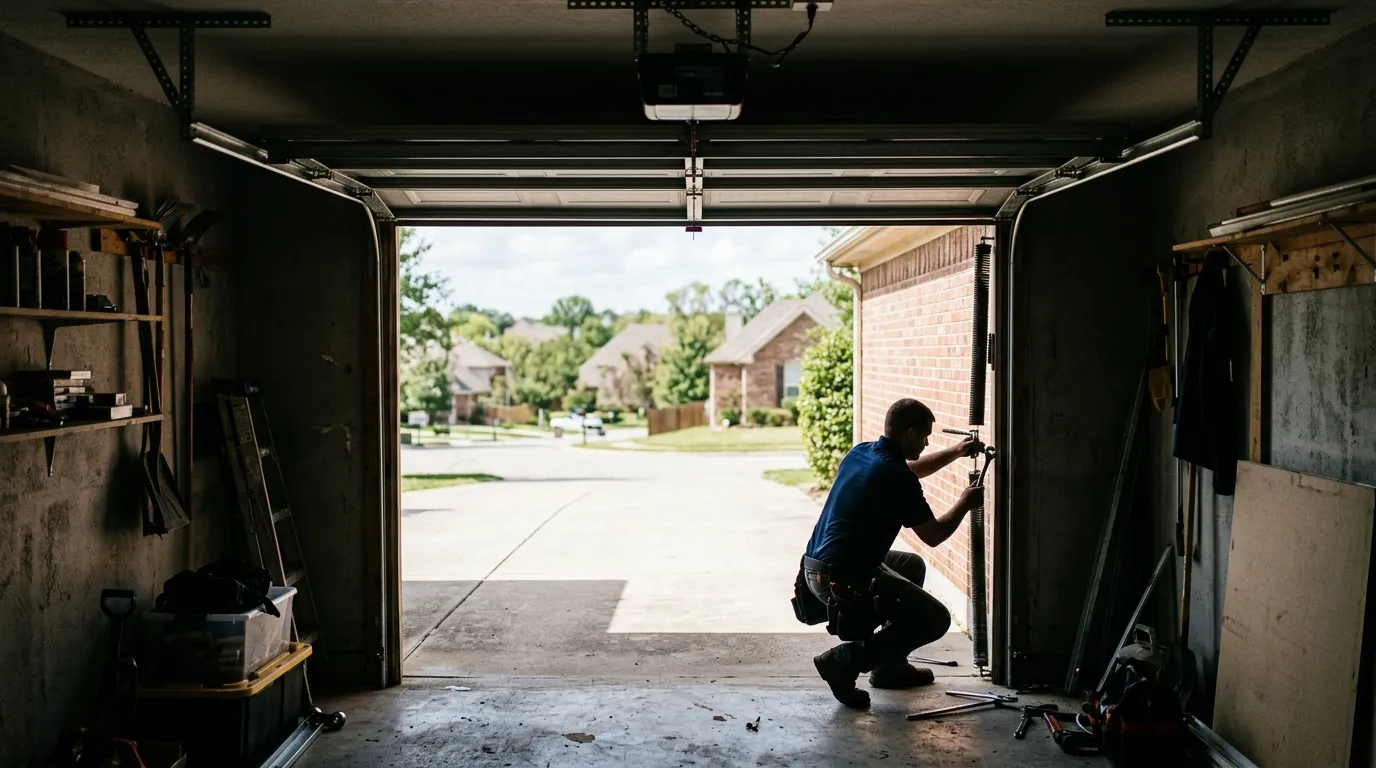
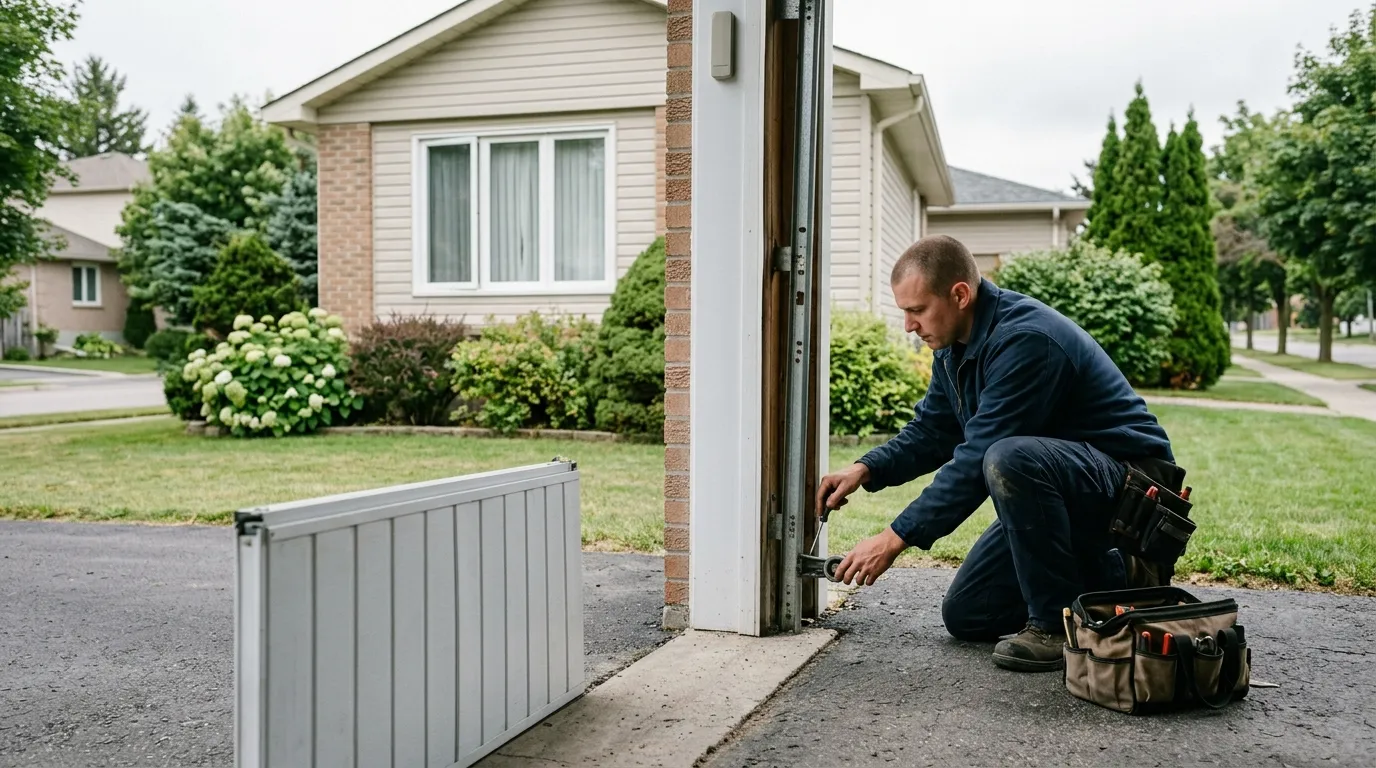
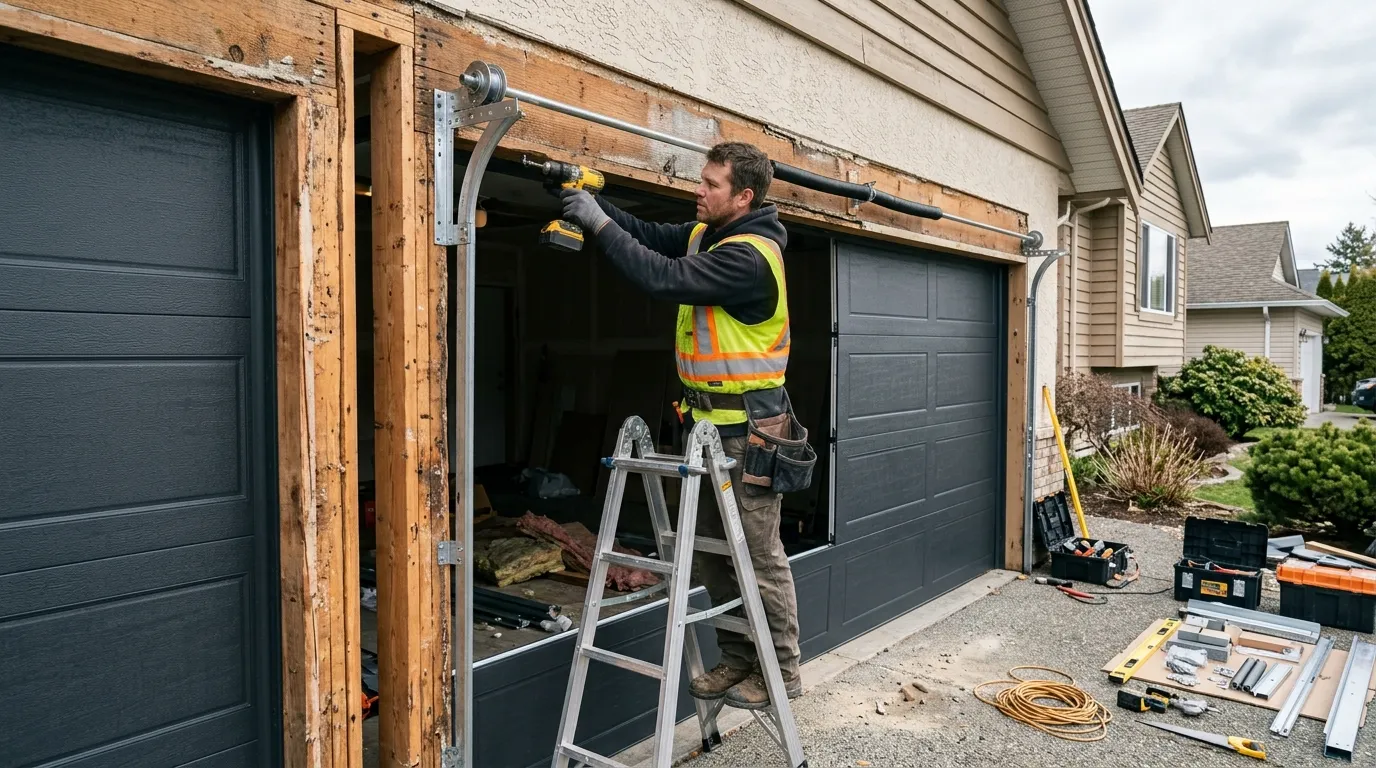
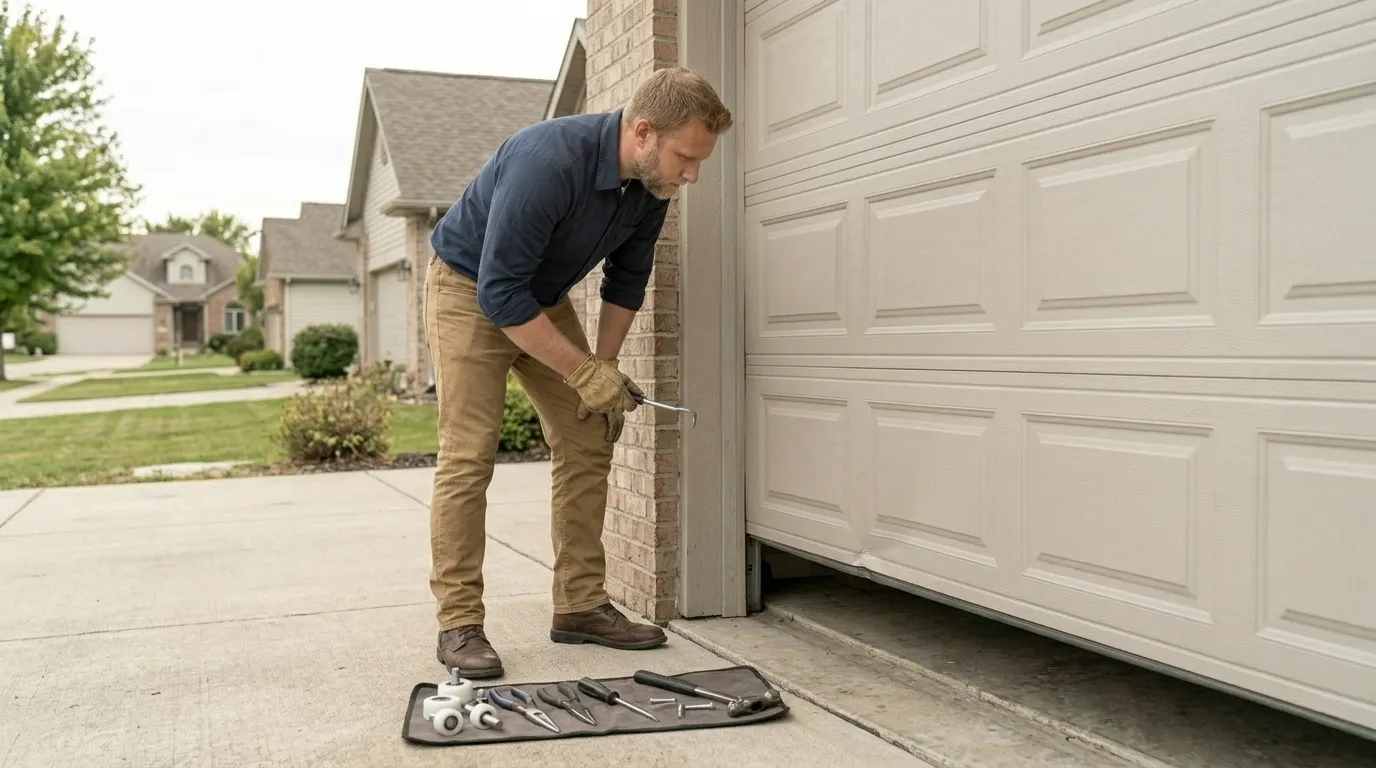
Cold snaps matter more on an older extension-spring door than people expect. In a moderate-cold climate like this one, steel contracts and lubricant thickens, and a spring that's already fatigued from 45-plus years of cycles is the one that snaps on the first hard cold morning of the season, not gradually. The fix starts with pulling the old spring set and checking the track alignment, since houses from the 1976 window have settled enough that tracks are rarely still square to the frame. We reset or shim the track, replace both springs as a pair even if only one broke - mismatched spring tension on an old door is how you get a second call in six months - and check the opener's force setting against the new spring weight before we leave. On some of these doors the opener itself predates the current door and is undersized for it; we'll flag that rather than force a fix that won't hold.
What Can Go Wrong
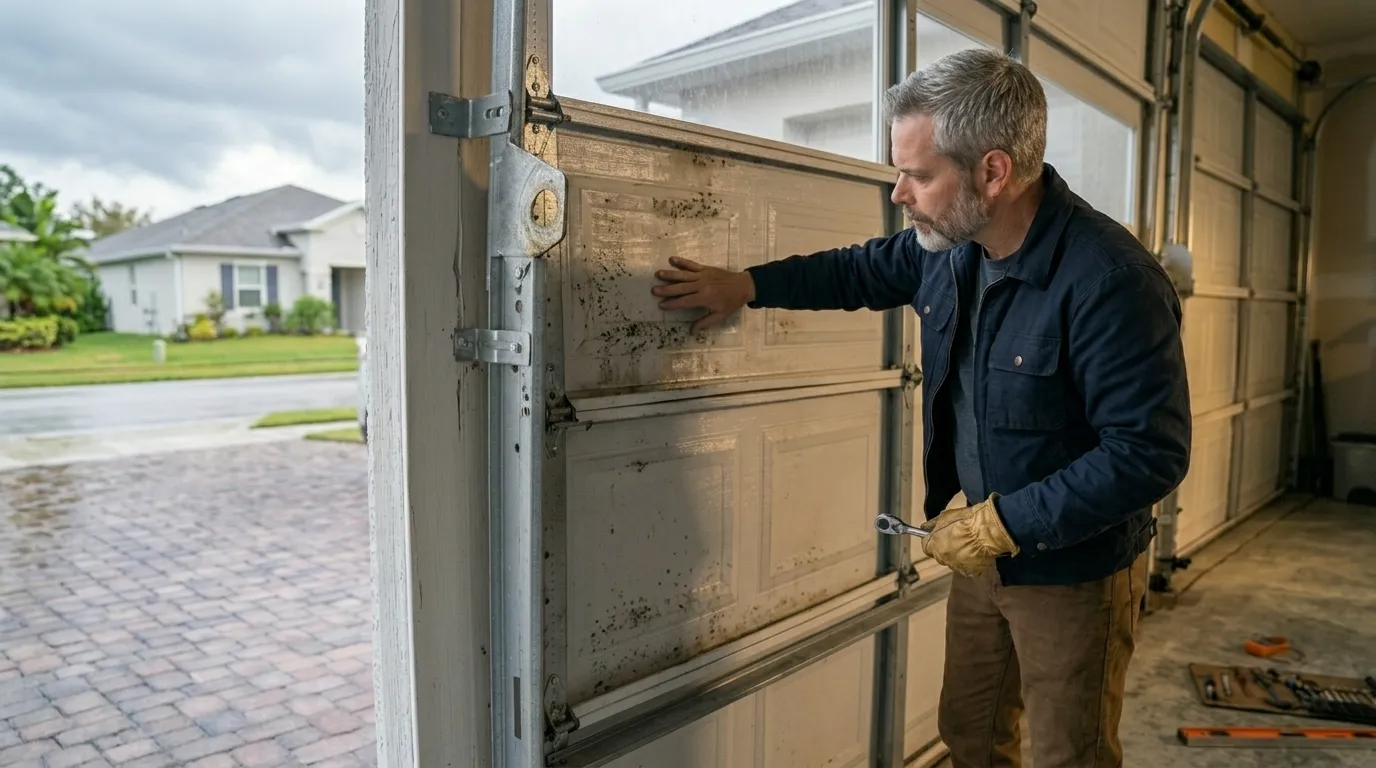
The biggest risk on a Kensett-era door is a cable that lets go under load because the drum or roller it rides on has worn past the point the cable can seat evenly. That's a sudden, heavy drop, not a slow sag, and it's the reason we don't recommend DIY spring work on extension systems from this build window - the tension math is different from newer torsion setups and the margin for error is smaller. The other common failure is a panel seam that's flexed loose over decades of use without ever being resquared; it looks cosmetic until the door starts binding in the track. We'll tell you plainly when a door's frame has moved enough that patching the panel is a short-term fix and a full door is the better spend, especially given how tight household budgets tend to run in this part of our service area.