How Long You Are Without the Door
Kensett sits four miles from Searcy, which is about as short a drive as this company makes. That matters less for how fast someone shows up and more for how a job here actually gets scheduled: a Kensett install can slot into the same afternoon as a Searcy call without anyone racing across the county to make it happen. The short trip also means less guesswork on the front end. A crew that was just in Kensett last month knows the pattern of houses out here well enough to bring the right header brackets and jamb hardware on the truck the first time, instead of turning around for a part that a newer subdivision would never need.
What the distance does not buy you is a promise of a same-day slot every time. Install jobs get scheduled, not walked in on, especially when the old door has to come off clean before the new one goes up. The four miles keeps the trip simple. It doesn't skip the step of booking it.
Booking a Visit
Booking starts with a look at what's already hanging in the opening, not a guess over the phone. Most homes in Kensett were built around 1976, which puts the garage on the older end of what this whole service area has, where the broader mix runs 1975 to 1997 with 1982 as the middle. A door opening framed in the mid-1970s often runs a hair narrower or shorter than what current stock doors are cut for, so the visit includes measuring the actual rough opening before anyone orders a door.
Household income in this area runs lower than the wider service territory's median, and that's part of the conversation too - not to push a cheaper door, but to lay out steel versus insulated options honestly, with real cost differences, instead of assuming everyone wants the top-end model. A booked visit means a measured opening, a written quote, and a install date - not a same-day drop-in.
What the Fix Involves
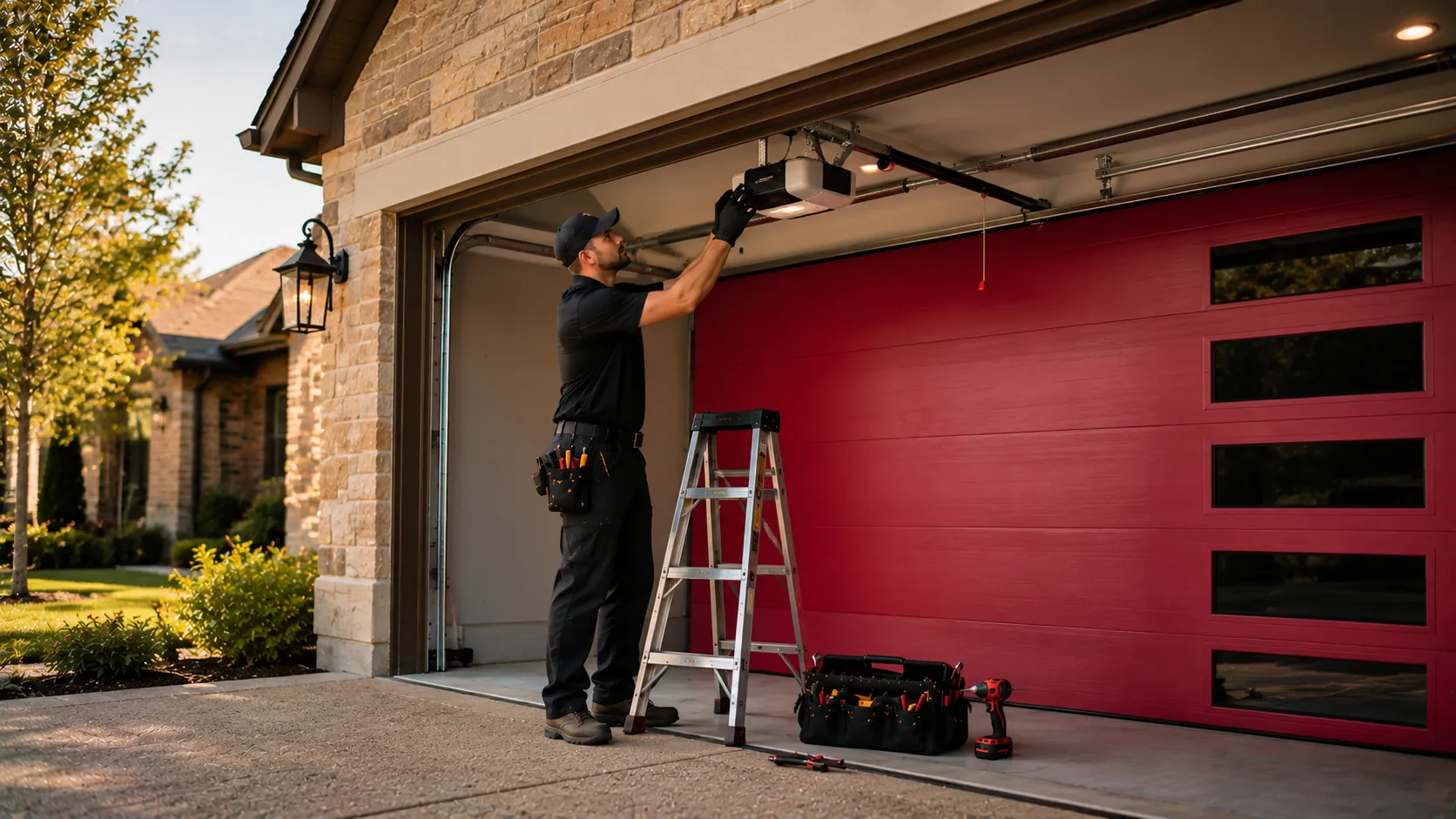
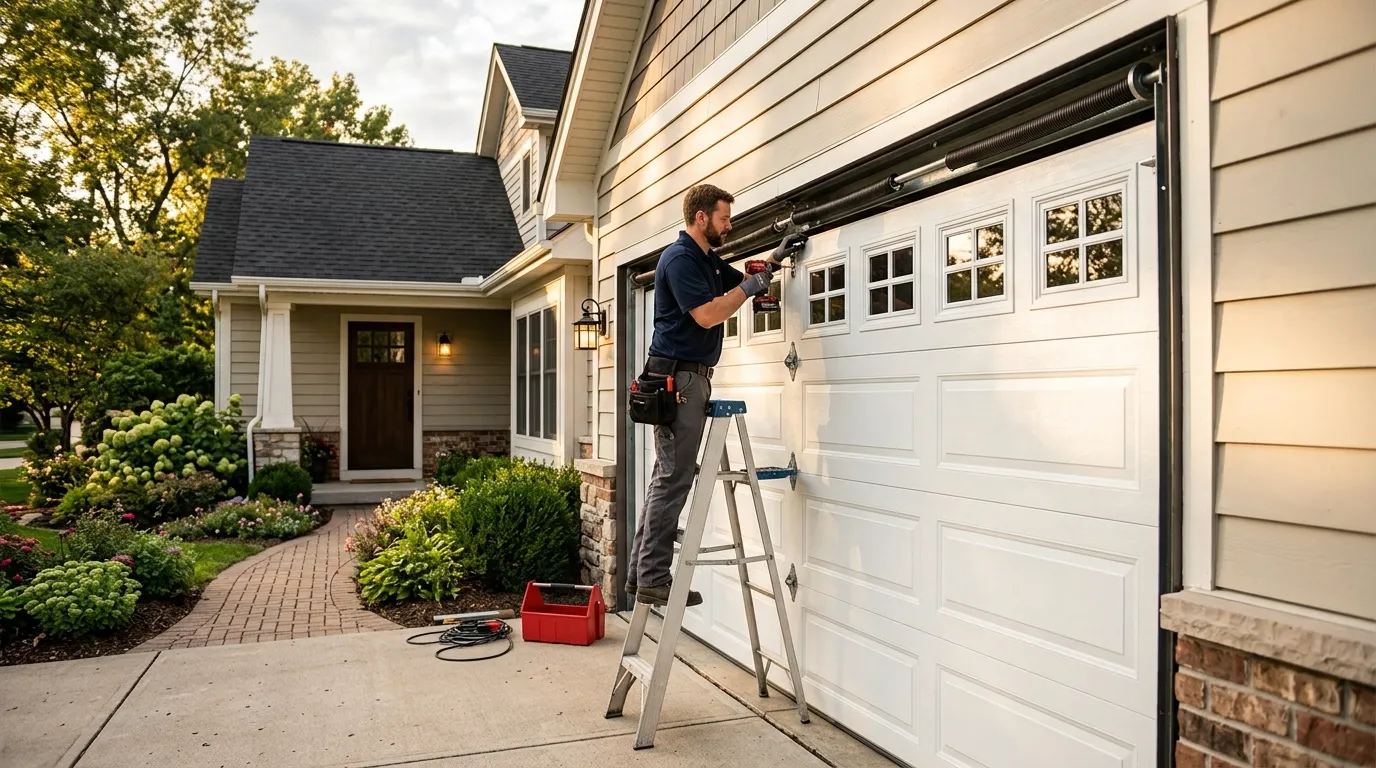
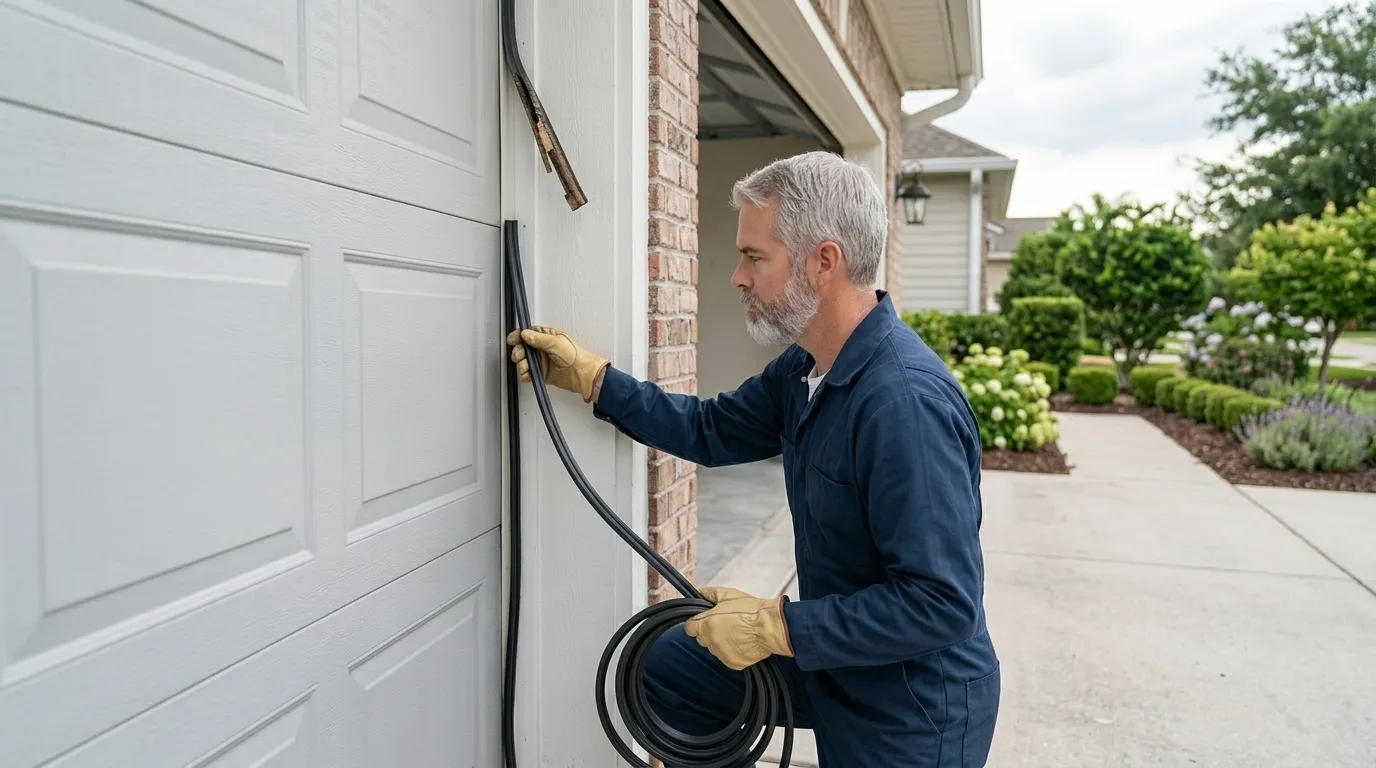
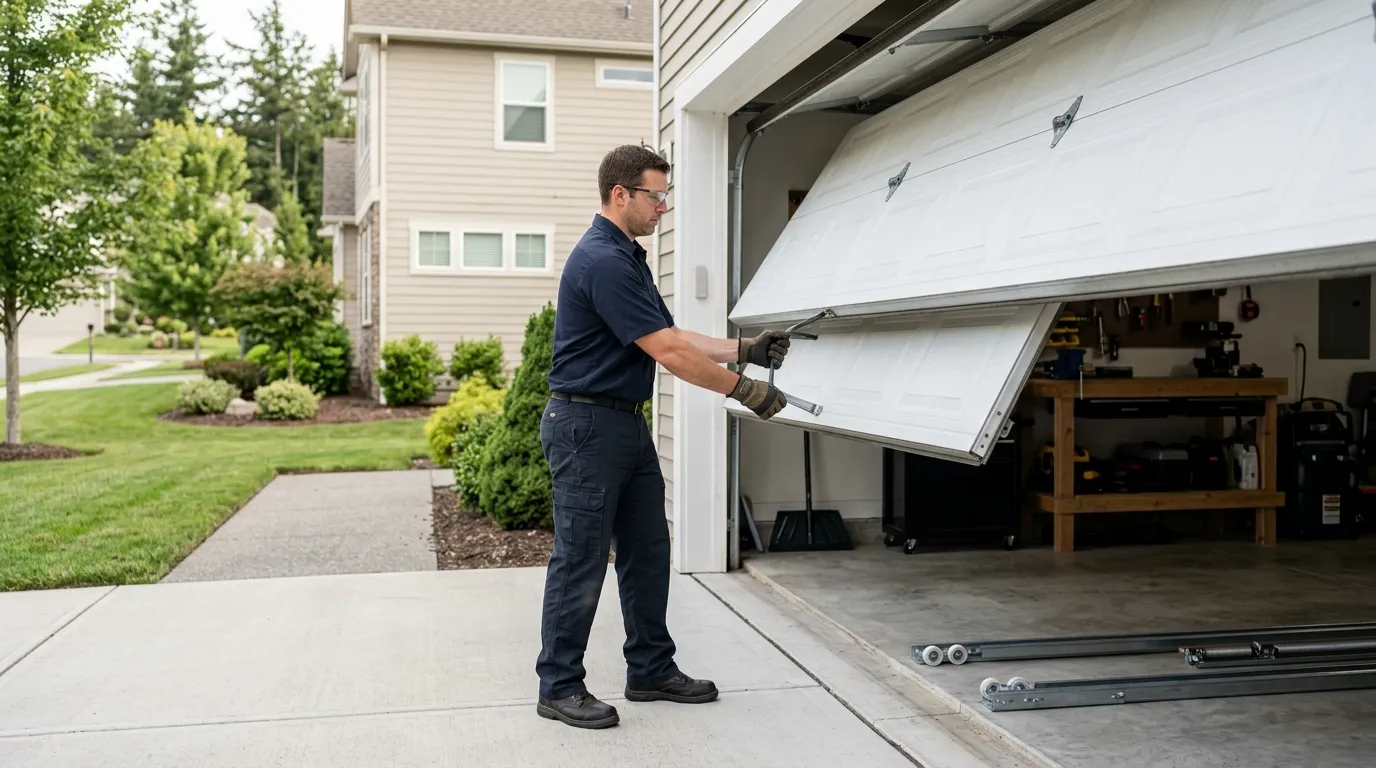
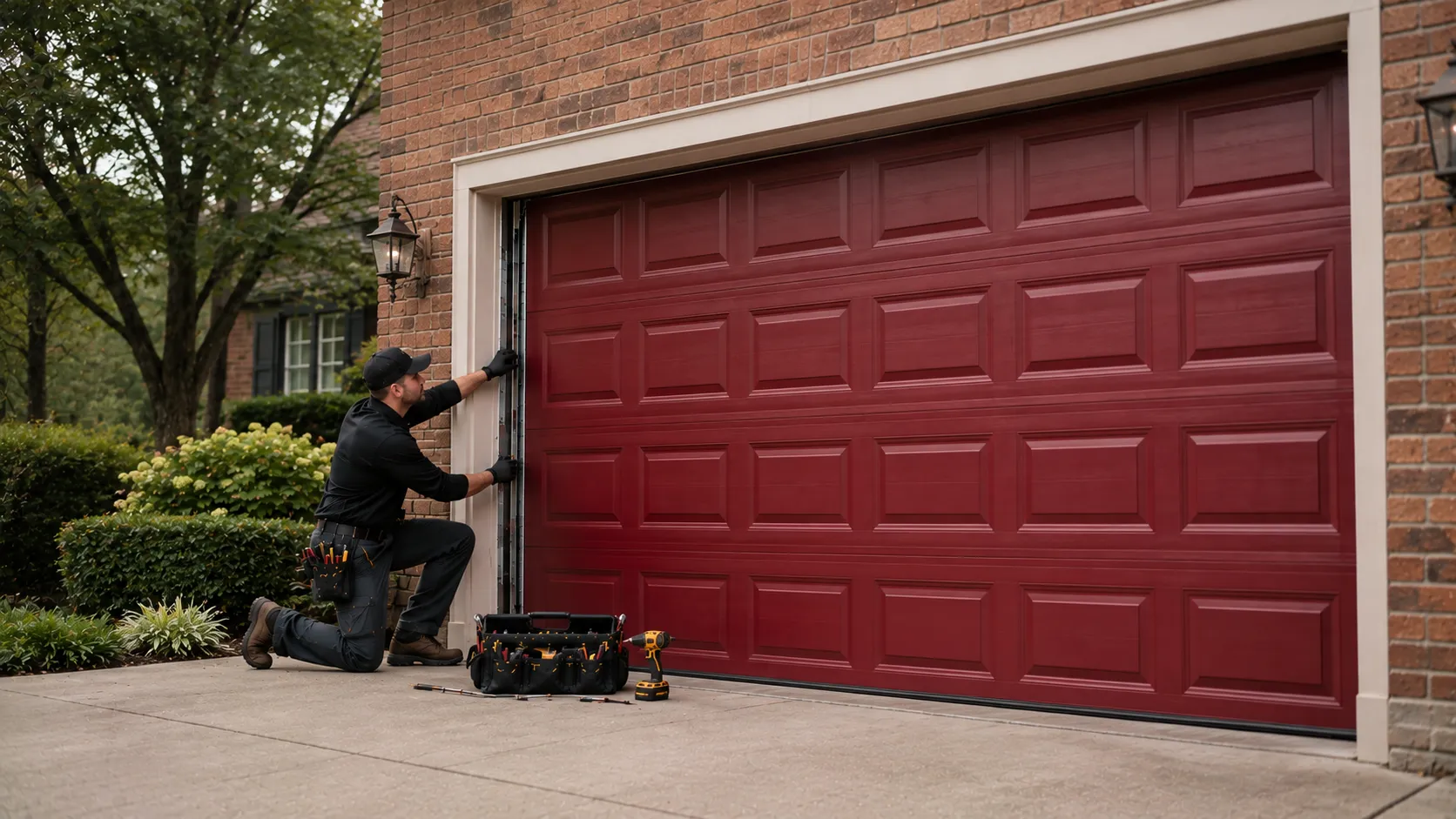
A new install on a house this age usually means pulling the old track, springs, and sometimes the header bracket if the wood underneath has shifted over close to fifty years. The opening itself rarely needs reframing, but the hardware mounting points do - lag bolts driven into 1970s framing don't always hold the way they did new, and that gets checked before the new track goes up, not after.
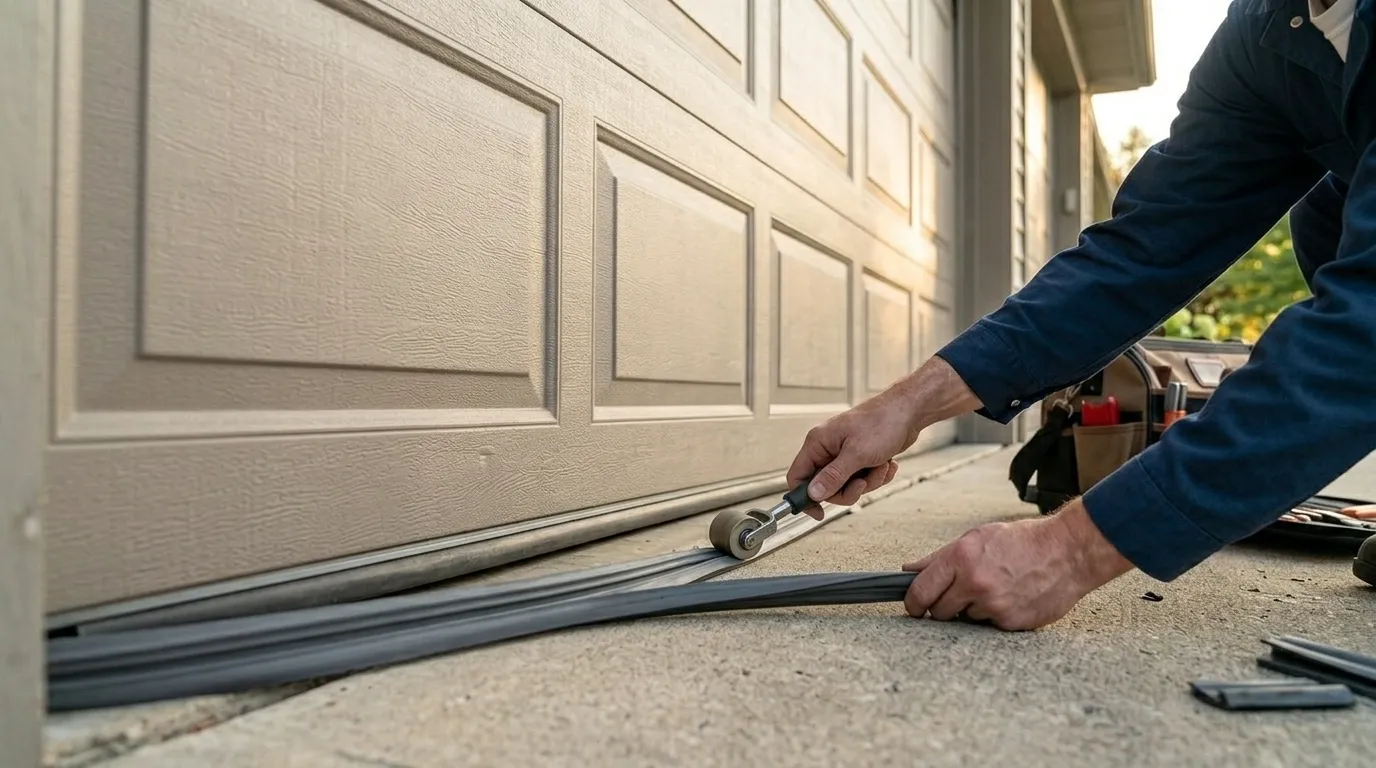
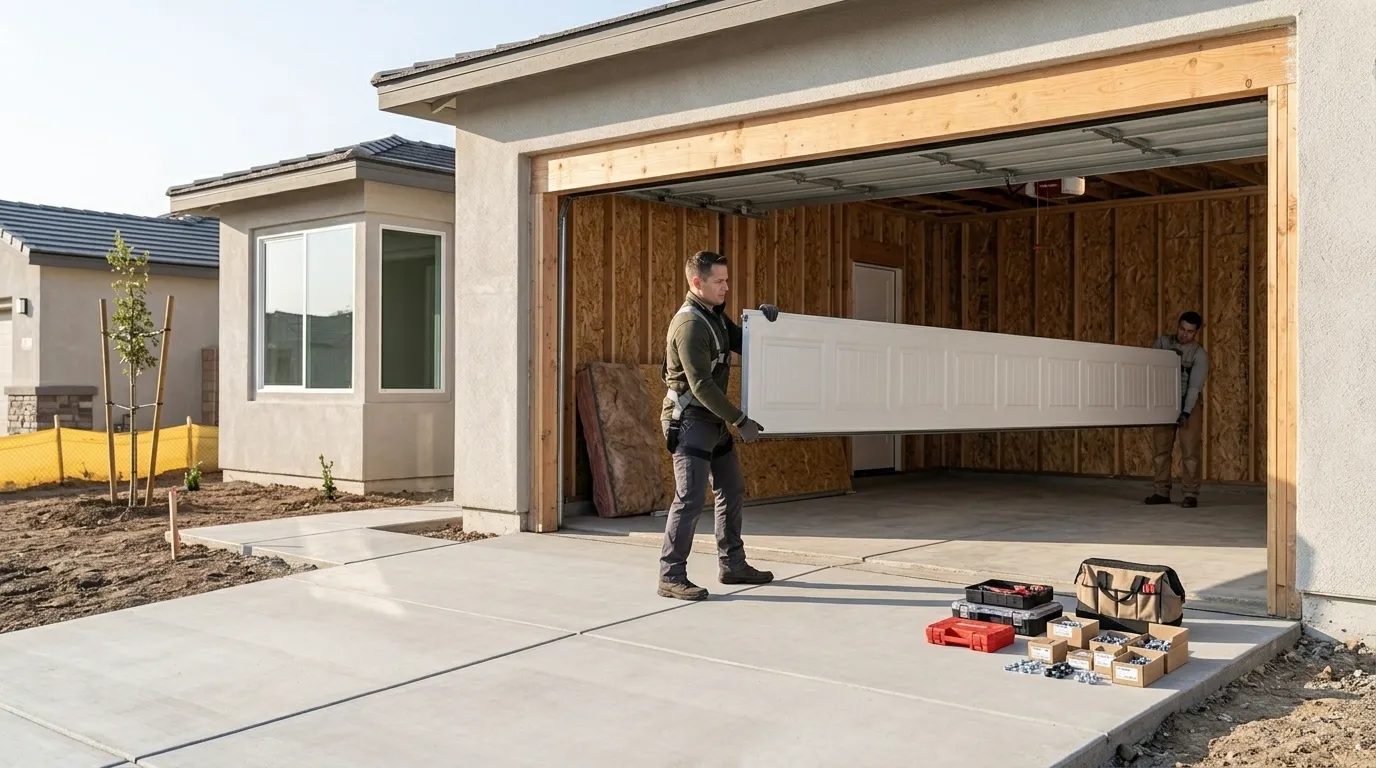
Once the frame is solid, it's a standard sequence: new track, new springs sized to the door's actual weight, panel assembly, and opener mounting if one's going in. The whole thing gets balanced and tested under load before the crew leaves, because a door that closes fine empty can still bind once the opener is doing the lifting.
What Can Go Wrong
The most common surprise on an older Kensett install is what's behind the drywall at the header - sometimes it's solid, sometimes fifty years of moisture have softened it enough that the new bracket needs a backer board before it'll hold torsion spring tension safely. That's not a hidden upsell; it's a real load path issue and skipping it means a door that pulls loose within a year.
One honest limit: if the opening itself is out of square by more than a small margin, a straight swap won't fix it, and that's a carpentry job before it's a garage door job. We'll say so rather than force a door into a bad frame.