Booking a Visit
Judsonia doesn't have its own garage door shop. We run the job out of Searcy, six miles down the road, so when a spring snaps on a Saturday morning you're not waiting on someone to drive in from across the county. That said, we're honest about it: this is a truck coming from Searcy, not a local depot, so we ask what you're seeing on the phone first - a door stuck halfway, a loud bang followed by the door not moving, a cable hanging loose - so the truck that shows up has the right spring on it the first time. Of the 744 households in Judsonia, most sit in that same 1980s window of construction, which means the spring on your door is very likely the same size and mount as your neighbor's. That consistency actually speeds up the visit; it's the odd one that slows things down. If you want the general rundown of how we handle spring jobs across the wider Searcy service area, that's covered on our main spring repair page. For more on what we see specifically around Judsonia, see Judsonia Garage Doors.
What the Fix Involves
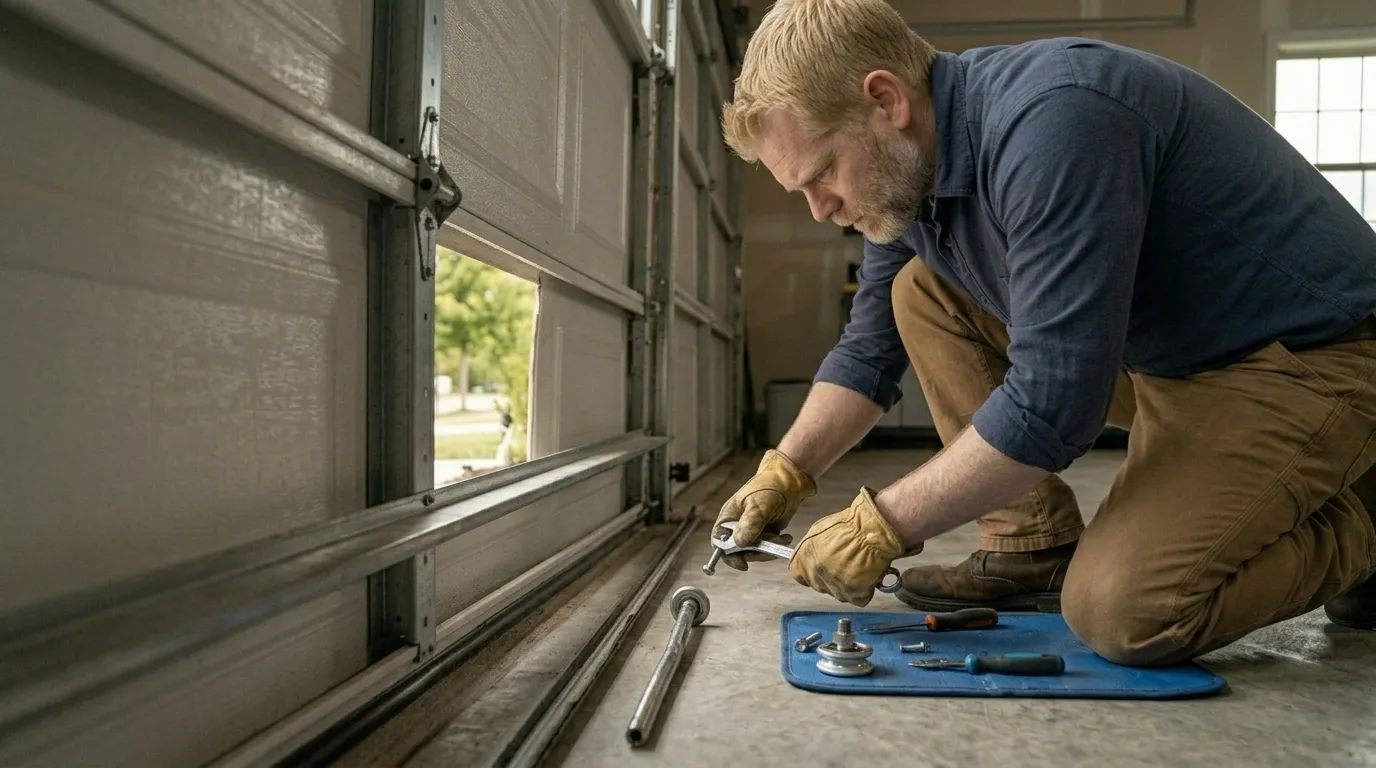
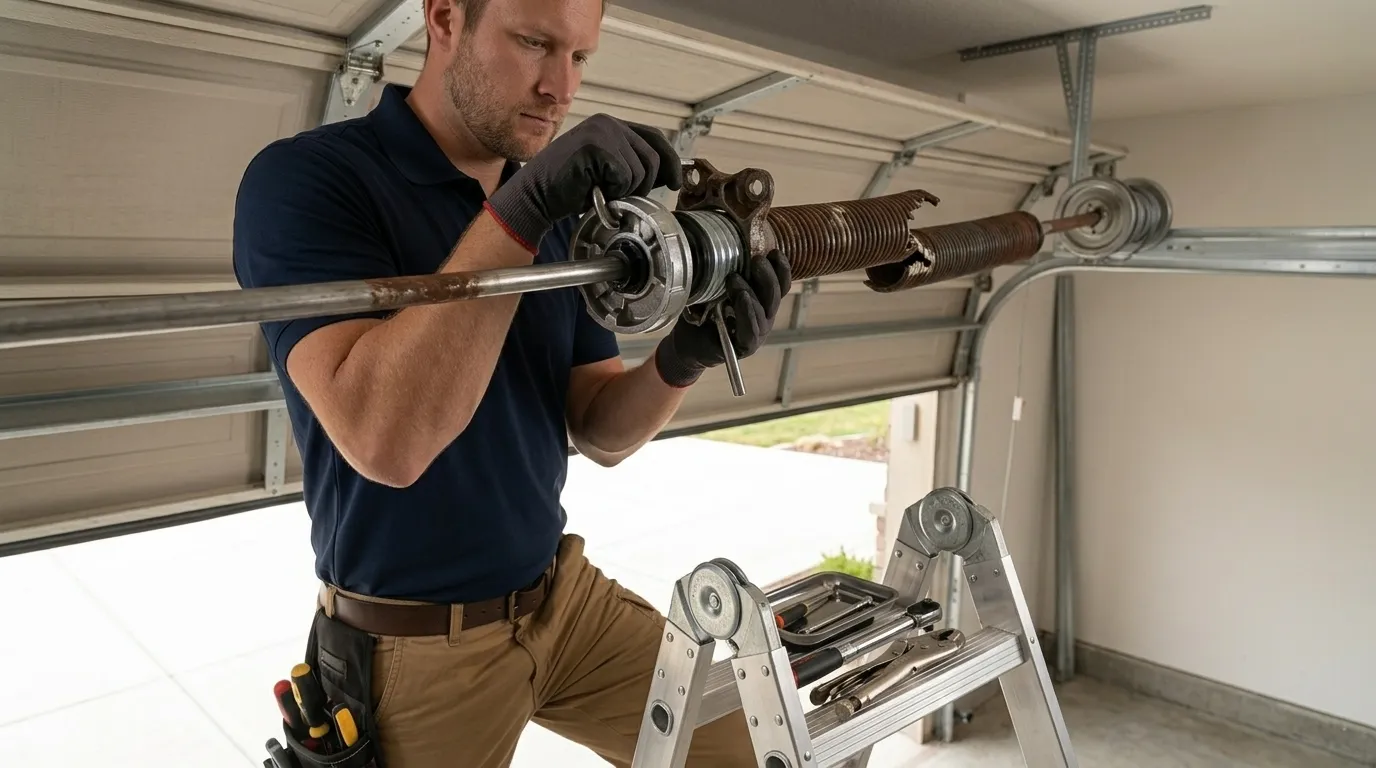
Judsonia's housing stock runs newer than a lot of what we see elsewhere in the service area - the median build year here lands at 1982, right in the middle of that 1975-1997 window that covers most of the region's houses. That matters for spring work because doors from this era were almost always built for torsion springs mounted on a shaft above the door, not the older side-mounted extension setups you'd find on houses built before the 1970s. The fix is usually straightforward: unwind and remove the broken spring, measure the wire gauge and coil length against the door's weight and height, and set a matching torsion spring with the correct winding cones. What complicates it here isn't the door - it's the weather. This part of Arkansas sits in a cold-moderate climate band, and springs that have wound and unwound through a few decades of freeze-thaw cycles tend to have rust pitting at the coil ends, which is where they usually let go. We check both springs on a double-spring setup even if only one broke, because the other one is the same age and has seen the same weather.
Parts We Carry
Because most Judsonia doors date to that 1975-1997 stretch, with the bulk of them built in the 1980s and 90s, the torsion springs we carry on the truck are sized for standard 7-foot and 8-foot residential doors - the sizes that era of builder installed almost universally. We stock galvanized-coated springs rather than plain oil-tempered wire, since the cold-moderate climate here means enough freeze-thaw and humidity swing over a winter to matter for coil life. Cables, end bearings, and center bearing plates from that period are also fairly standard, so we carry the common sizes rather than needing to order them. Where we do run into trouble is a door that's had a nonstandard replacement installed at some point - a wider opening cut into an older frame, or a spring swapped out years ago with whatever size was on hand at the time. Those jobs sometimes need a spring ordered to match, which means a return trip rather than a same-visit fix. It doesn't happen often given how uniform the housing stock is here, but it happens enough that we'd rather tell you upfront than pretend every door is a guaranteed one-visit job.
What Can Go Wrong
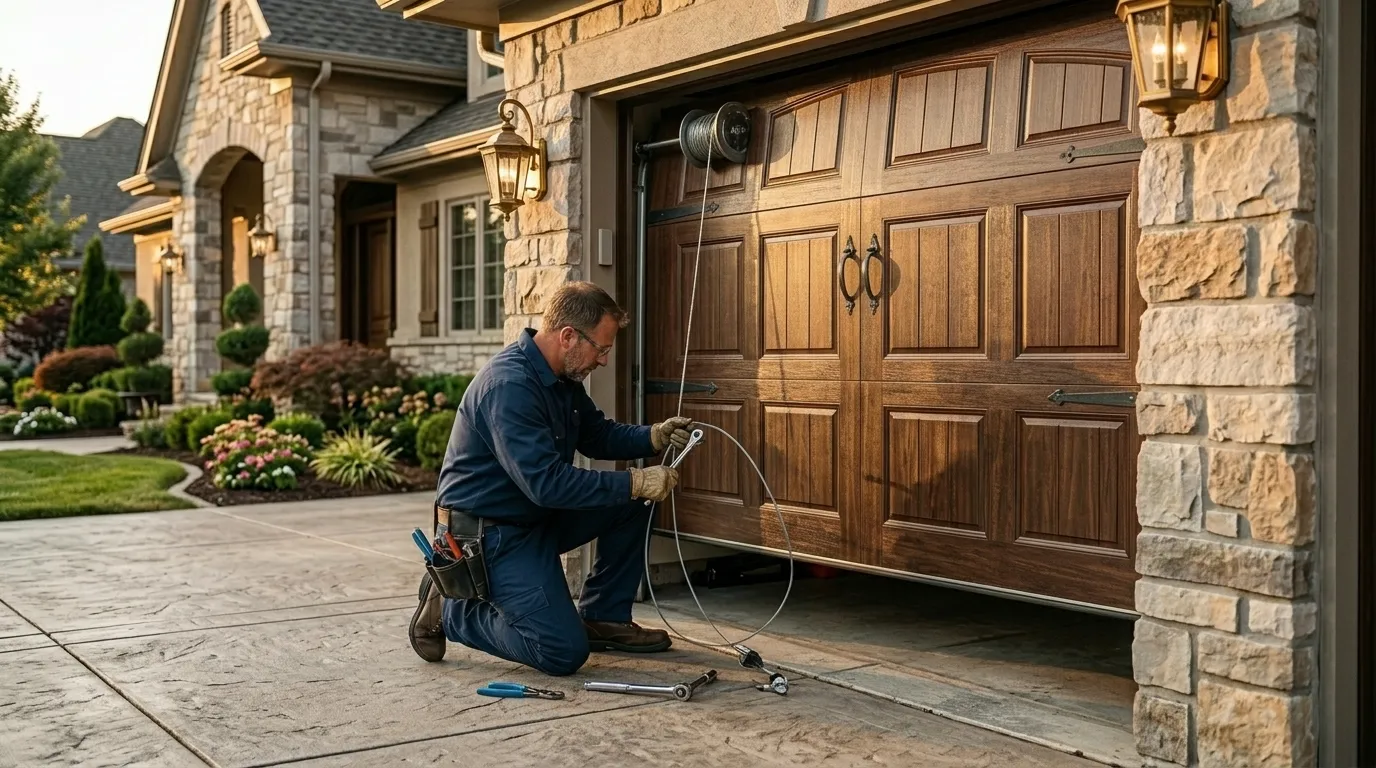
The most common failure we see on doors from Judsonia's era is coil-end rust, which weakens the wire at the winding cone until it snaps under tension - usually on a cold morning when the metal has contracted overnight. A second common issue is a cable that's frayed near the drum from years of the spring compensating for slightly uneven tension, which shows up as a door that drifts to one side as it opens. Less often, we find a spring that was replaced at some point with the wrong wire gauge - too light for the door's weight - which means the opener has been straining for longer than it should have, and that opener may need attention too. The honest limitation here: if the spring is a nonstandard size someone installed off-cycle from the original build, we may need to order the exact match rather than pull it off the truck, and that adds a day or two. We'd rather say that now than promise a same-day fix we can't always deliver.