What Can Go Wrong
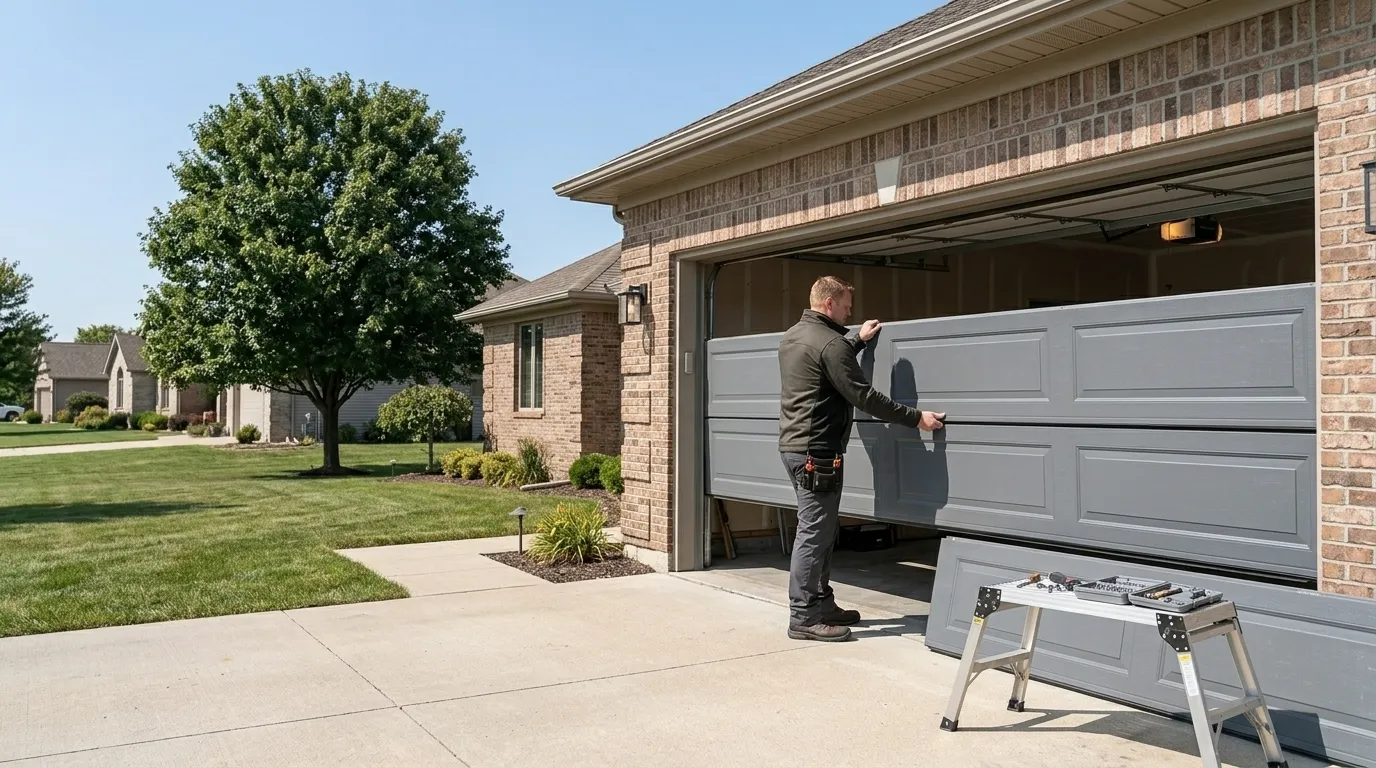
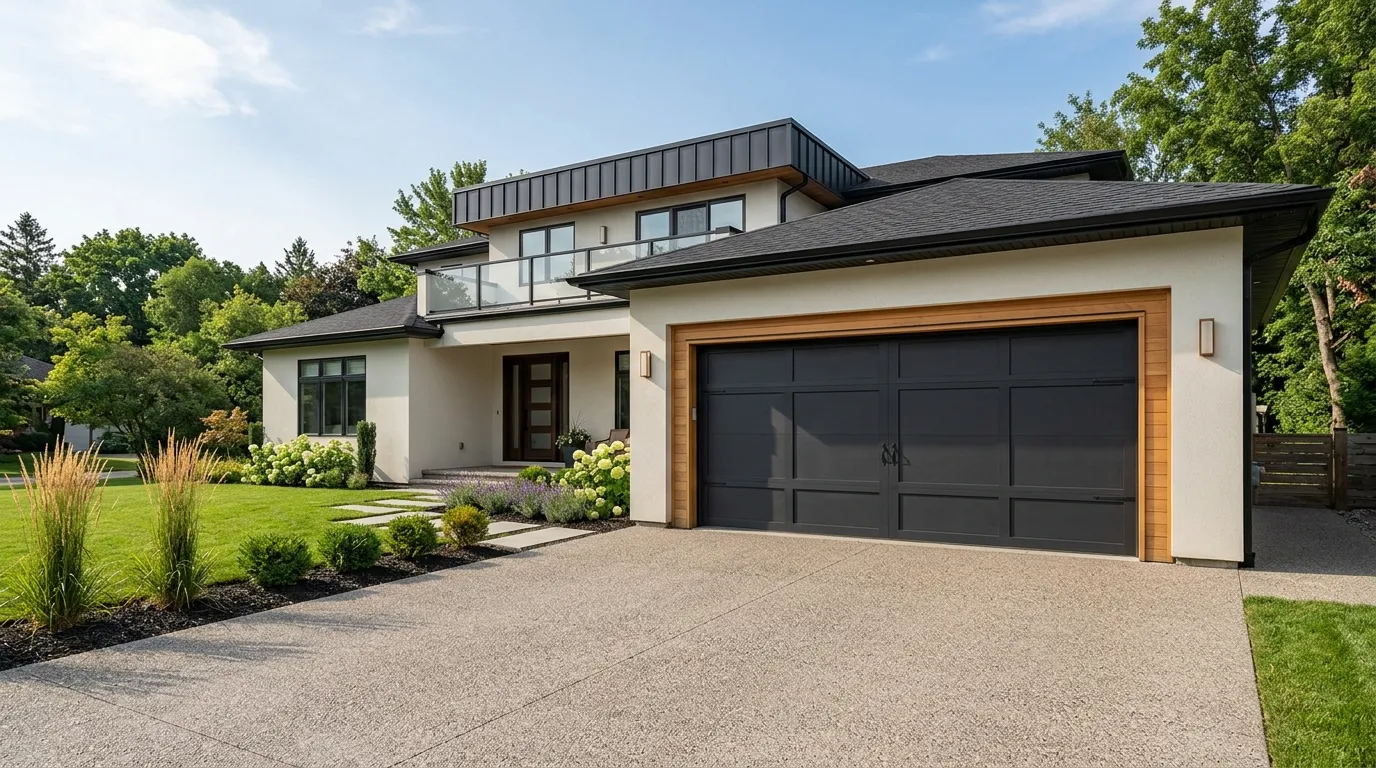
Most houses in Beebe went up around 1997, which puts you square in the era of factory steel sectional doors on standard torsion springs and a chain-drive or screw-drive opener bolted to the same ceiling bracket the builder used. These doors are wider than the older one-piece slabs you'll find in some of the surrounding towns, usually 16-foot doubles, and the torsion springs sized for that width wear on a fairly predictable cycle. After 25-plus years most of what fails is original equipment: the spring finally snaps, the cable frays where it wraps the drum, or the nylon rollers on the original track have worn oval and started binding. Openers from that build era are also reaching the end of their motor life, and the logic boards in them aren't things anyone stocks new anymore. None of this is exotic. It's a door built to a mid-90s spec doing exactly what a 25-year-old door built to that spec does.
Doing It Yourself
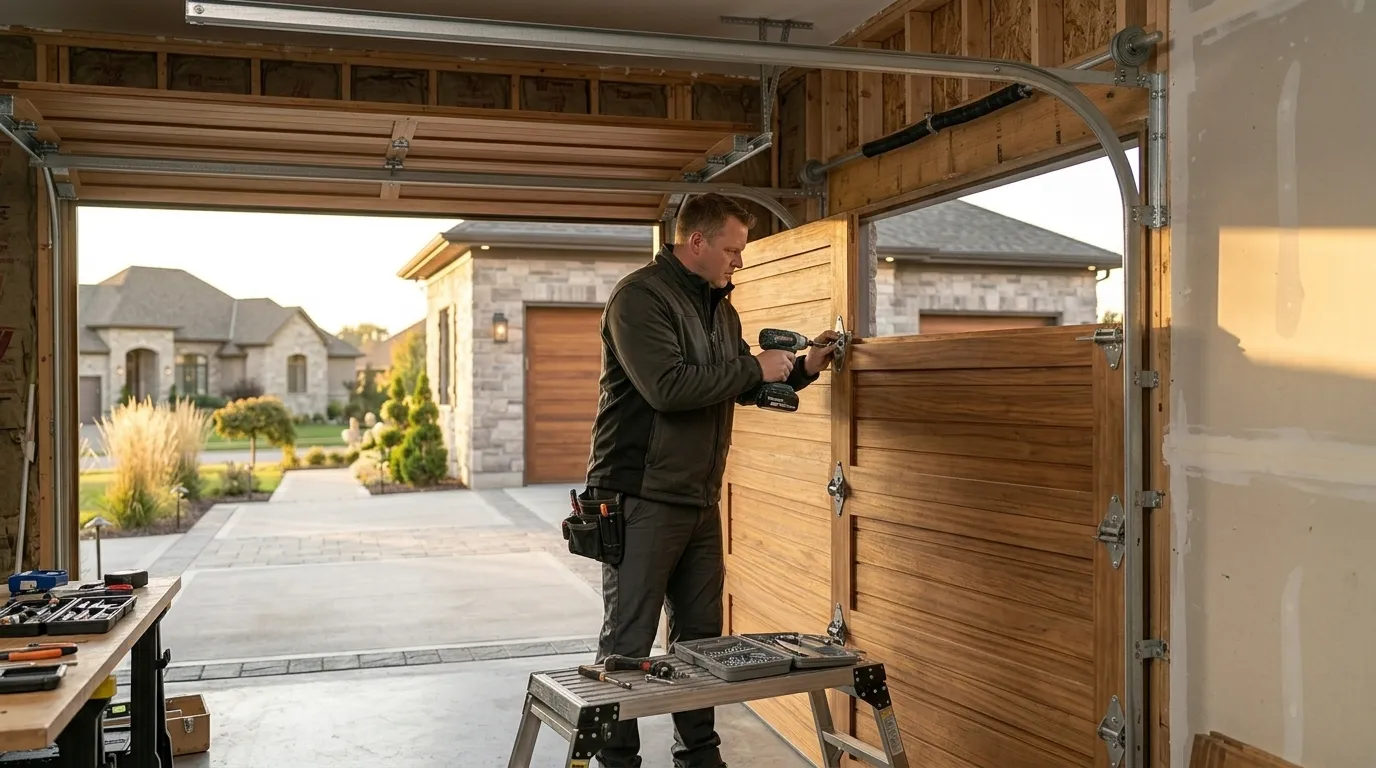
A frayed cable or a slipped roller you can sometimes work around for a day or two by leaving the door up and calling it in. A broken torsion spring, you cannot. The springs on a 16-foot double door built in the 1997 range hold enough stored tension to break a hand or a jaw if you unwind them without the right bars, and we won't talk anyone through that over the phone. Track alignment is a similar story - it looks like a bolt-tightening job and it's actually a geometry job, and getting it wrong walks the door off the rollers the next time it cycles. What you can safely do yourself: check the weatherstrip at the bottom for cracking (the cold-moderate winters here are hard on old rubber), keep the track clear of debris, and listen for a new grinding or popping sound before it becomes a full stop. That's the honest limit of a DIY fix on a door this age.
How It Shows Up
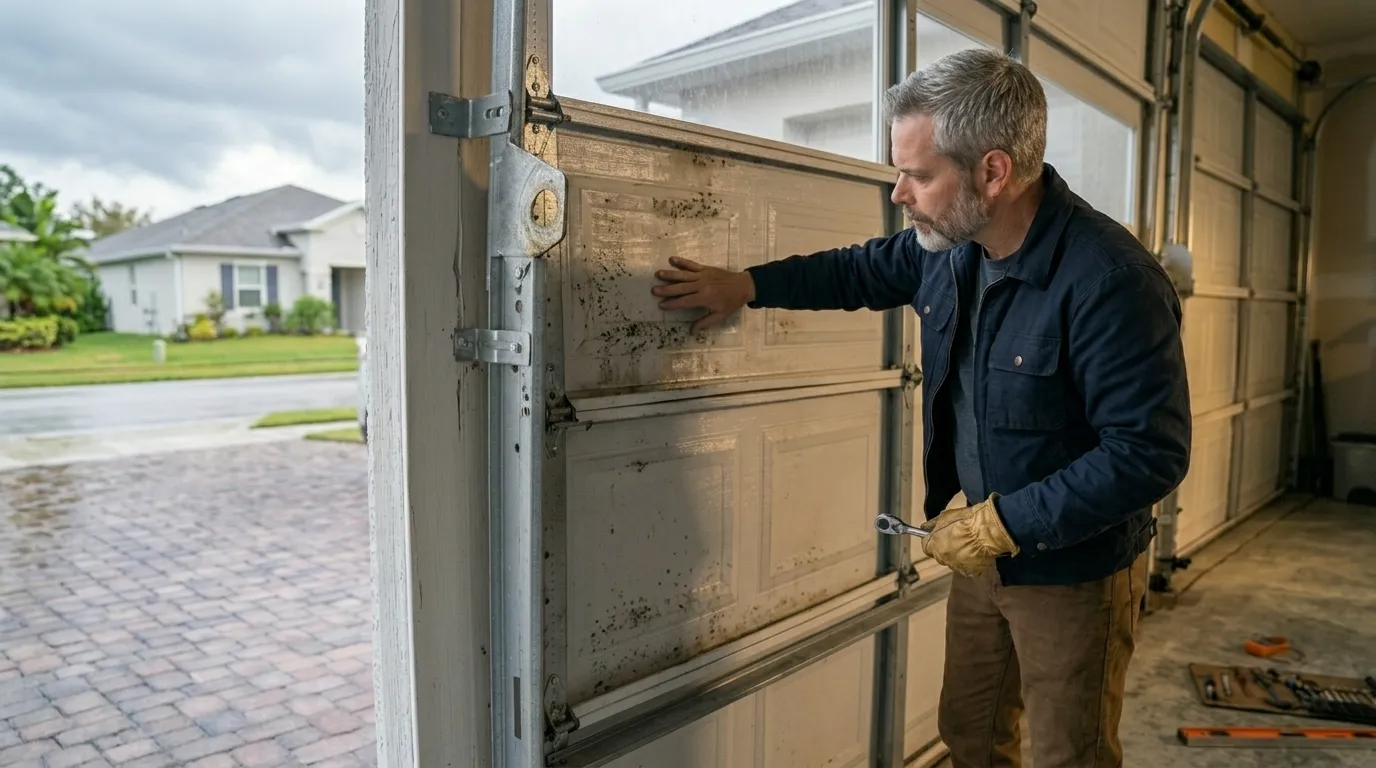
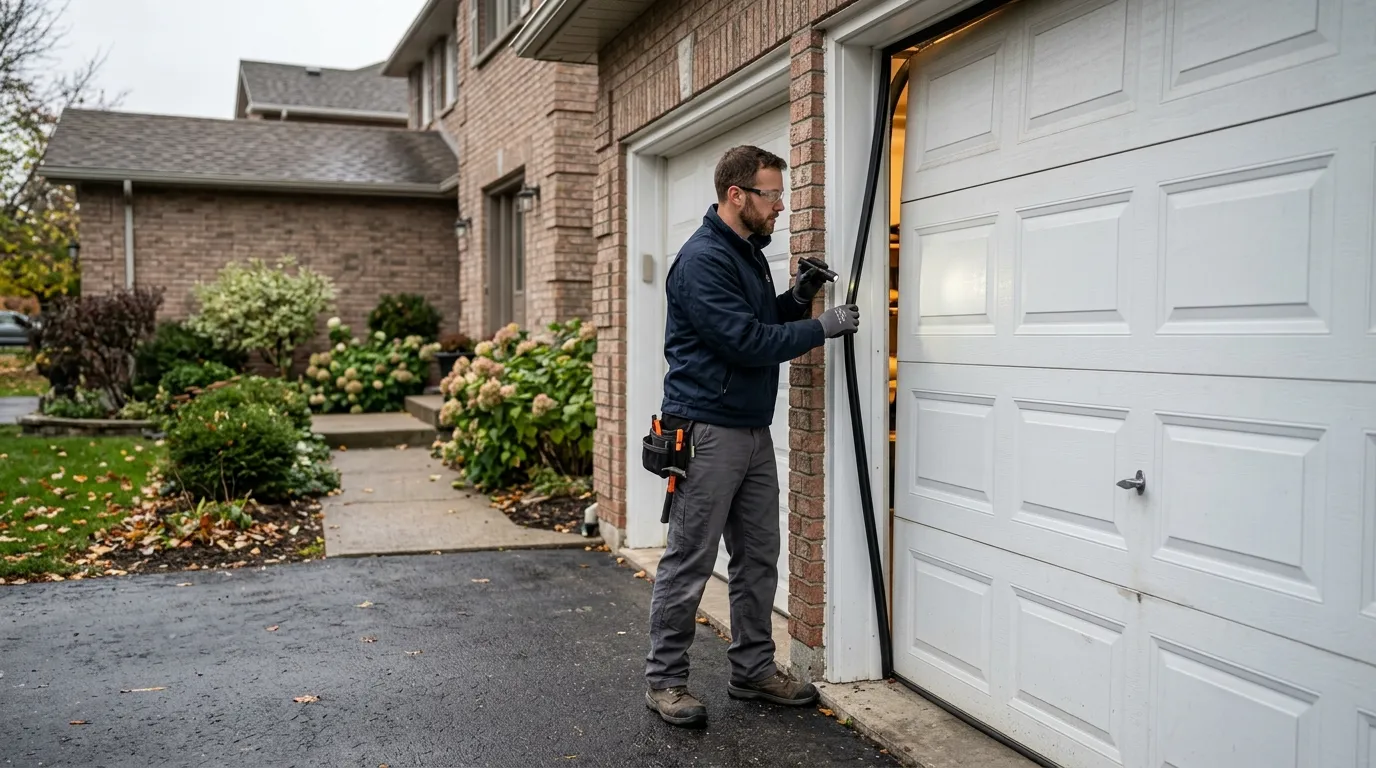
On a door this age the failure rarely comes out of nowhere. A torsion spring usually gives a warning first - a loud bang from the garage (that's the spring itself letting go, not the door falling) followed by a door that won't lift past a few inches, or an opener that strains and reverses. A worn cable shows up as one side of the door hanging lower than the other, or a visible fray near the bottom bracket. A bad roller sounds like a rhythmic knock as the door travels, getting louder over weeks, not days. Original mid-90s openers tend to fail slower: intermittent response, a remote that works some days and not others, a motor that runs hot and shuts off mid-cycle. None of these mean the same thing on a newer door - which is exactly why the age of the housing stock out here matters more than a generic symptom list would suggest.
How Long You Are Without the Door
A snapped spring or a bad cable on a standard 16-foot double is a single-visit repair once the truck is on-site with the right parts - the work itself runs under two hours. What stretches the timeline for Beebe specifically is the round trip: the 15 miles each way means the visit gets scheduled as a full appointment slot, not squeezed between two calls across town. If the opener's logic board or motor has failed rather than just a switch or capacitor, and the unit is old enough that the exact replacement board isn't made anymore, that can mean coming back with a new opener rather than a repaired one, which adds a second visit if the part isn't already on the truck.