What Can Go Wrong
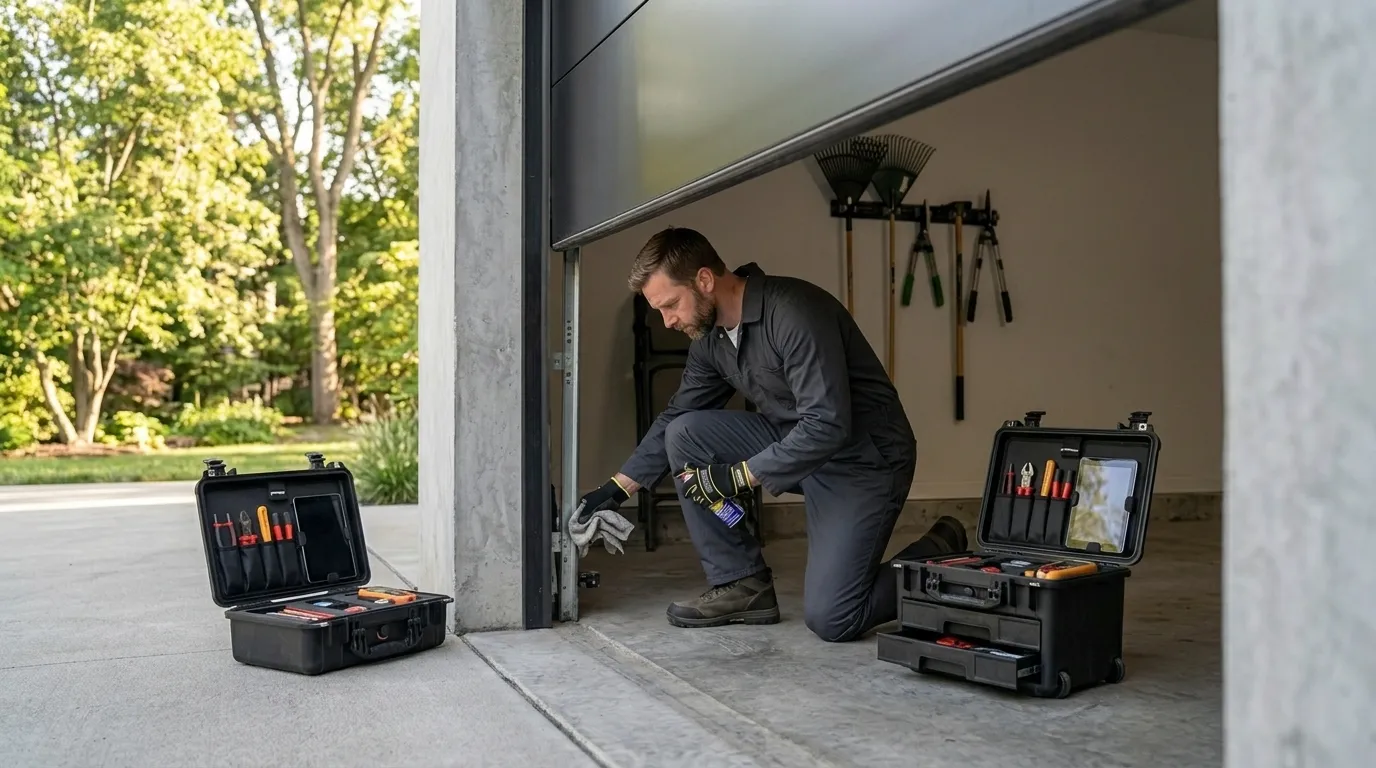
Beebe's housing stock runs newer than a lot of what we see closer to Searcy - the typical home here went up around 1997, later than the 1982 median across the wider service area. That matters for rollers specifically. Builder-grade doors from the mid-90s mostly shipped with plain nylon rollers on stamped steel stems, no bearing, no lubrication built in. Twenty-some years on, those rollers have flat spots, cracked edges, or a stem worn thin enough to bind in the track.
When that stem wears unevenly, the roller doesn't roll clean anymore - it drags, and the track takes the abuse instead. On a cold morning the door can catch right where the track curves into the horizontal run, which is the exact spot rollers fail first. We see this pattern often enough on 1990s-built Beebe doors that it's the first thing we check before touching the opener or the springs.
Doing It Yourself
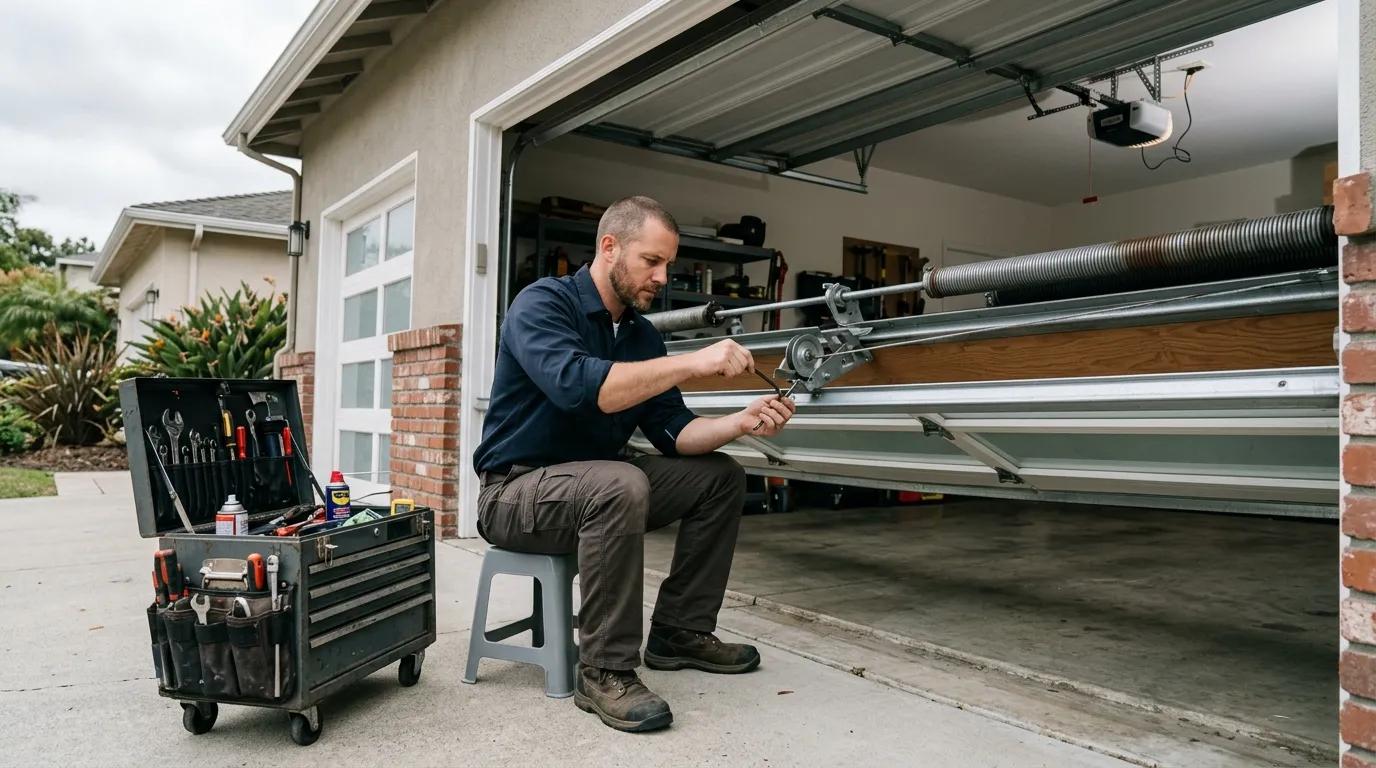
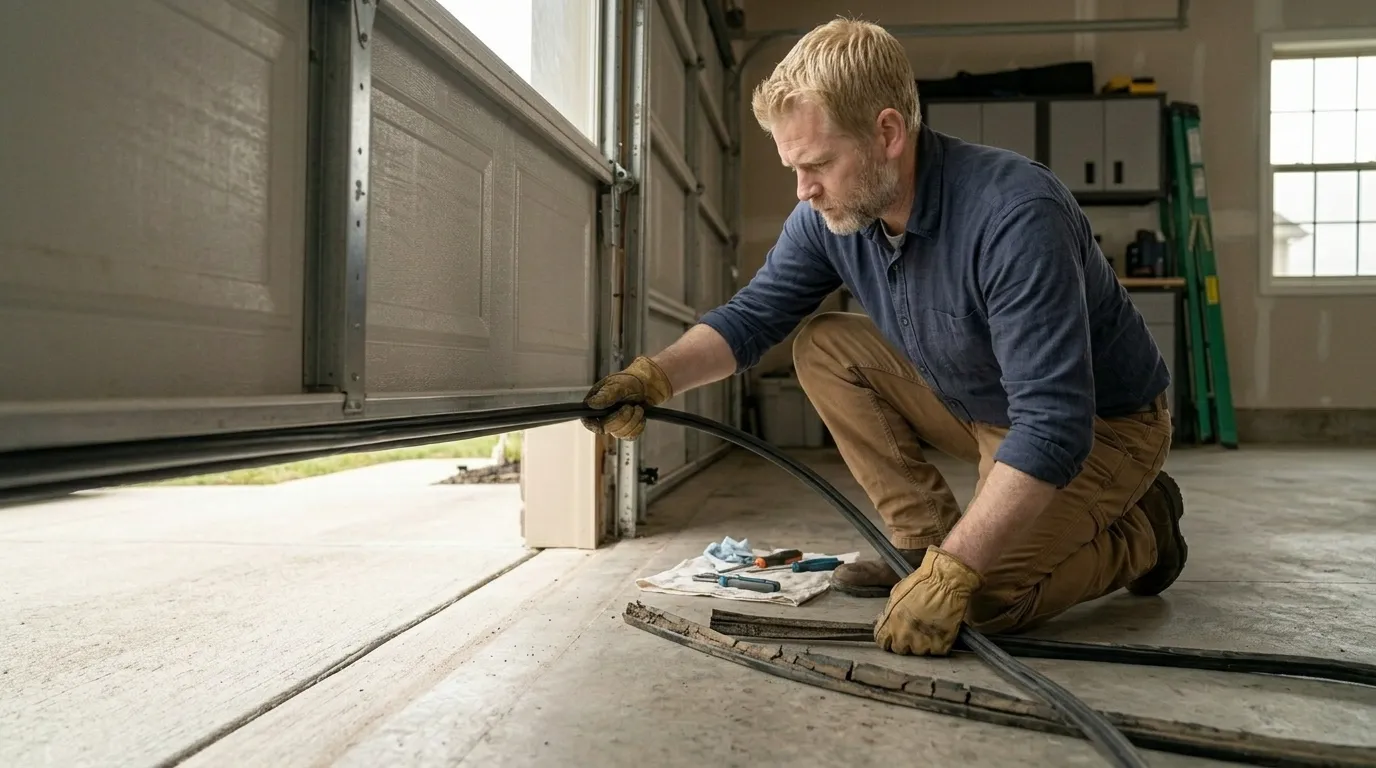
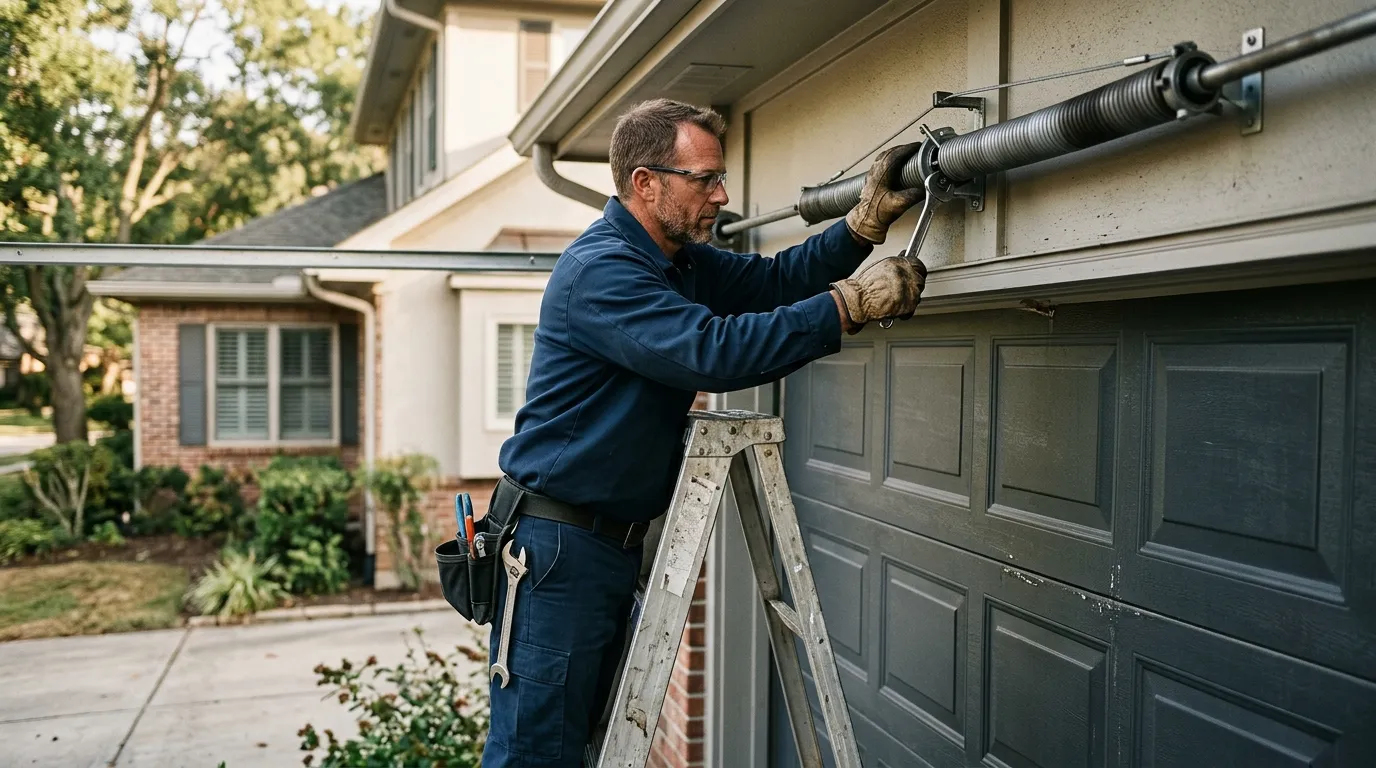
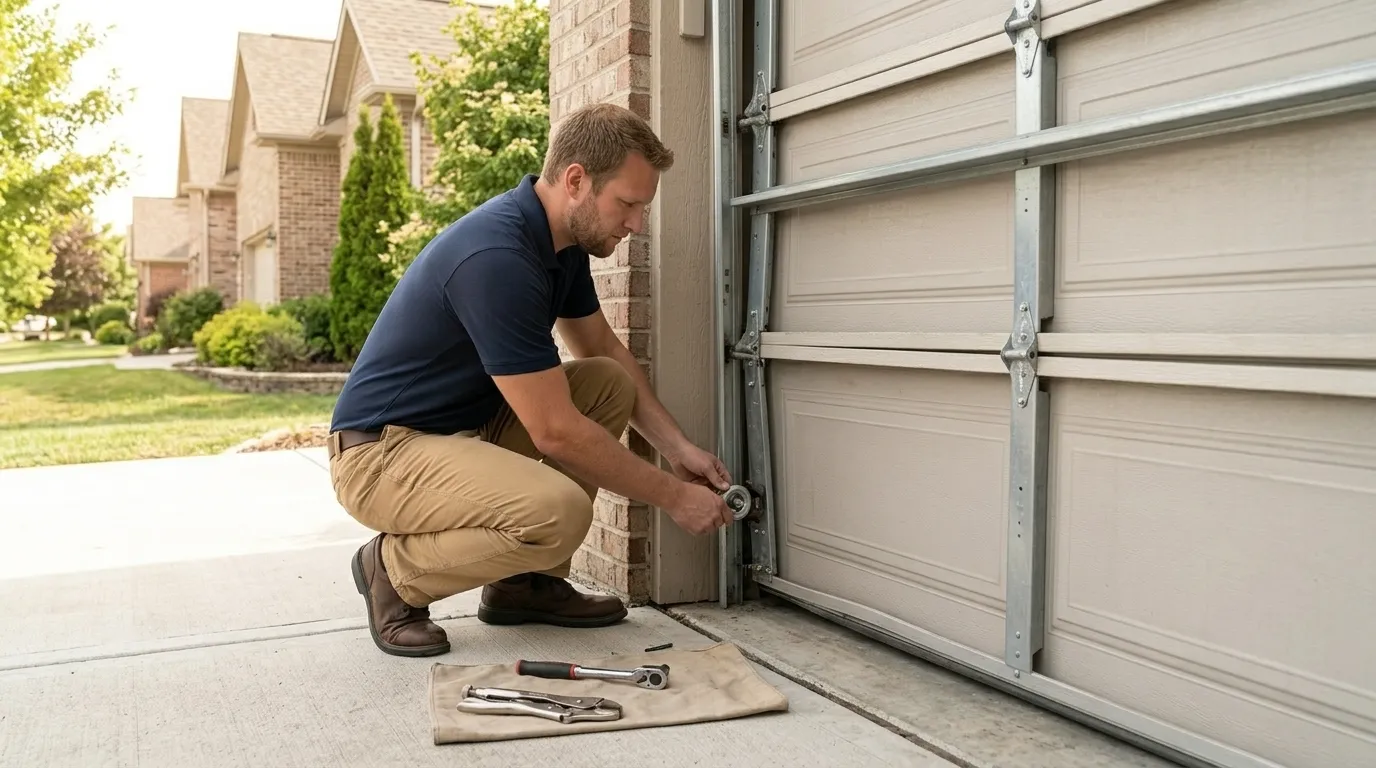
Swapping a single roller on the bottom section isn't a bad DIY job if the door is down and the spring is intact - pull the hinge, slide the old roller out, seat the new one, done. The trouble starts at the top rollers, the ones set in the track right where the cable drum and the torsion spring live under load. Pulling those without releasing tension first is how people lose fingers, not a scare tactic, just how the hardware is built.
We'd rather tell you that straight than sell you a truck roll for a $12 part. If it's one bottom roller and you're comfortable with a socket wrench, go ahead. If any roller near the top brackets is seized or the track itself is bent from the drag, that's where we'd want to look at it before you do.
How It Shows Up
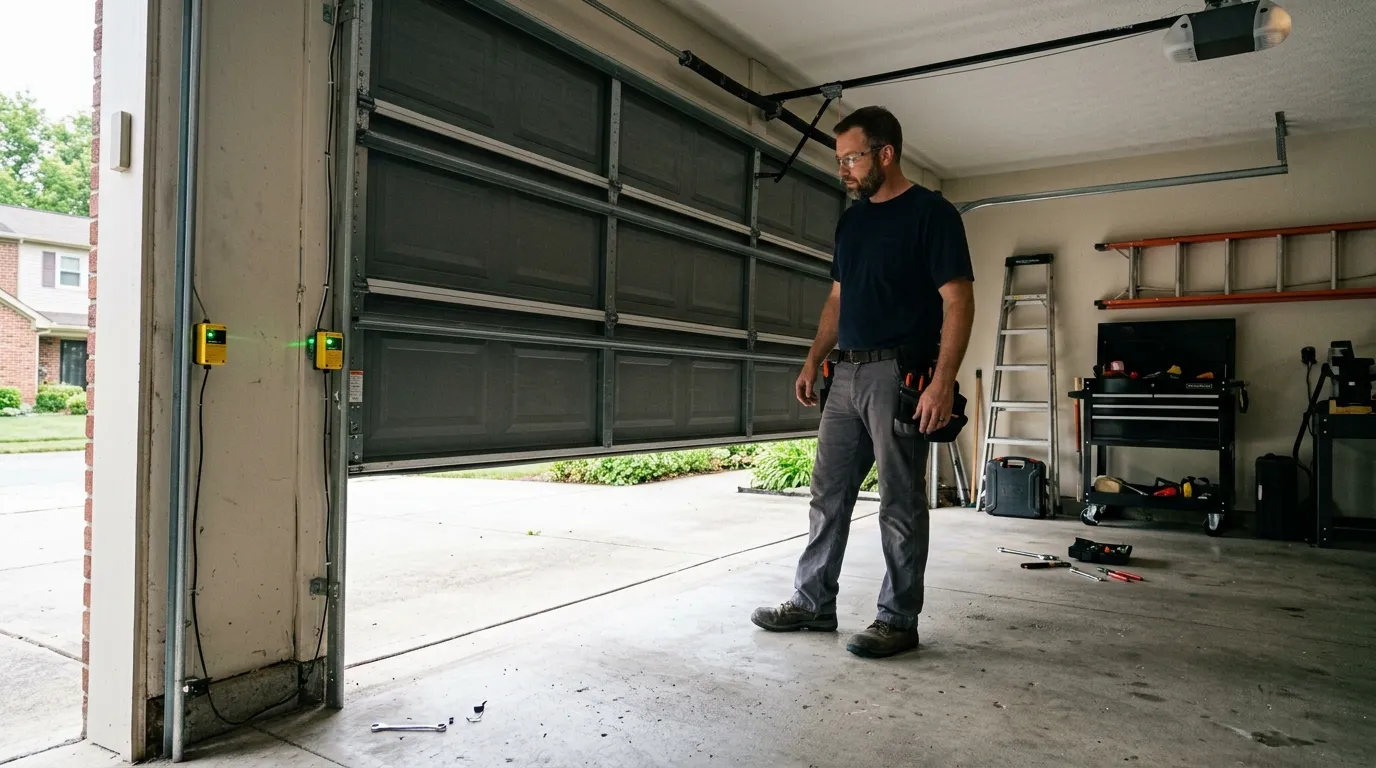
On these later-90s Beebe builds, the first sign is usually noise before it's a jam - a grinding or clicking as the door passes the curved section of track, worse in the morning when the metal's cold and the old grease has gone stiff. Some owners notice the door hesitate or jerk at the same spot every single cycle, which is the tell that one roller, not the whole track, is the problem.
Left alone, a worn roller eventually splits or the stem snaps, and the door can drop off the track on that side. At that point it's not a $12-a-roller fix anymore - you're looking at a bent track section too, and that's a different bill.
How Long You Are Without the Door
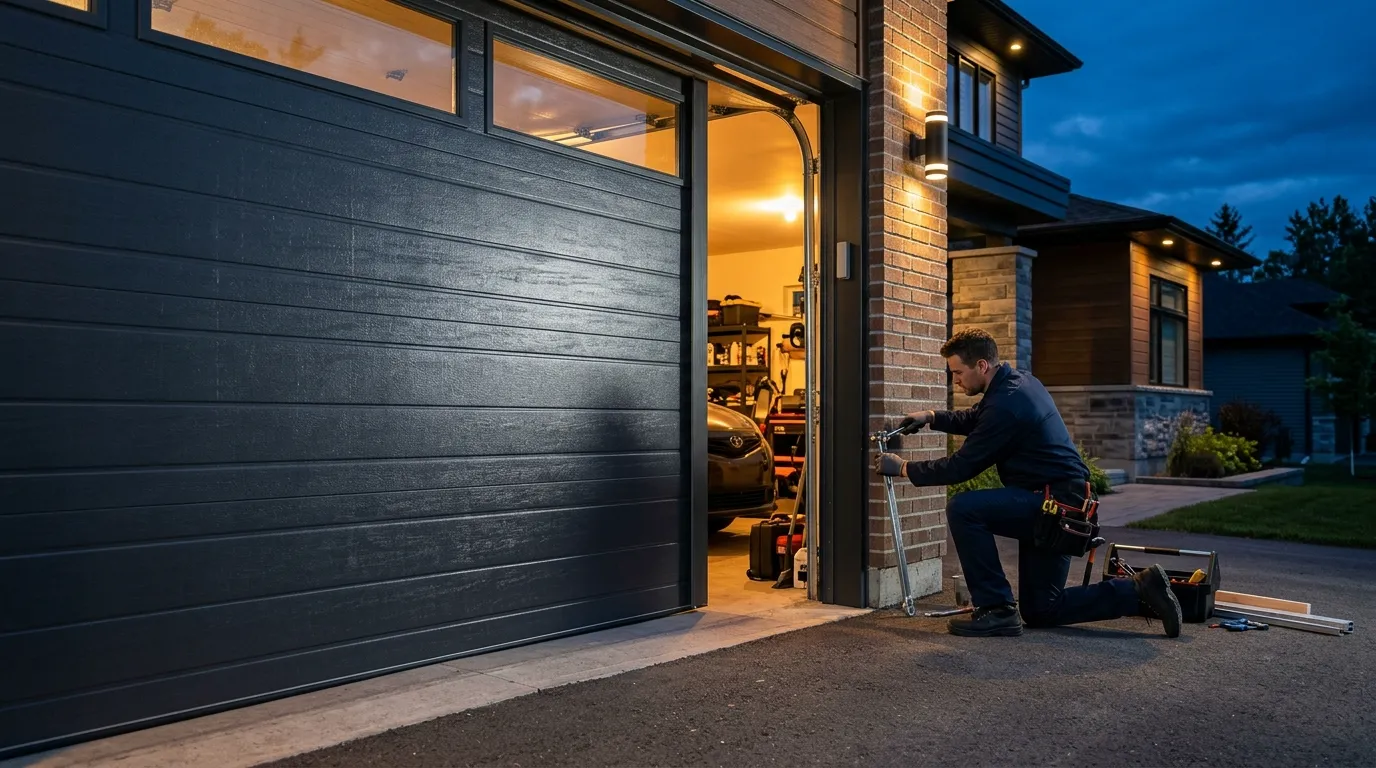
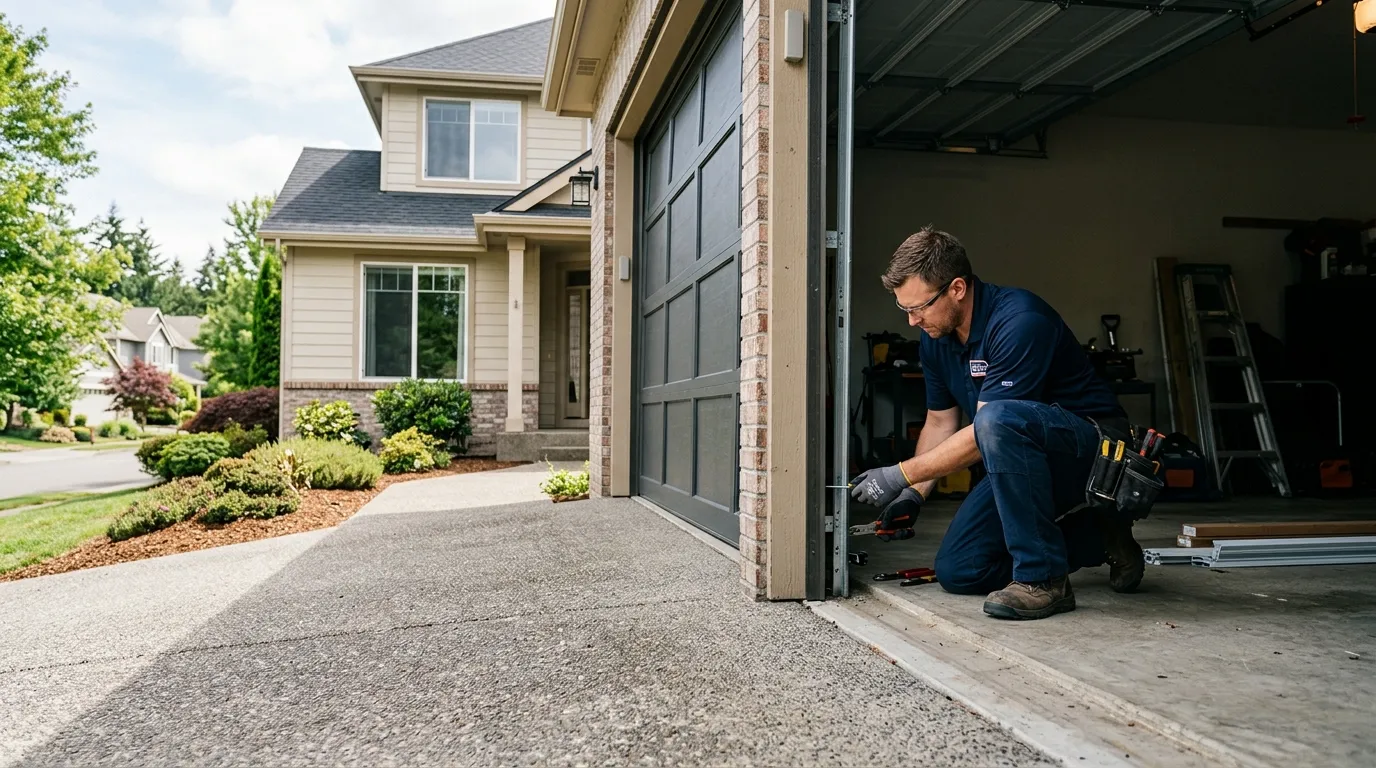
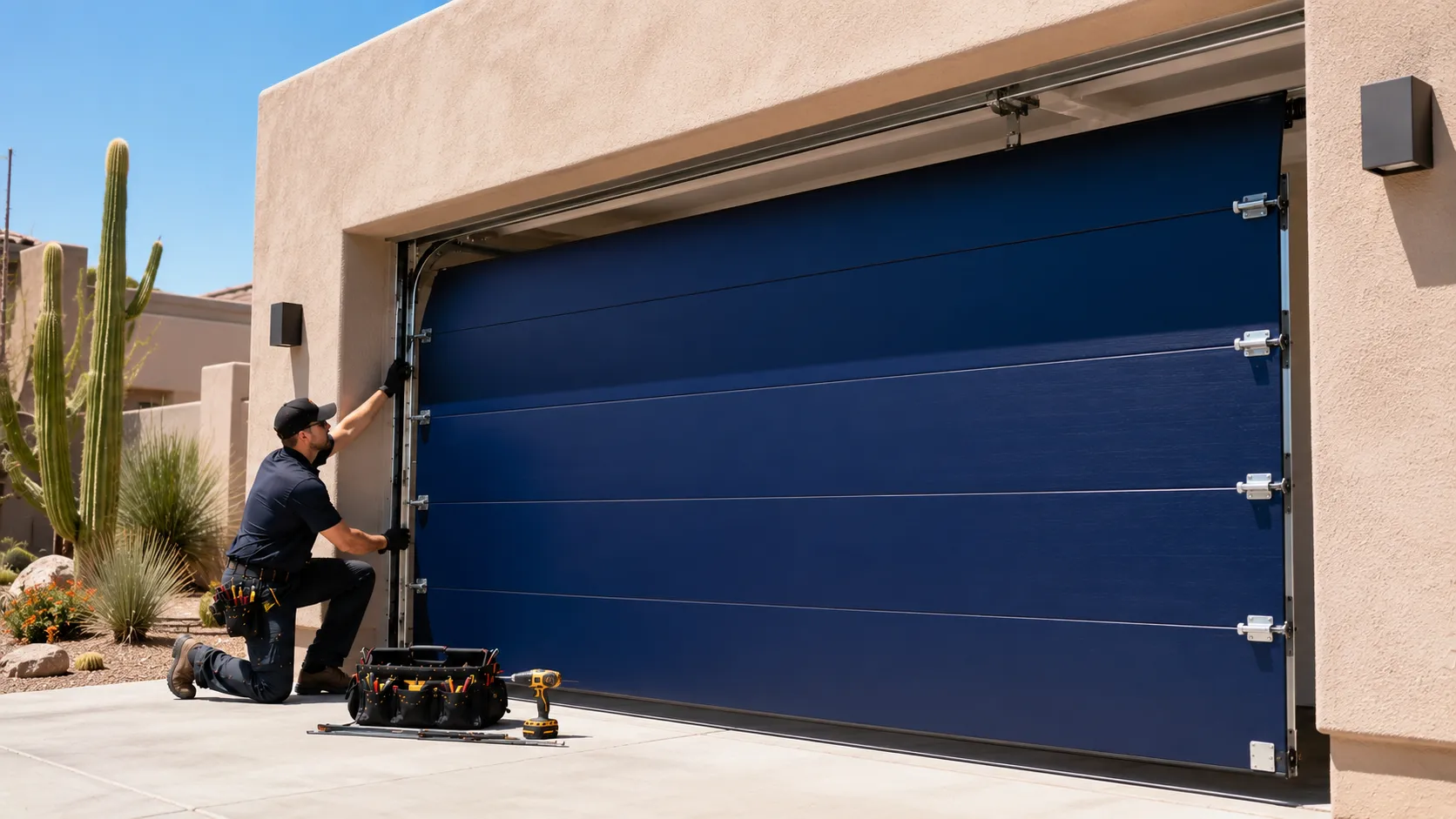
A straight roller swap, once we're on site with the right part in hand, doesn't take the door out of service for long - it's one of the shorter jobs we do. The time that adds up is the 15 miles from Searcy plus whatever we need to check on the track itself if a roller's been dragging a while. If the track's bent from the wear, we're straightening or replacing that section too, which adds time on top of the roller swap itself.