What Can Go Wrong
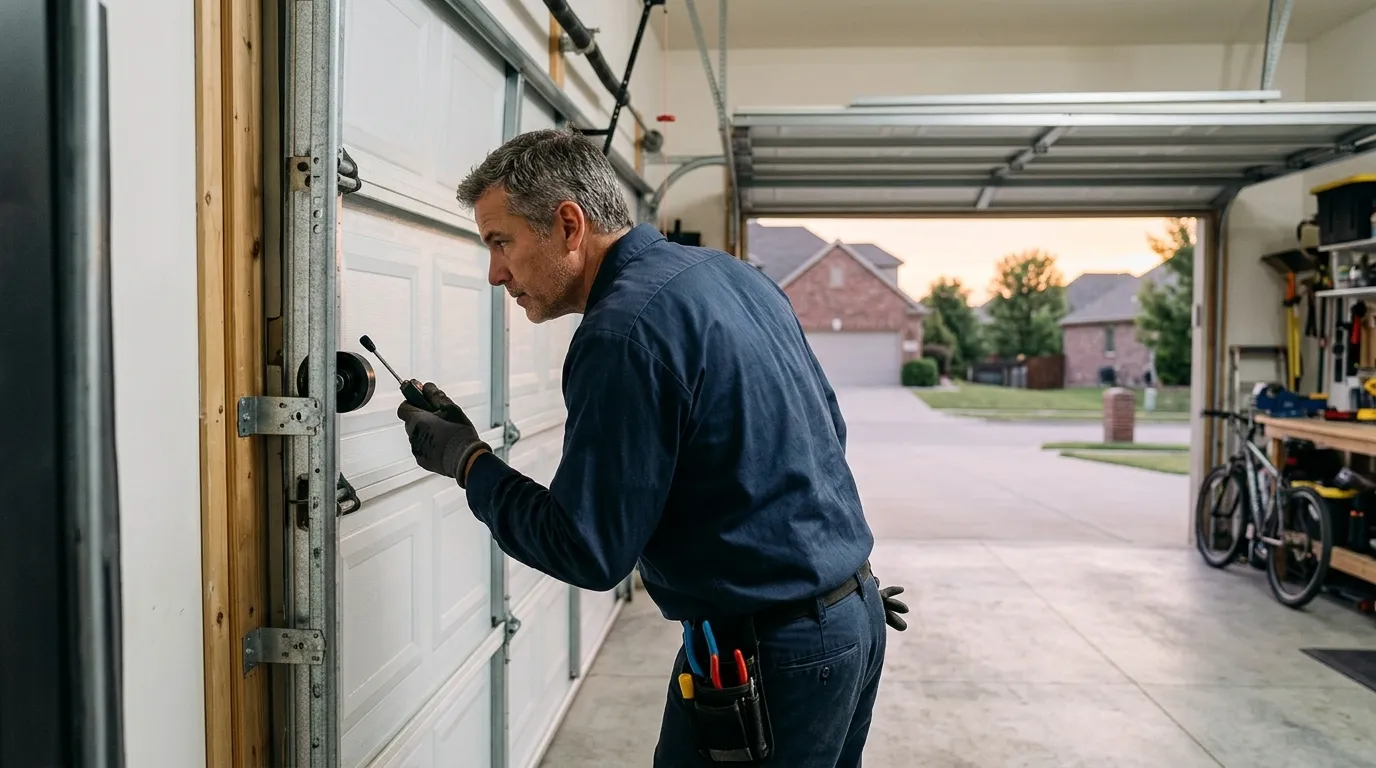
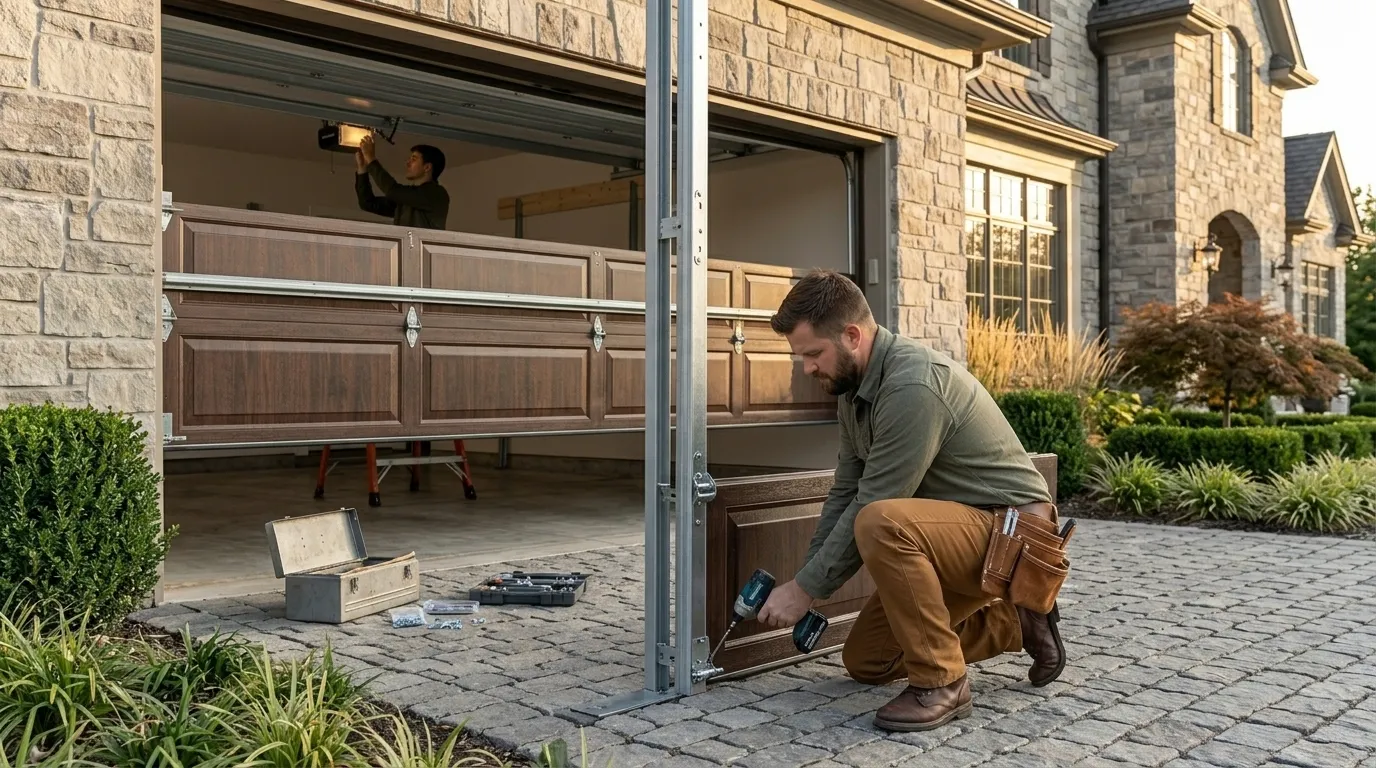
Beebe's median house went up around 1997, noticeably later than the 1982 median across the wider service area we cover from Searcy. That matters for springs. A house from 1997 almost always shipped with a factory torsion spring set mounted on a steel header bracket above the door, not the older side-mounted extension springs you'd find on a 1970s build. Torsion springs are rated in cycles, usually somewhere around 10,000, and a door that opens and closes four times a day runs through that count in six or seven years. So even a house built new in 1997 has likely already gone through one spring replacement, if the springs were never upsized when the door was installed. The failure looks the same either way: the spring snaps, usually with a loud bang, and the door goes dead weight. On these newer builds we also see openers trying to force a door with a broken spring, which burns out the drive gear inside the opener head. That's a second repair riding on the first one if nobody catches it in time.
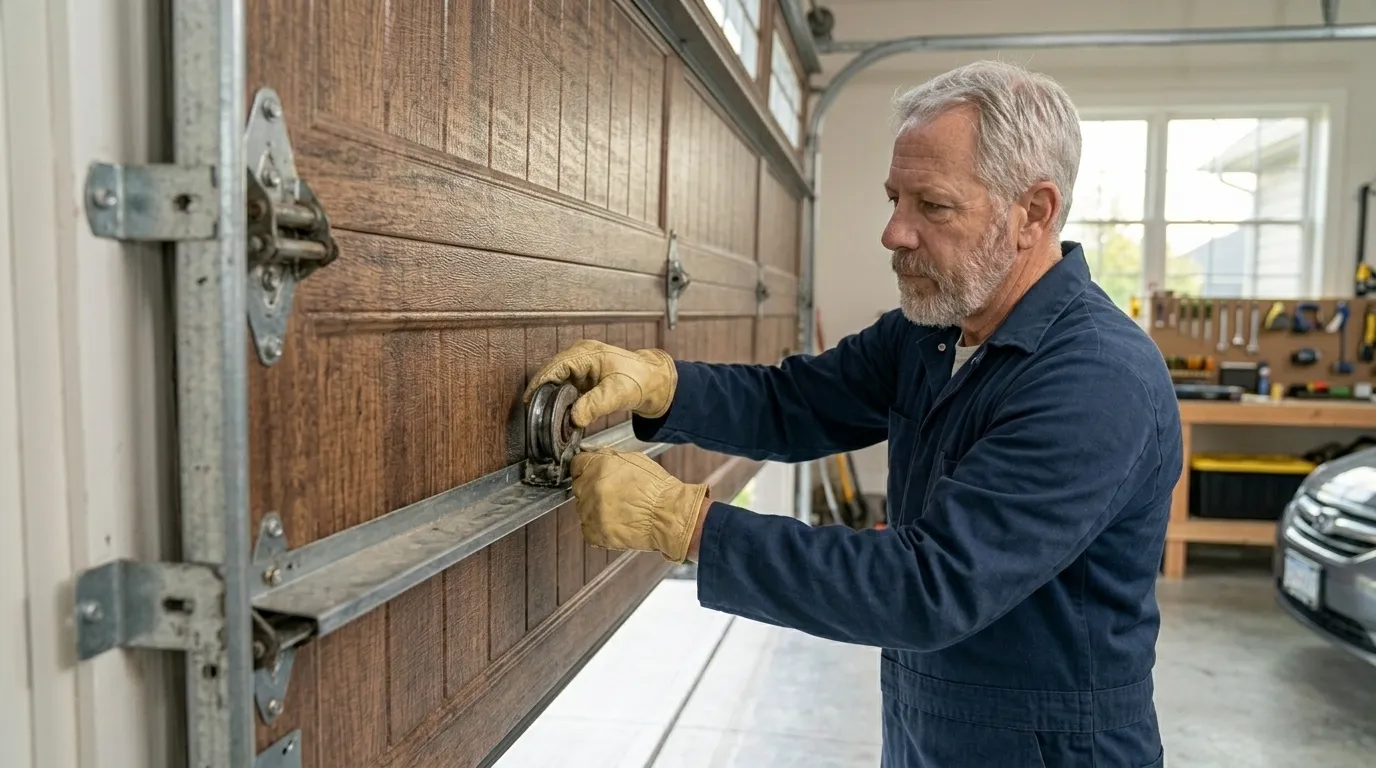
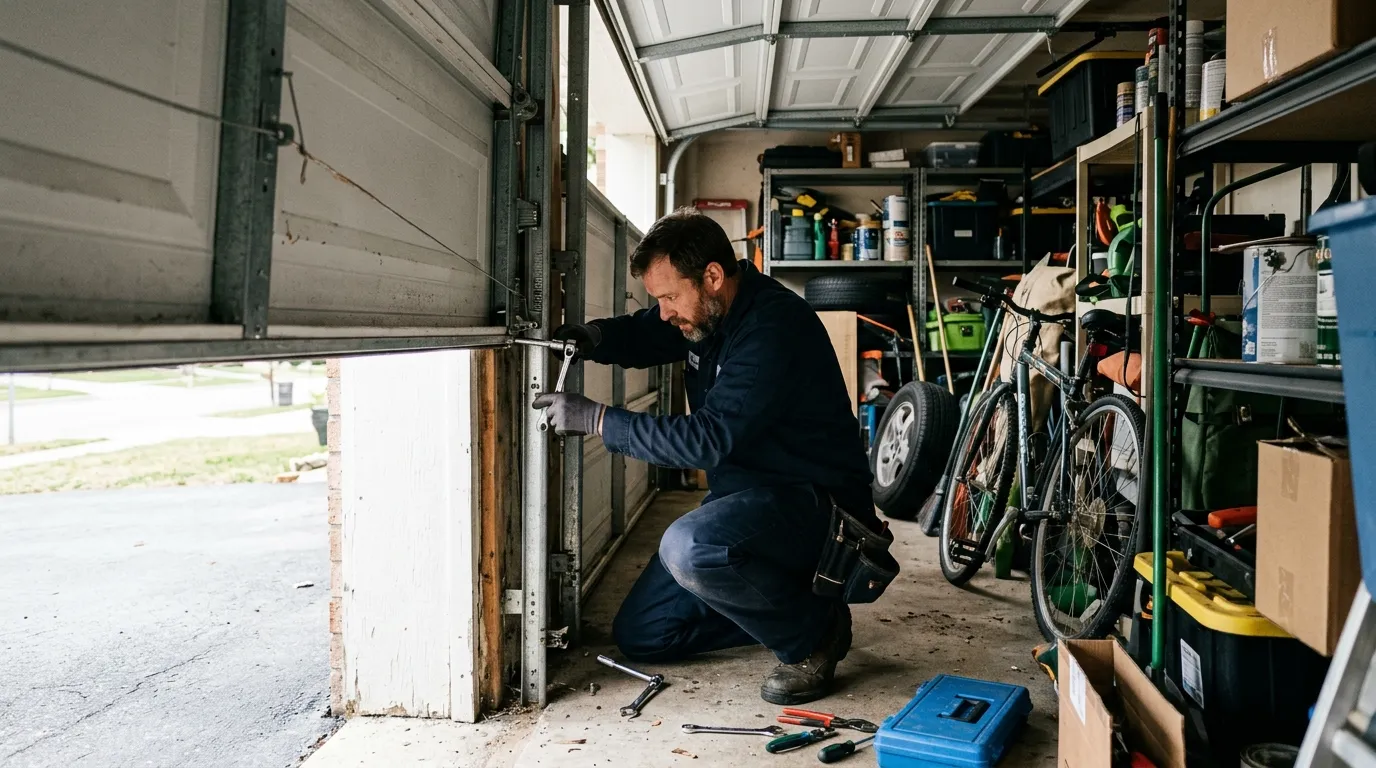
Cables fray at the drum end on these same doors, especially if the door's ever been left half-open in wind. None of this is exotic. It's just what happens to hardware that's been cycling for two, three decades on a standard residential door.
Doing It Yourself
A torsion spring is under enough stored tension to break a bone or worse if the winding bars slip. We're not going to walk you through winding one down or up here, and honestly no reputable company should. What you can safely check yourself: pull the release cord, lift the door by hand, and see if it feels balanced. A door that's roughly weightless at waist height has a spring that's still doing its job. A door that slams down or feels like dead weight has a spring that's broken or badly weakened. If you hear a bang from the garage, don't run the opener again. Running the opener on a broken spring damages the drive gear and sometimes the track, turning a spring job into a bigger bill. Just leave the door where it is and call it in.
How It Shows Up
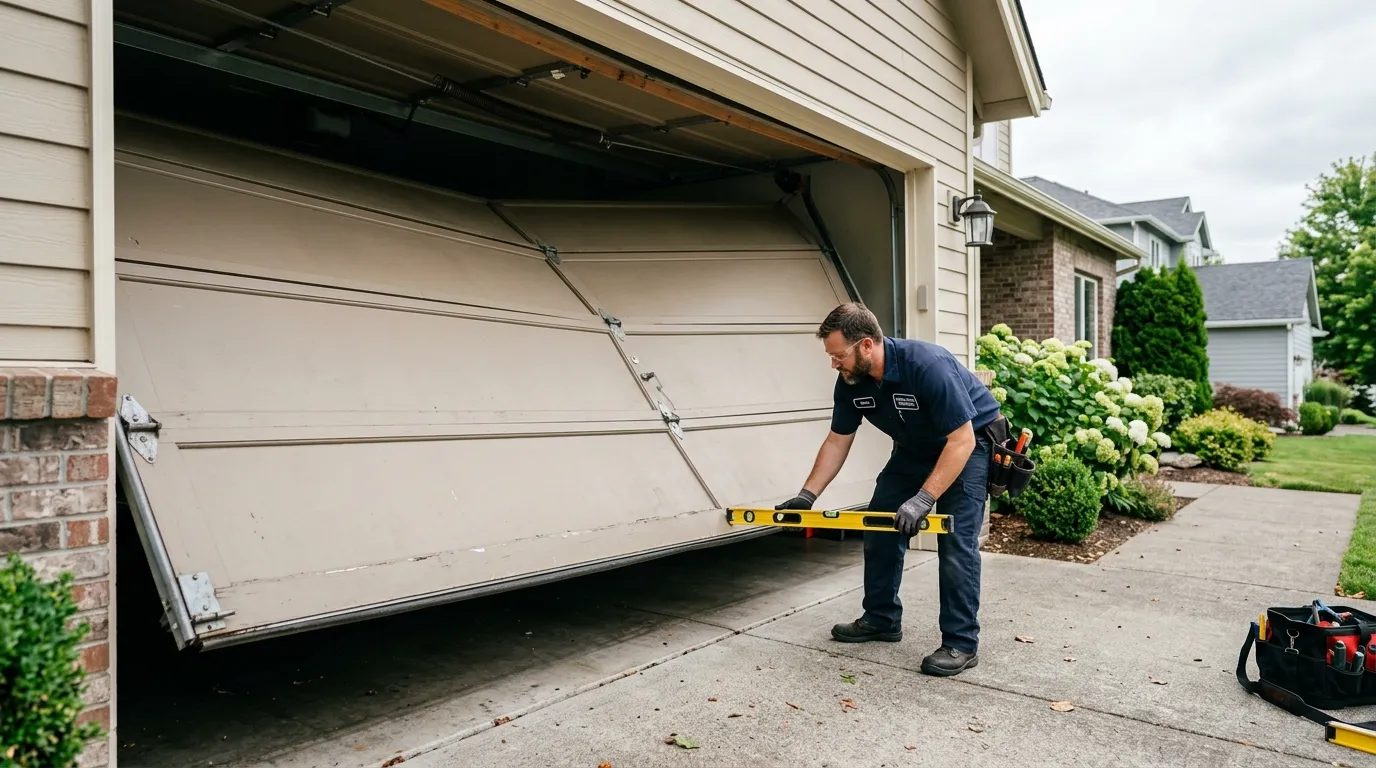
Most calls start the same way: a bang from the garage, then the door won't budge or drops fast when someone tries the opener. On the newer builds common in Beebe, the door itself and the opener are usually in decent shape - it's the spring and sometimes the cable that's given out from age and cycle count, not rust or a warped panel like you'd see on an older door elsewhere in the service area. Occasionally a homeowner notices the door sagging on one side before it fully breaks, which usually means one spring on a double-spring setup has already gone and the other is carrying the whole load.
How Long You Are Without the Door
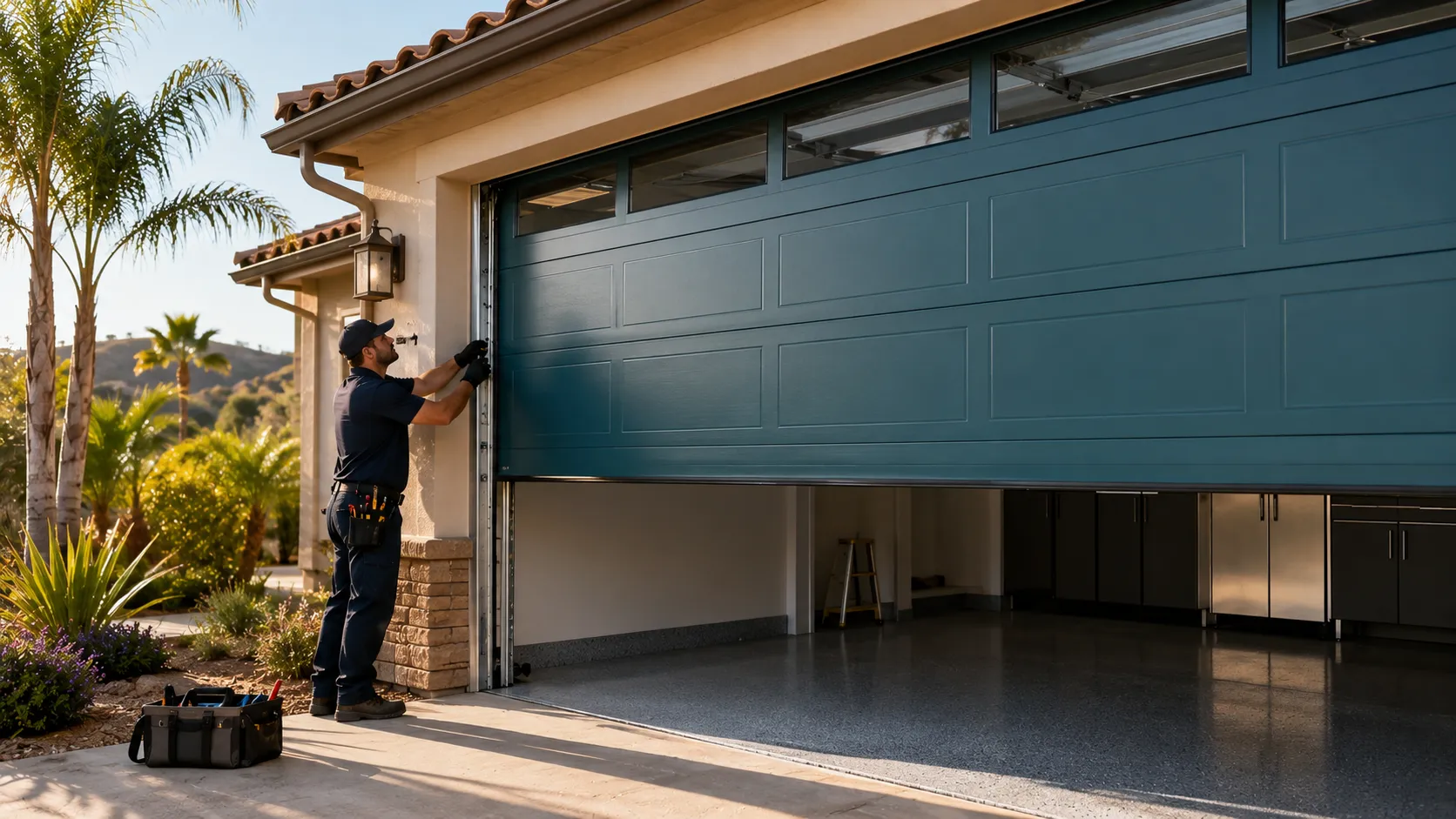
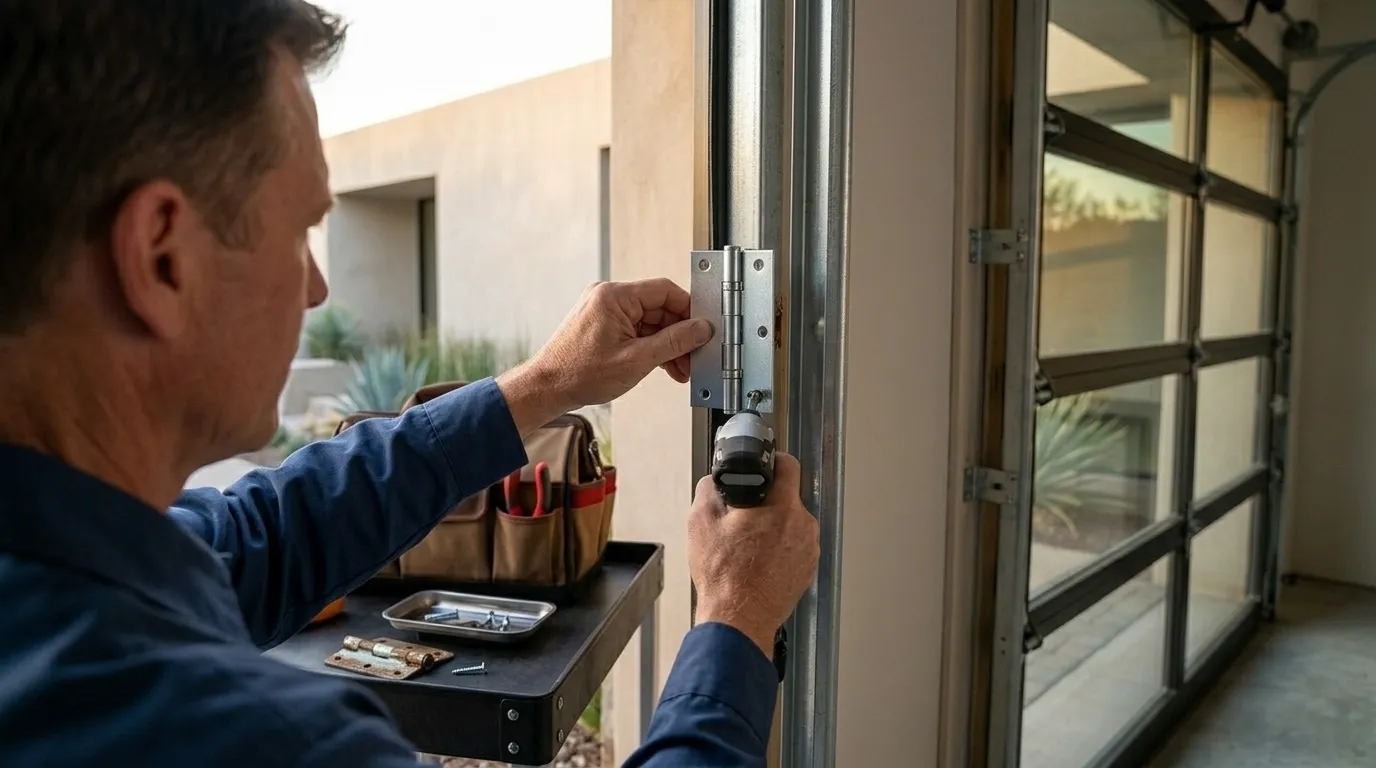
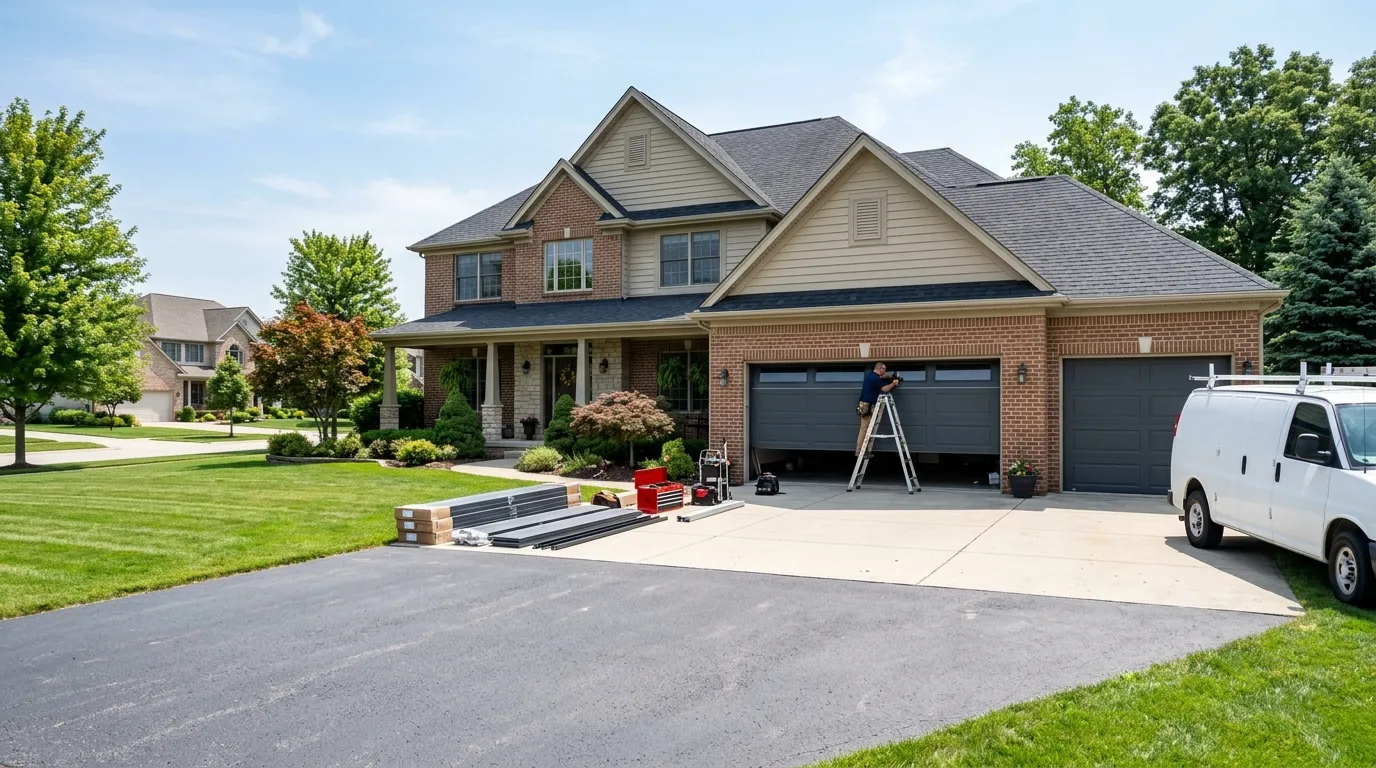
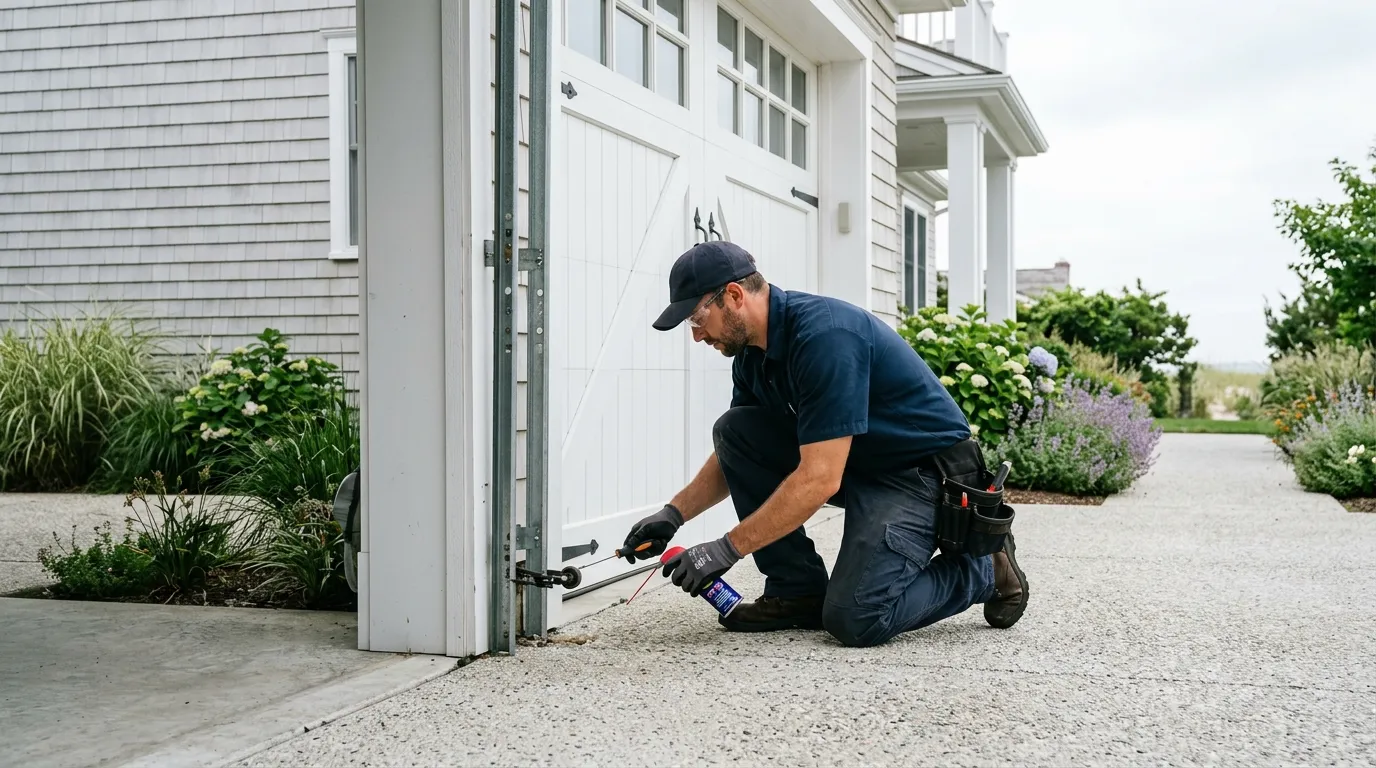
Spring repair itself, once a truck is on site with the right parts, generally runs an hour or two depending on whether it's a single spring or a matched pair, and whether the cables need replacing too. The bigger variable for Beebe is that we're driving from Searcy, so the time from your call to a truck in your driveway isn't the same as it would be for a job inside Searcy proper. If a specific spring size or a less common cable isn't something we carry stocked on the truck, that adds a return trip. We won't promise a same-day fix here - we'll tell you honestly what the parts situation looks like when you call.