What Can Go Wrong
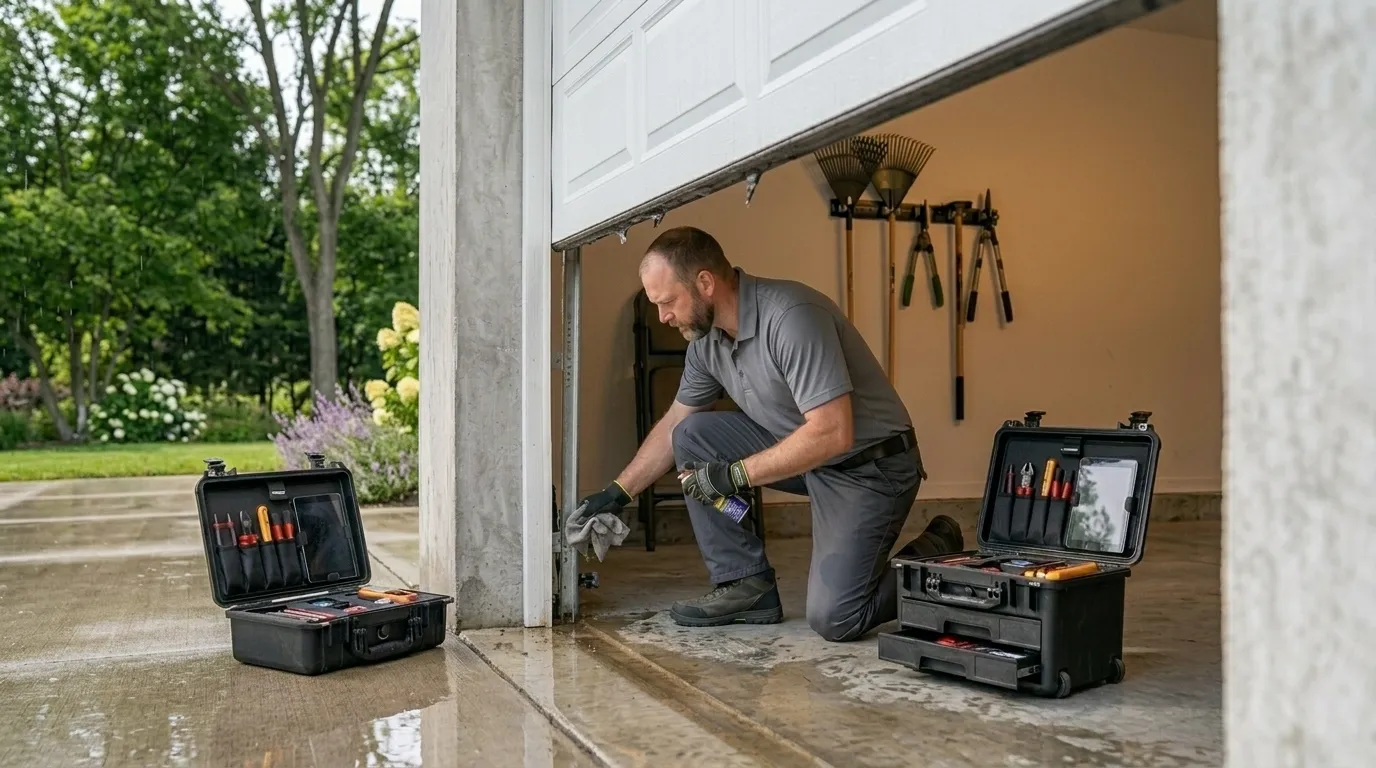
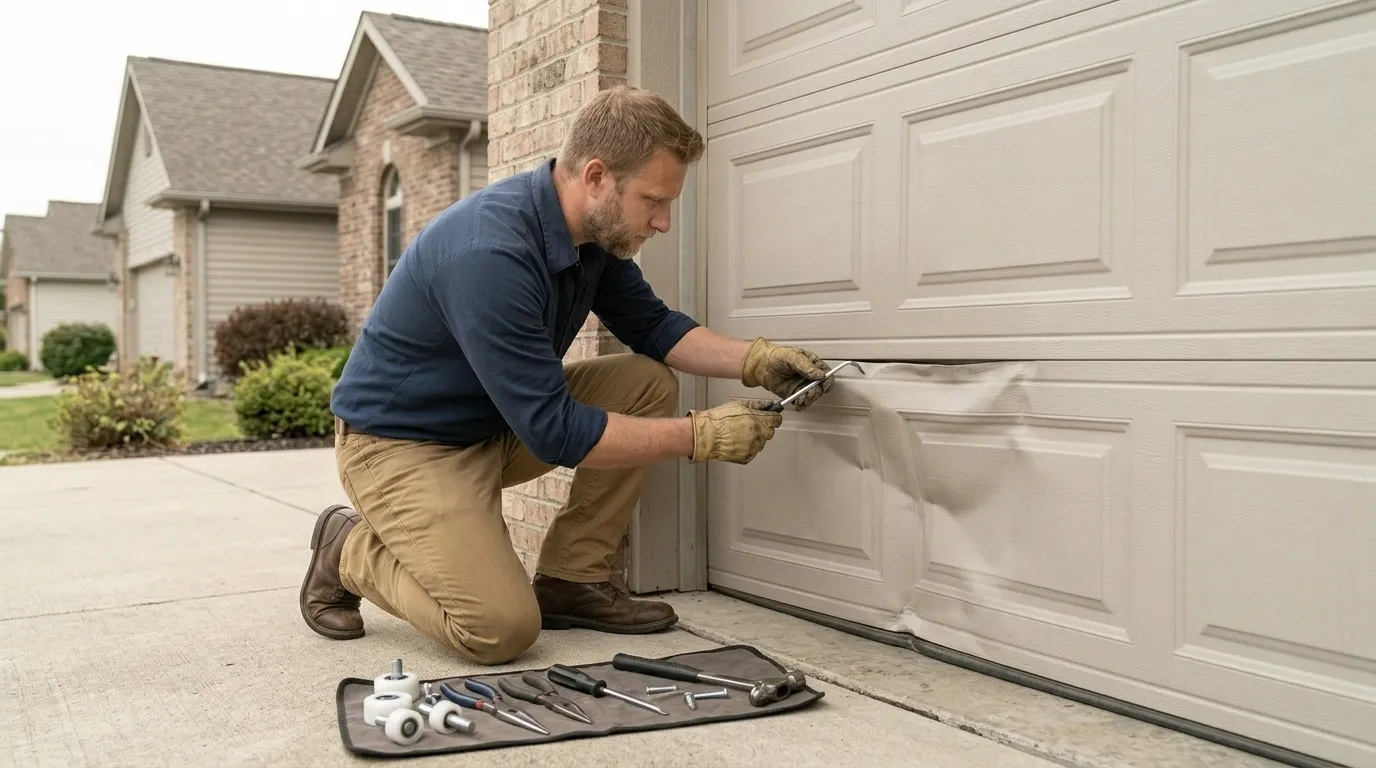
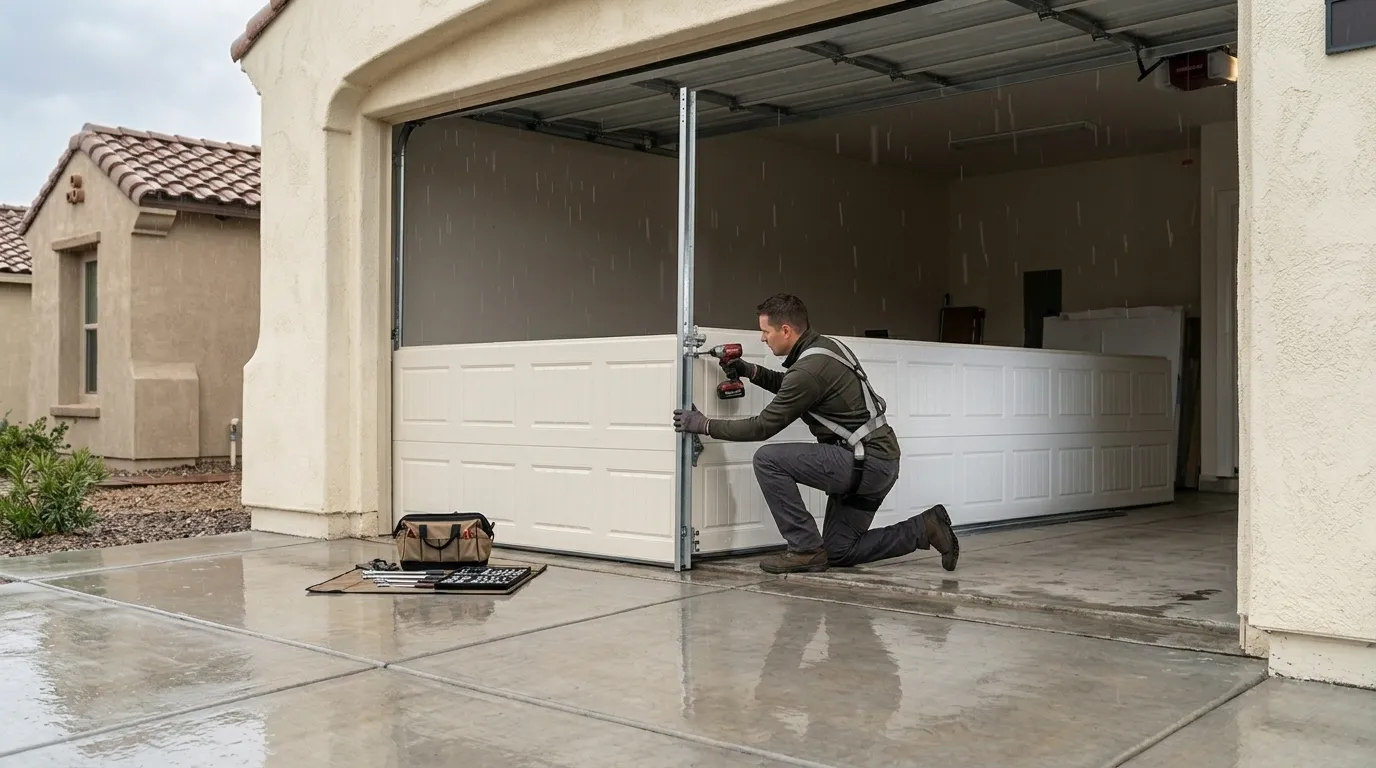
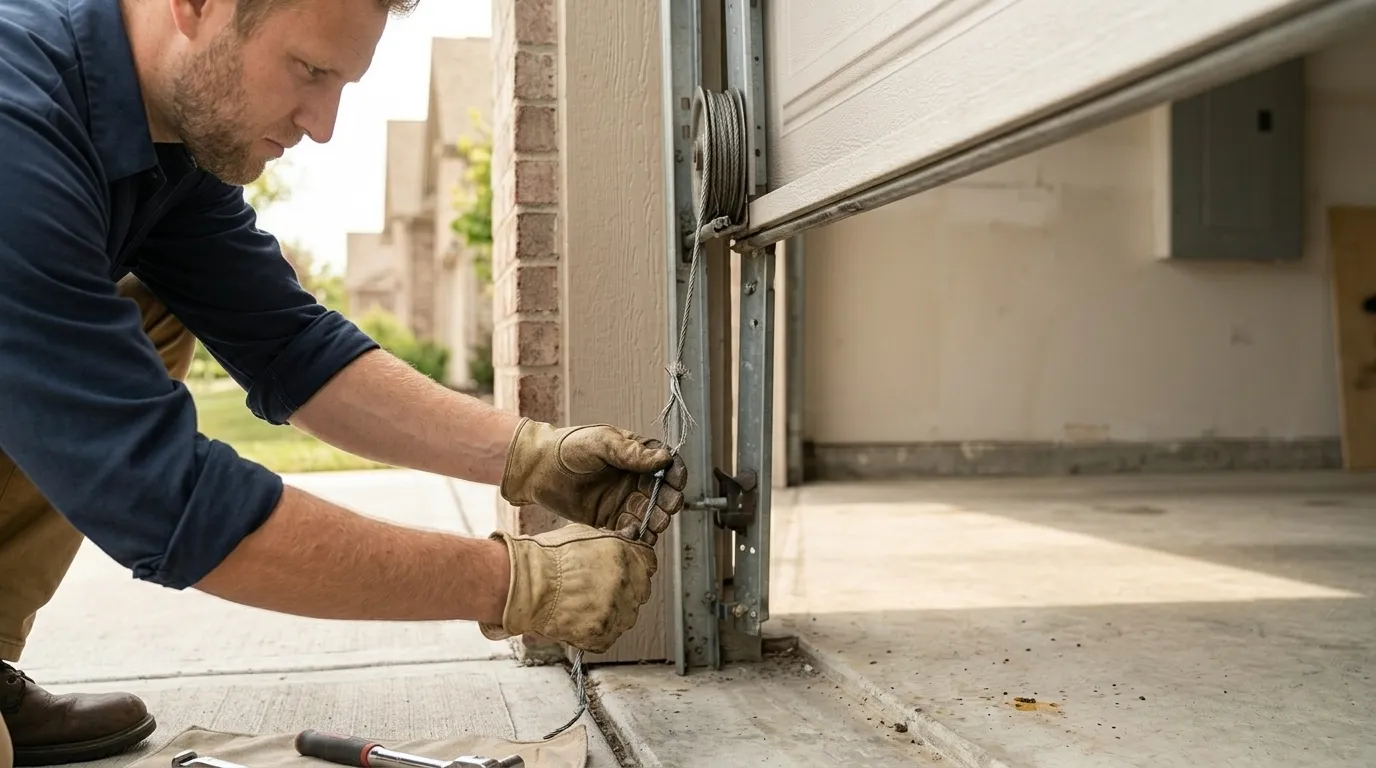
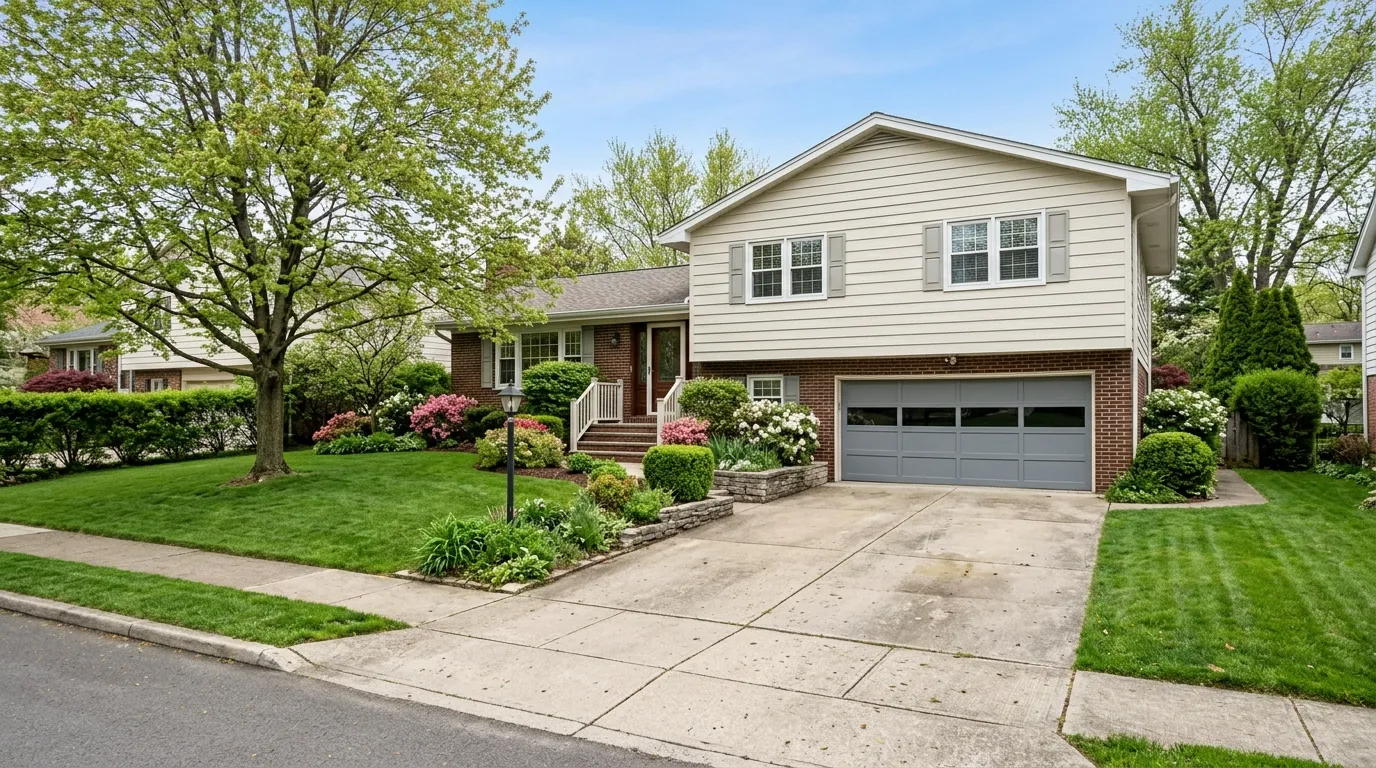
Beebe's housing stock skews newer than the rest of the area we cover out of Searcy. The wider service zone runs a median build year of 1982, but Beebe itself is closer to 1997. That gap matters because it points to a different door on the other side of the dent. A house built in 1997 almost certainly has a steel raised-panel door on torsion spring hardware, not the older extension-spring flat panel setups still common in the oldest parts of Searcy's coverage area. The failure we see most in Beebe is a single panel caved in from a backed-into car or a wind-driven branch, with the rest of the door and the opener still fine. Sometimes the damage is only cosmetic - a dent that doesn't affect travel. Other times a bent panel throws the whole door out of square and it starts binding in the tracks on one side. We'll tell you straight if it's the panel alone or if the impact knocked a hinge or roller out too, because those get replaced separately.
Doing It Yourself
A single panel swap sounds simple and sometimes is, if you can match the exact panel style, color, and window layout from the original run. That's the part that trips people up - a lot of steel door lines get discontinued or changed within a few years, so a 1997-era door may not have an exact match sitting on a shelf anywhere. We check the manufacturer and model before we quote anything. If your door is a double-wide with insulated panels, don't try to pull one section out yourself. The panels are usually pinned together and stapled to the tracks with the spring still under tension, and disassembling that wrong can put the whole door out on you at once. If it's cosmetic only and the door still opens and closes square, you can leave it be for a season - that one's genuinely optional. If it's binding, warping, or letting daylight through the seam, don't wait.
How It Shows Up
On a 1997-built house, panel damage usually shows up as a clean dent or crack in one section of a steel door, sometimes with the insulation foam visible through a split seam. Because most Beebe doors are newer than the older stock elsewhere in this service area, you're less likely to be dealing with rot or delaminated wood panels and more likely dealing with a factory-finish steel skin that's bent but not rusted through. Cold-climate moderate conditions in this part of Arkansas mean insulated panels are common, and once the foam core is exposed to weather it can hold moisture and start to sag over a season or two if it's not replaced. That's the difference between a panel job you can leave alone for a while and one that turns into a bigger repair if you wait.
How Long You Are Without the Door
A single panel that's in stock is usually a same-visit swap once we're on site - the door stays operable the whole time except for the hour or so we're actually working on it. The wait is almost always upstream of that: ordering a panel that matches an older or discontinued run can take longer than the repair itself. We don't sit on a quote hoping the part shows up faster than it will - we tell you the real lead time as soon as we know the door's brand and model, and you decide whether to wait for the matched panel or replace more of the door at once to get back to a uniform look sooner.