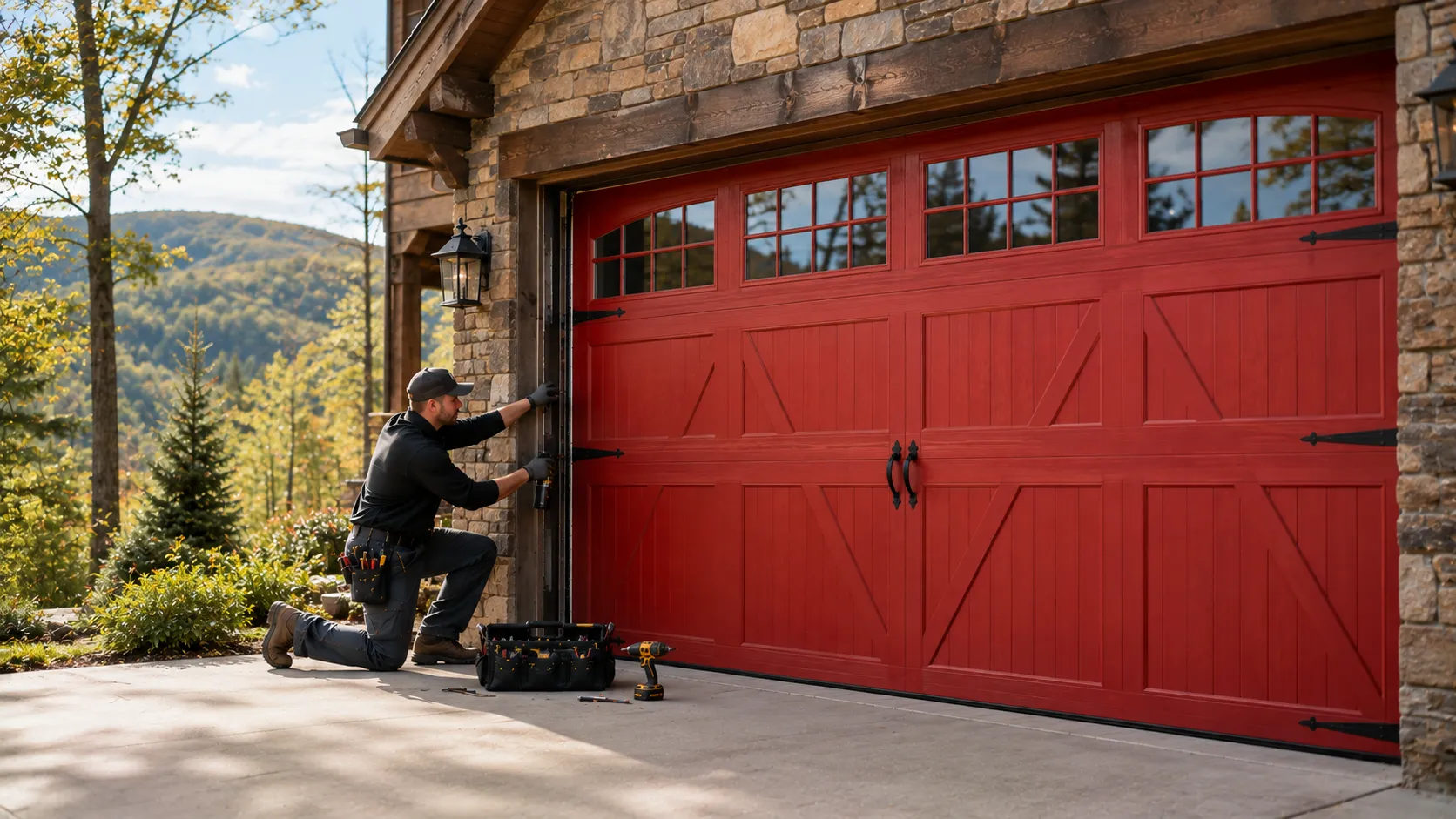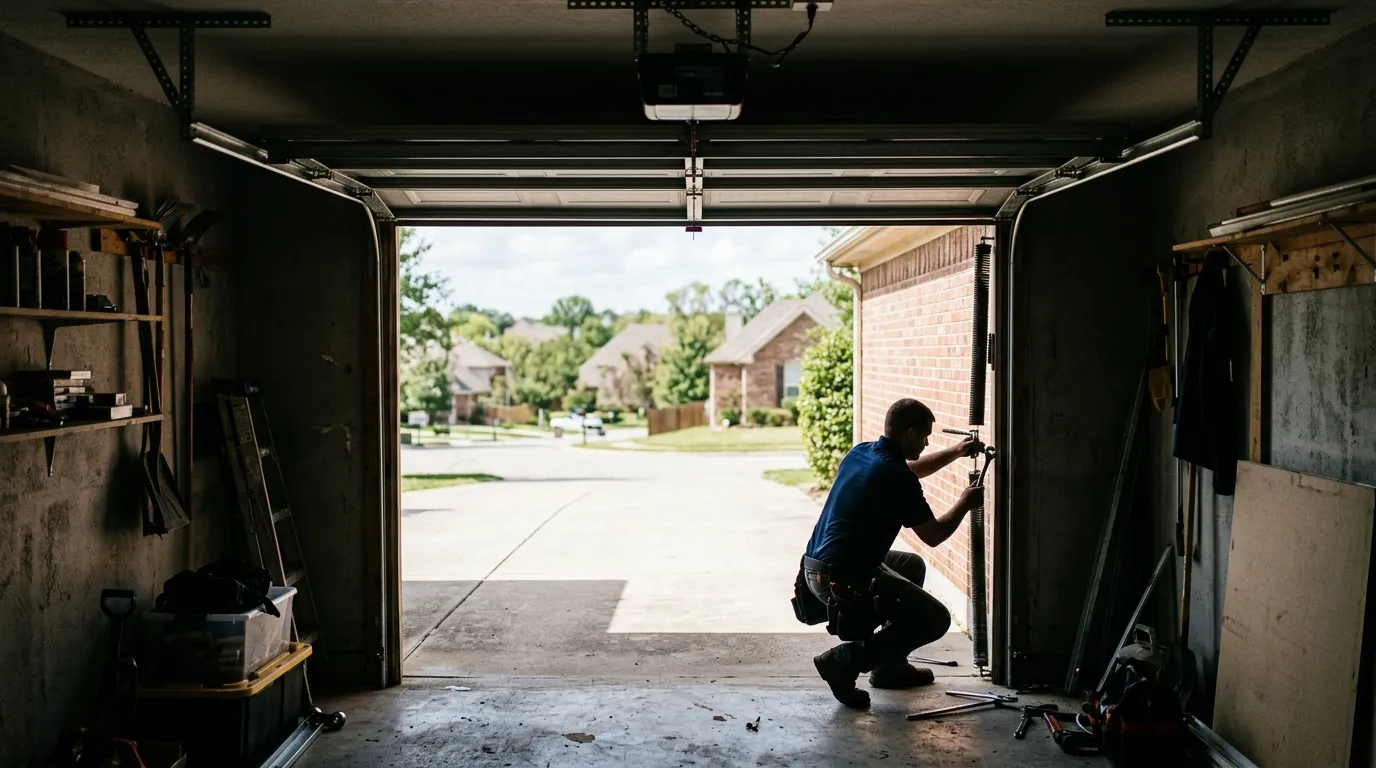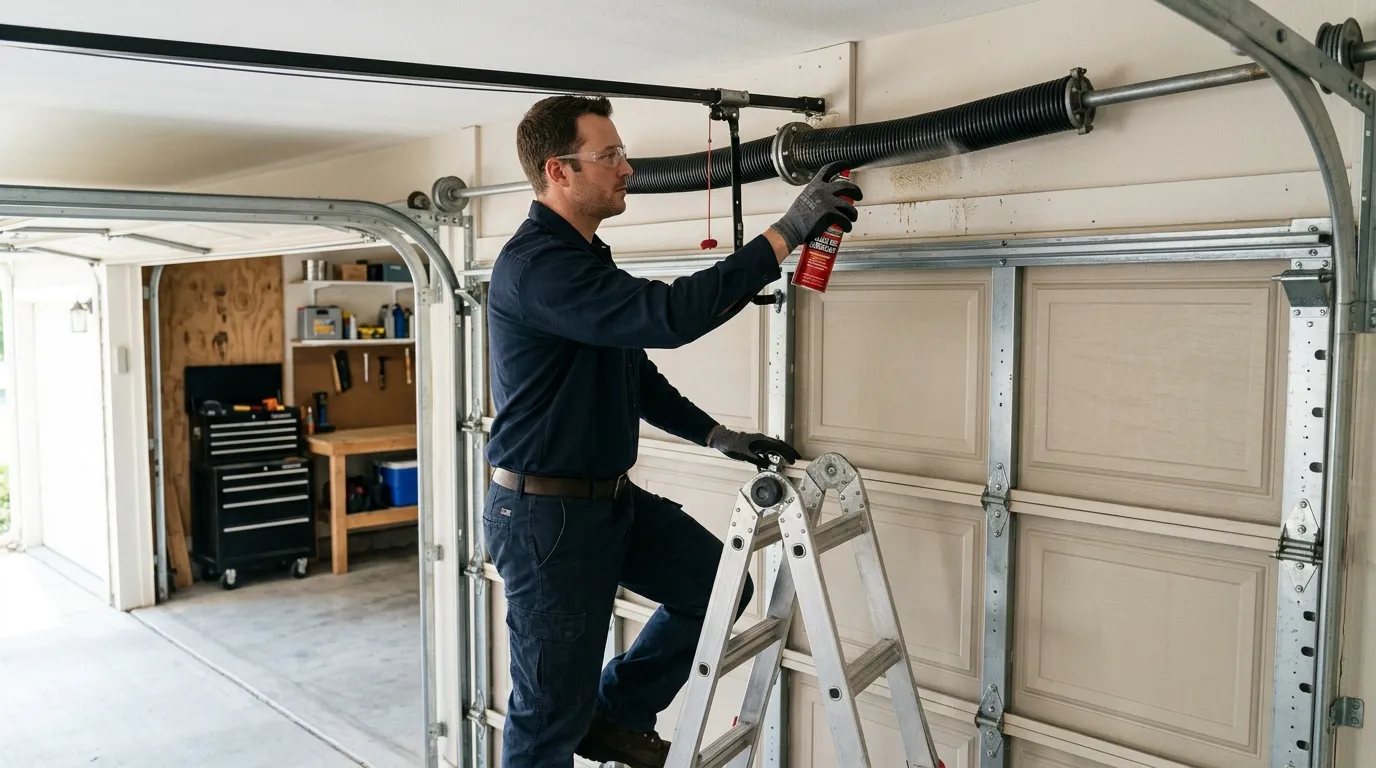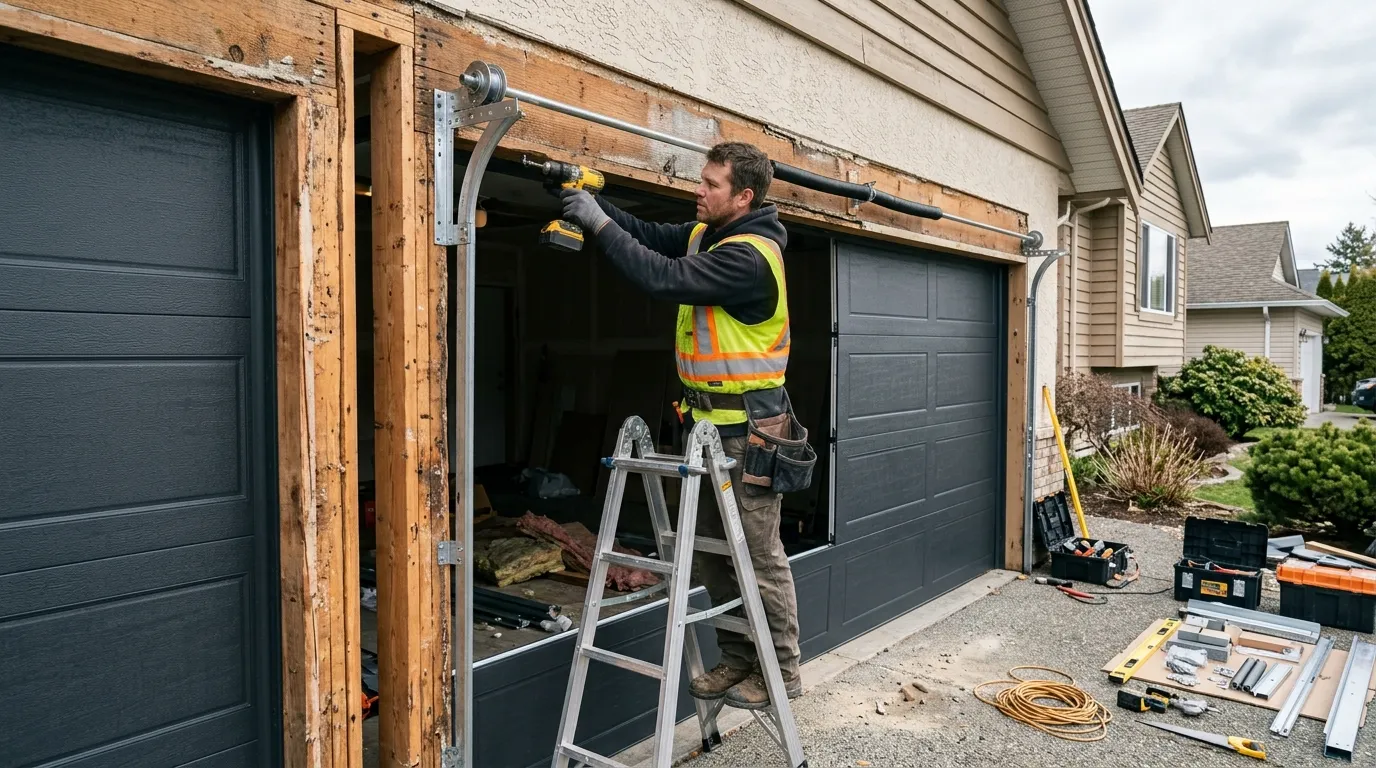
Why It Happens Here
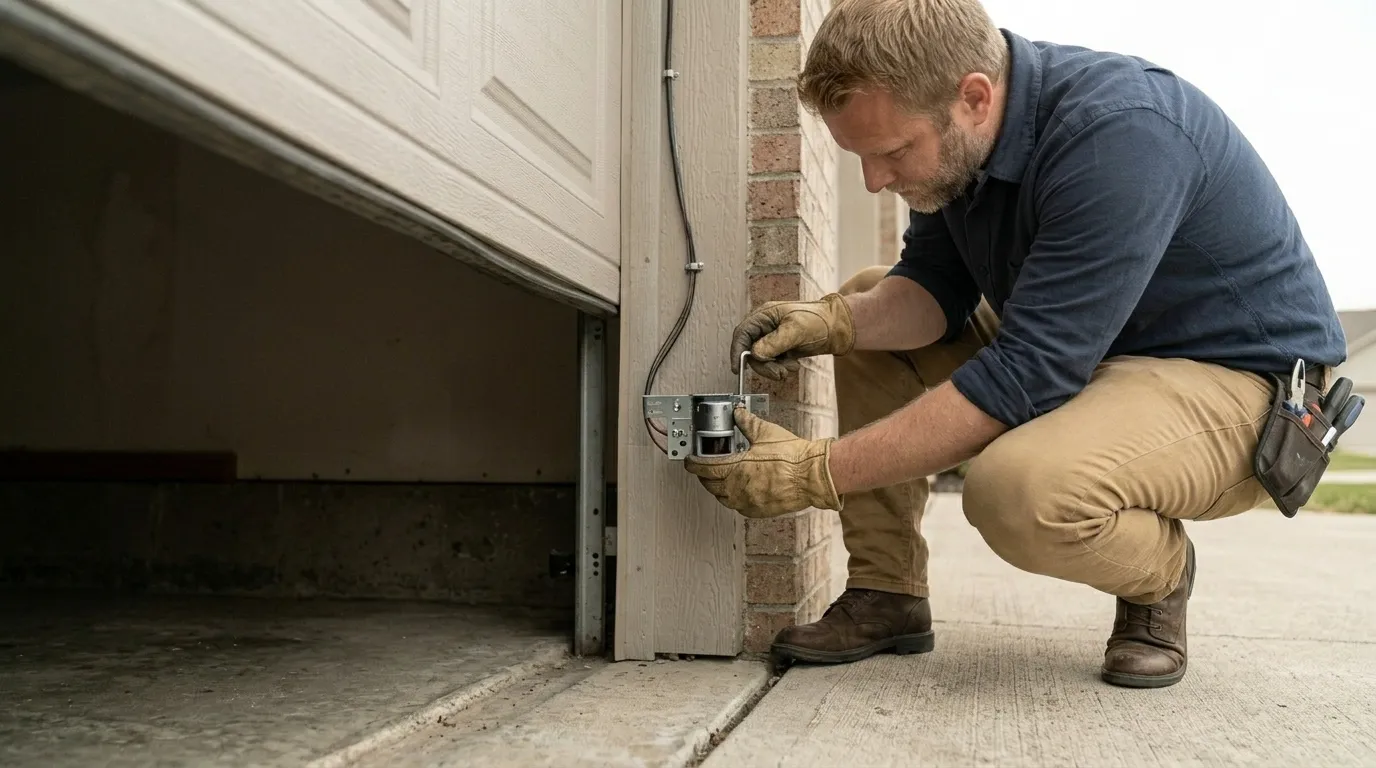
Bald Knob started building out around 1975, a few years ahead of the broader 1975-1997 stretch that shaped this part of the service area. That timing matters for cables specifically. Doors going up in the mid-1970s came with steel sectional panels hung on drum-and-cable systems, and a lot of that original hardware is still doing the job forty-plus years later. Cable doesn't fail because it's old in the abstract - it fails because the drum grooves wear, the galvanizing thins, and the strands start to fray right where the cable wraps the drum at the bottom of every open-close cycle. A door built in 1975 has done tens of thousands of those cycles. The cable on it is not the cable it left the factory with, even if nobody's ever touched it. That's the setup you're working with here more than in newer subdivisions: original drums, original cable, and springs that have usually already been swapped once but with cable nobody thought to replace alongside them.
How It Shows Up
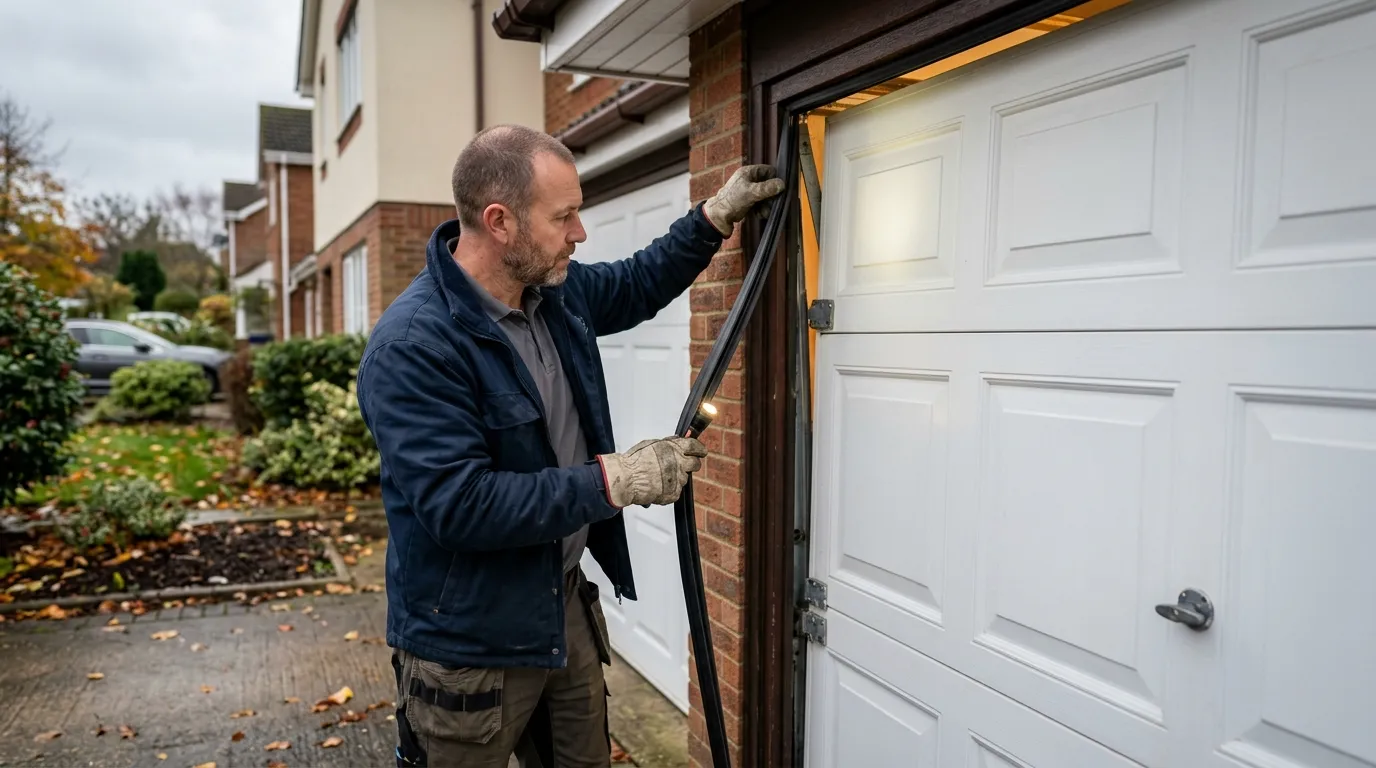
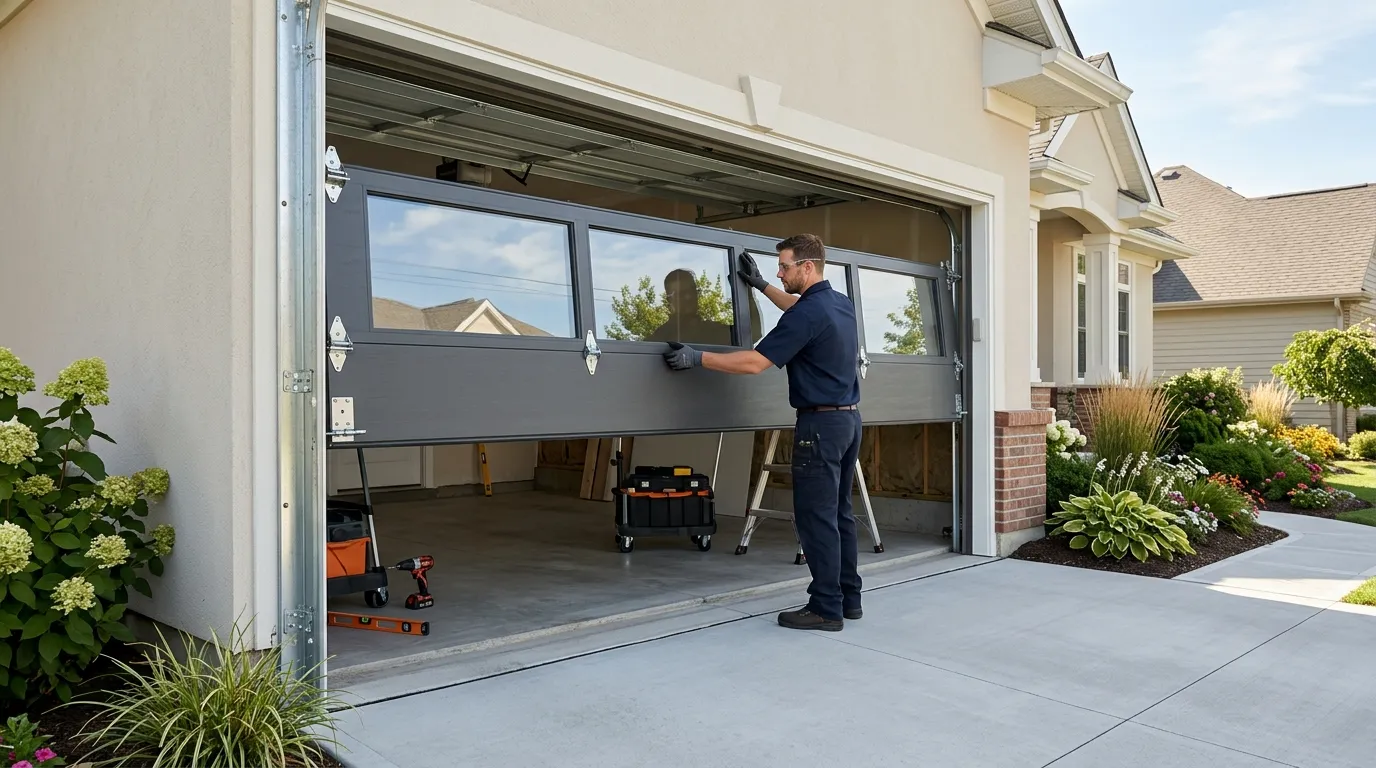
The classic sign is a door that drops crooked - one side hangs lower than the other, or the door won't sit flush against the floor on one corner. That's a cable that's slipped its drum groove or snapped outright, and the door is now hanging on one side only. You might also hear a loud bang followed by the door refusing to move at all; that's usually the spring letting go and taking the cable with it, or a cable giving out under full spring tension. Fraying is the early warning if you catch it - little wire hairs sticking out near the bottom bracket, or a cable that looks looser on one side than the other when the door's down. Cold snaps in this cold-moderate climate band tend to bring these on faster, since stiffened cable and shrunk hardware clearances put more strain on strands that are already thin from wear. If your door's original to a 1970s build, don't wait for the bang.
How Long You Are Without the Door
A straightforward cable replacement on a residential door - one snapped cable, drums and track otherwise sound - is usually a same-visit fix once the tech is on-site. Where it runs longer is when the original 1975-era drums are worn enough that new cable won't seat right, which means replacing the drums too, or when the opener's been fighting a bad cable for a while and the track's knocked out of alignment as a result. We won't know which one you've got until someone's looked at the door in person, since a call over the phone can tell us the age and symptom but not the actual wear on the hardware. If parts beyond standard cable and drums are needed - a full torsion tube replacement, say - that can mean a second trip while we source the right size for an older shaft diameter.
What Can Go Wrong
The biggest risk with a snapped cable is what it does to the rest of the door on the way down. A door that drops unevenly can bind in the tracks, bend a panel, or rack the whole frame if it's forced. Anyone who tries to muscle a stuck door open with one cable gone is working against full spring tension with nothing to stop the door short of the floor - that's how fingers and door panels both get hurt. On original 1975 hardware specifically, we sometimes find the second cable is close to failing too, since both sides usually see the same cycles and the same cold-weather stiffening. Replacing one side and leaving the other original is a real option if the second cable still looks sound, but it's worth knowing it's likely to be the next call, not a hypothetical one.