
Why It Happens Here
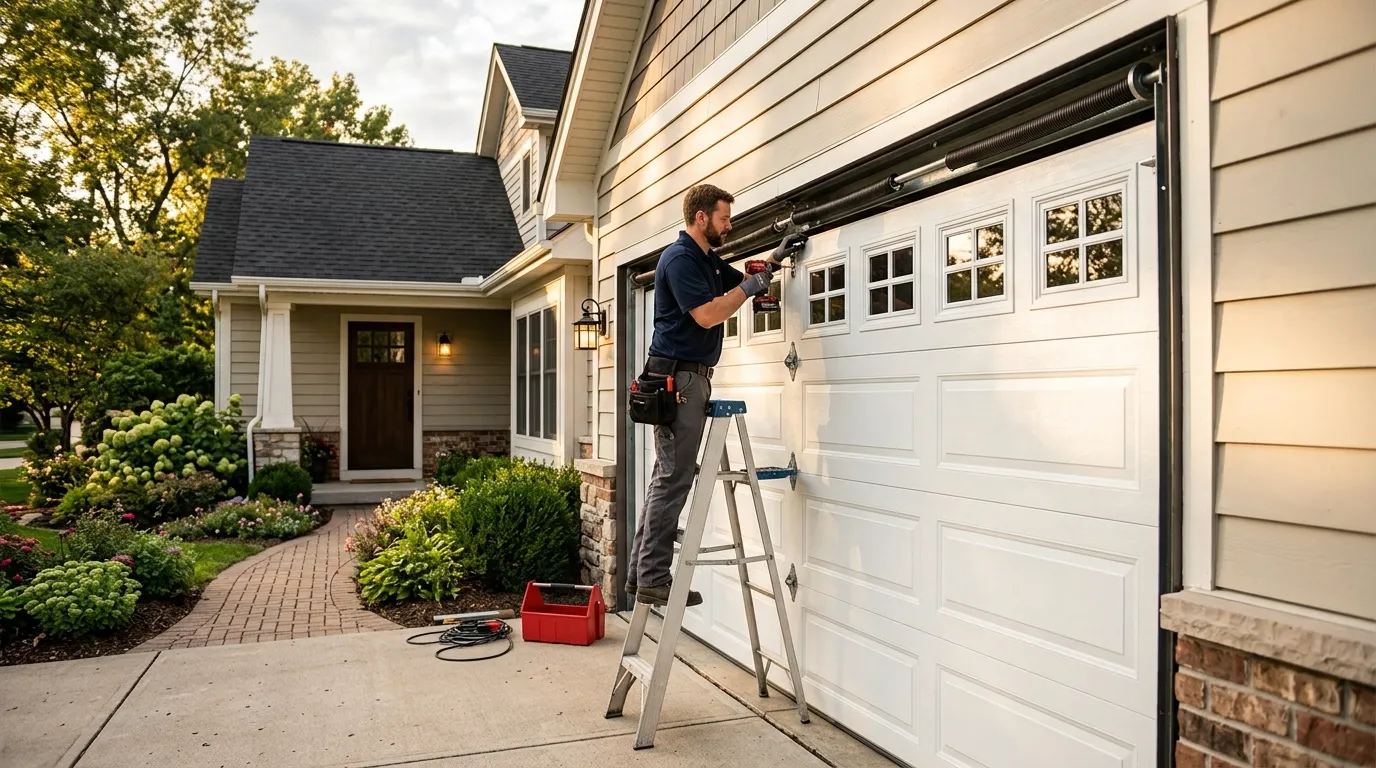
Across the wider Searcy service area, garage doors mostly went up between 1975 and 1997, with the typical build year sitting around 1982. Bald Knob skews earlier than that average - its housing stock centers closer to 1975, which puts a good share of these garages at the front edge of that window rather than the middle or back of it. That matters for springs. Doors from the mid-1970s were built before the double-torsion setups and heavier insulated panels became standard, so a lot of them are still running a single spring sized for a lighter door, or a spring that's been swapped once already by whoever owned the house before you. When that spring gives out, it's often not a clean, single-cause failure - it's a spring that was already undersized or mismatched carrying a door it was never quite right for. We don't guess at what's on your header from the driveway. We look at the coil diameter, wire gauge, and wind direction before we touch anything, because on a door this age, the replacement isn't always a straight swap for what's already up there.
The cold winters common to this part of the state also work against older steel. Metal fatigues faster with repeated temperature swings, and a 1975-era spring has had roughly fifty winters to accumulate that fatigue.
How It Shows Up
Most spring failures here start quiet. The door gets noticeably heavier to lift by hand days or weeks before anything snaps - that's the spring losing tension gradually, not all at once. Some owners notice the opener straining, making a higher-pitched motor sound as it works harder to do what the spring used to help with. Others hear a bang from the garage, usually when nobody's near the door, which is the spring parting under tension rather than during use.
On the older single-spring setups common in this area's mid-1970s builds, a full break usually means the door won't budge past a few inches, whether you're using the opener or the emergency release. On homes with a later replacement door but original hardware underneath, the mismatch between a heavier panel and an old spring can show up as a door that slams down instead of settling, or one that drifts open on its own when the opener disengages. Either symptom is the spring telling you it's done, not something to grease and wait out.
How Long You Are Without the Door
A straightforward torsion spring replacement on a residential door, once we're on site with the right parts, is a same-visit job - the door goes back into full working order before we leave. The variable is parts. If your setup is a less common size or an older single-spring configuration that isn't something we stock on the truck as standard, we may need to order it, and that adds a few days before the second visit. This is one of the honest limits of the job: we won't force a same-day fix by putting on a spring that's close enough but not correctly matched to your door's weight and size, because a wrong-sized spring is a comeback call waiting to happen, or worse, a safety issue.
What Can Go Wrong
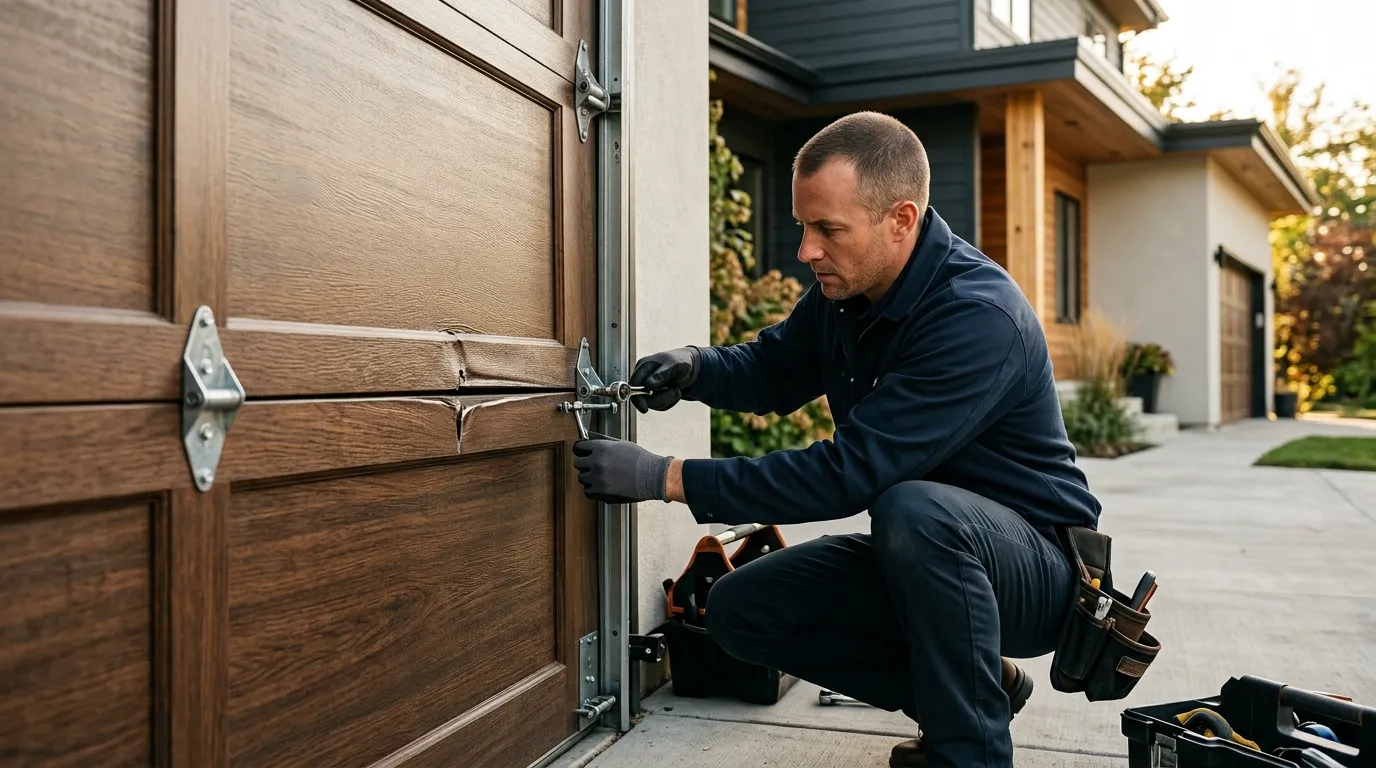
On the older end of this area's housing stock, the spring is rarely the only worn part. Cables run through the same drums the spring winds against, and on a door old enough to have never had that cable replaced, we often find fraying right where it passes over the drum - something you can't see unless the door is already open and the tension is off. The center bracket, torsion tube, and end bearing plates take stress every time the spring winds and unwinds, and after decades of Arkansas winters, some of that hardware has rusted or worked itself loose. Replacing a spring on a bracket that's already cracked just moves the failure to the next cold spell, so we check that hardware before we call the job done, not after.