Why It Happens Here
Bald Knob is a small town - about 953 households, ten miles out from our shop in Searcy. That size matters for how panel damage shows up: this isn't a place where a dozen doors fail on the same street every winter. It's scattered, one house at a time, and usually tied to age.
Most of the homes we get called to here were built around 1975, a good bit older than the 1982 median across the wider six-town area we cover. Doors from that era are steel, often without the foam-core insulation you see in anything put up after the mid-90s. The steel is thinner too. A ladder leaned wrong, a mower kicked gravel, a trailer backed in too fast - any of that dents a panel that thin far more easily than it would a newer door.
One more thing worth knowing: Bald Knob's median household income, at $49,107, runs above the $43,811 figure for the broader service area. That doesn't change how the door fails, but it does mean more of the calls we get here are for full-panel swaps rather than the cheapest possible patch - people want the door looking right, not just working.
How It Shows Up
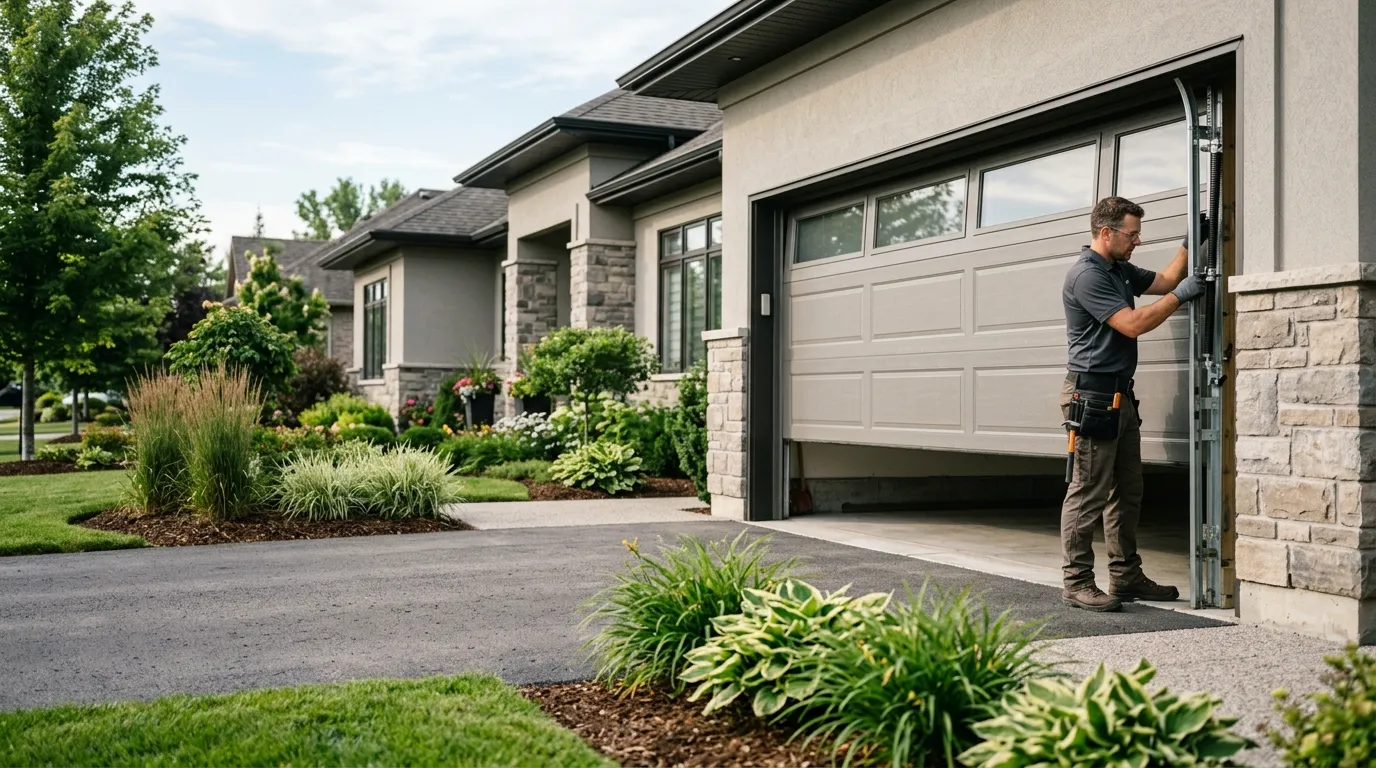
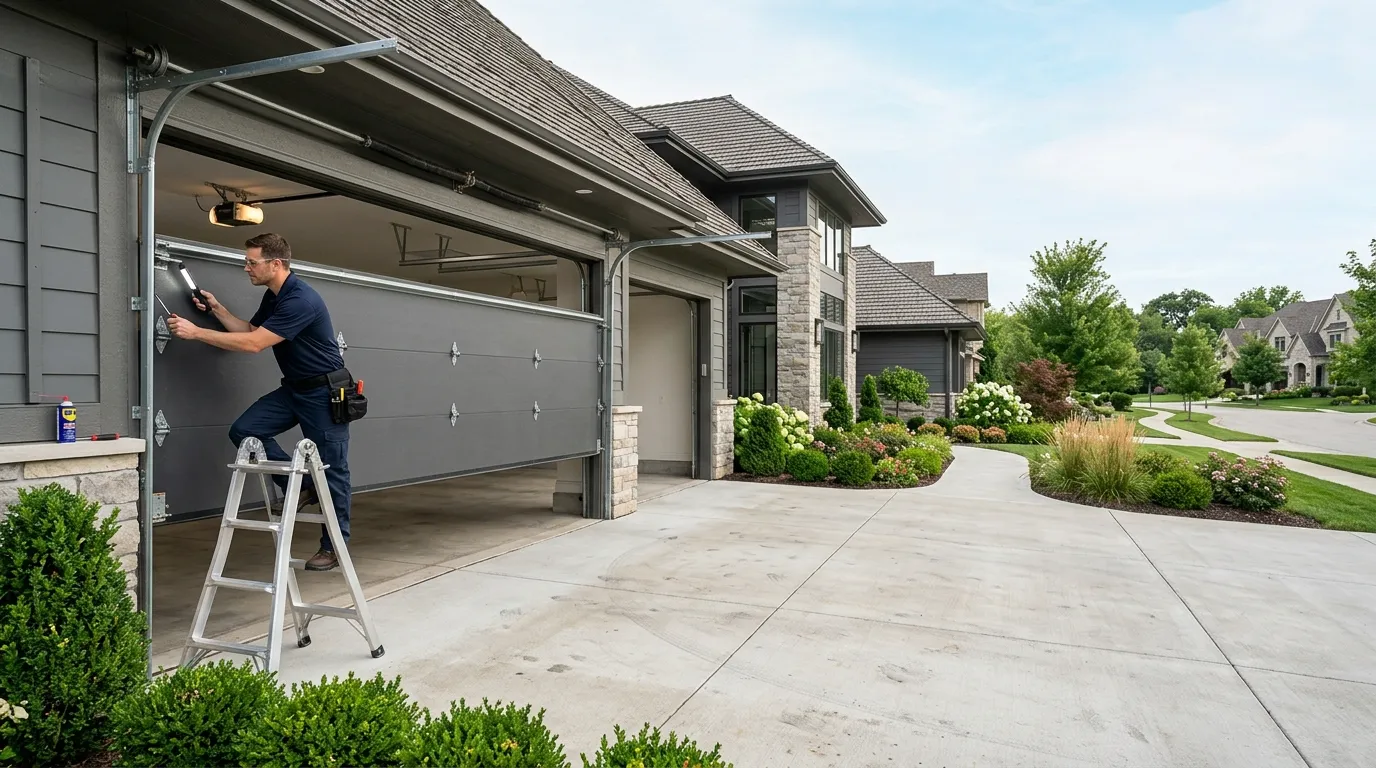
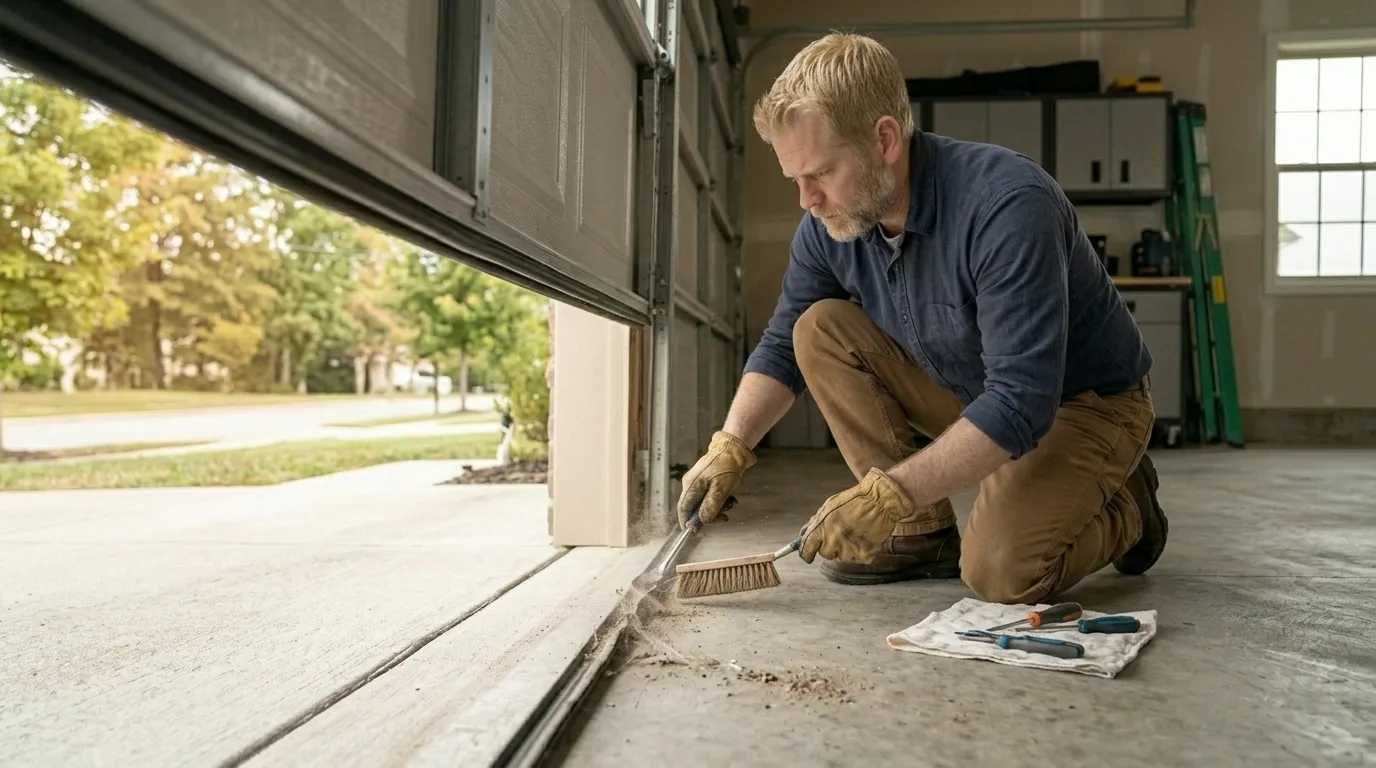
On a door this age, panel damage rarely stays contained to one spot. A dent in the bottom panel of a non-insulated steel door can bow the panel enough that it binds against the track, which then stresses the roller and the hinge above it. You'll hear it before you see it - a scrape or a thunk on the way up.
Rust is the other common one. Older steel panels in this part of Arkansas take on rust at the bottom edge first, where snow melt and yard water sit against the steel longest. Once rust perforates a panel, it's not a dent you can pull back out - the metal's compromised and the panel needs to come off the door entirely.
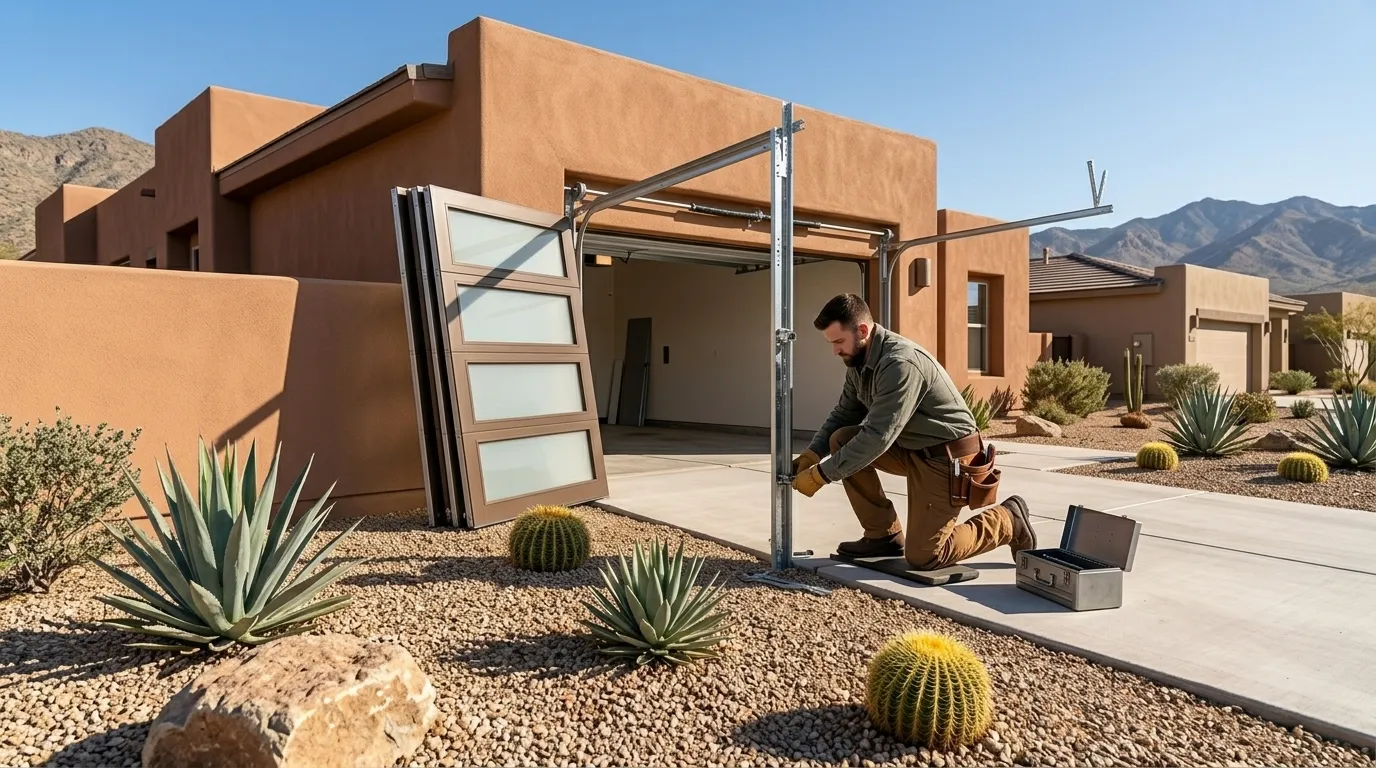
On a lot of these 1970s-era doors, the panel sections are also narrower than what's sold today, which is the honest limitation here: we can't always match a single replacement panel to the rest of the door. Sometimes the fix is one panel, sometimes it's the whole section, and we tell you which before we quote it, not after.
How Long You Are Without the Door
A single dented panel on a door that still opens and closes fine isn't an emergency - you can usually keep using the door while you wait on the part, as long as it isn't binding against the track. If it is binding, don't force the opener through it; that's how you turn a panel job into a track and roller job too.
The timeline mostly comes down to whether the panel is a stock size or something we have to special-order for an older door. Doors from around 1975, the era common in Bald Knob, don't always match panel sizing that's sold new today. When a section has to be ordered to fit, that adds time before we're back out for install - we'll tell you that up front rather than guess at a date.
Once the part's in hand, the swap itself is a same-visit job. We're not leaving a door half-assembled overnight.
What Can Go Wrong
The service area sits in a cold-moderate climate band, and that plays into panel failure in a specific way: a dented panel that's also lost its seal at the edge lets moisture sit against the steel behind it. On a door already ten-plus years past insulation upgrades - which describes a lot of Bald Knob's stock - that moisture finds rust starting on the inside of the panel where you can't see it until it's bad.
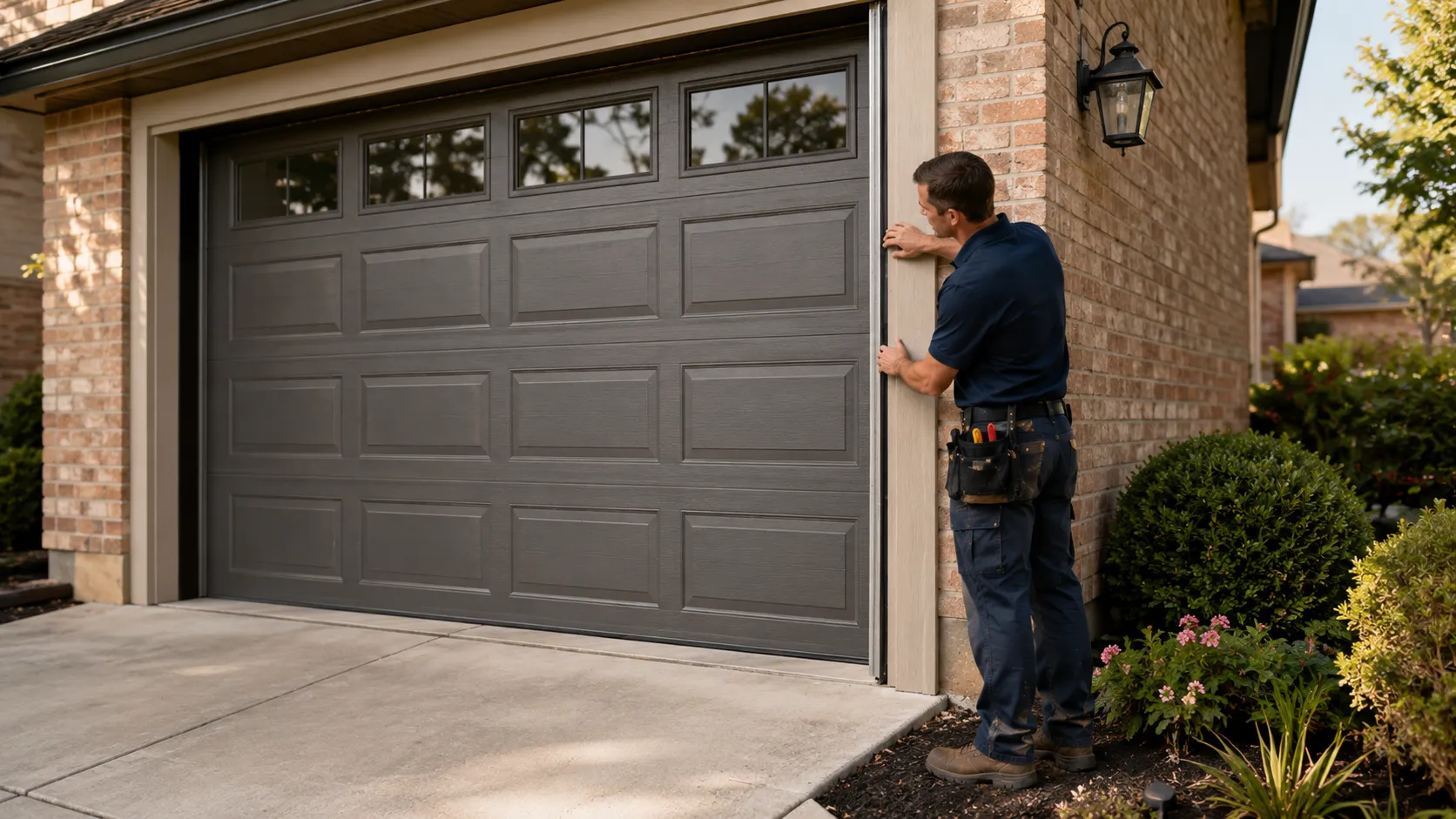
The other thing that goes wrong is guessing at the fix instead of pulling the panel. A dent that looks cosmetic can have cracked the panel's internal stiffening rib, and a door that looks fine standing still can bind hard the first time it's run under power after the swap if the new panel isn't shimmed to match the old door's slight sag.
We'd rather replace a section that's borderline than patch it and have you calling us back in a season.