Why It Happens Here
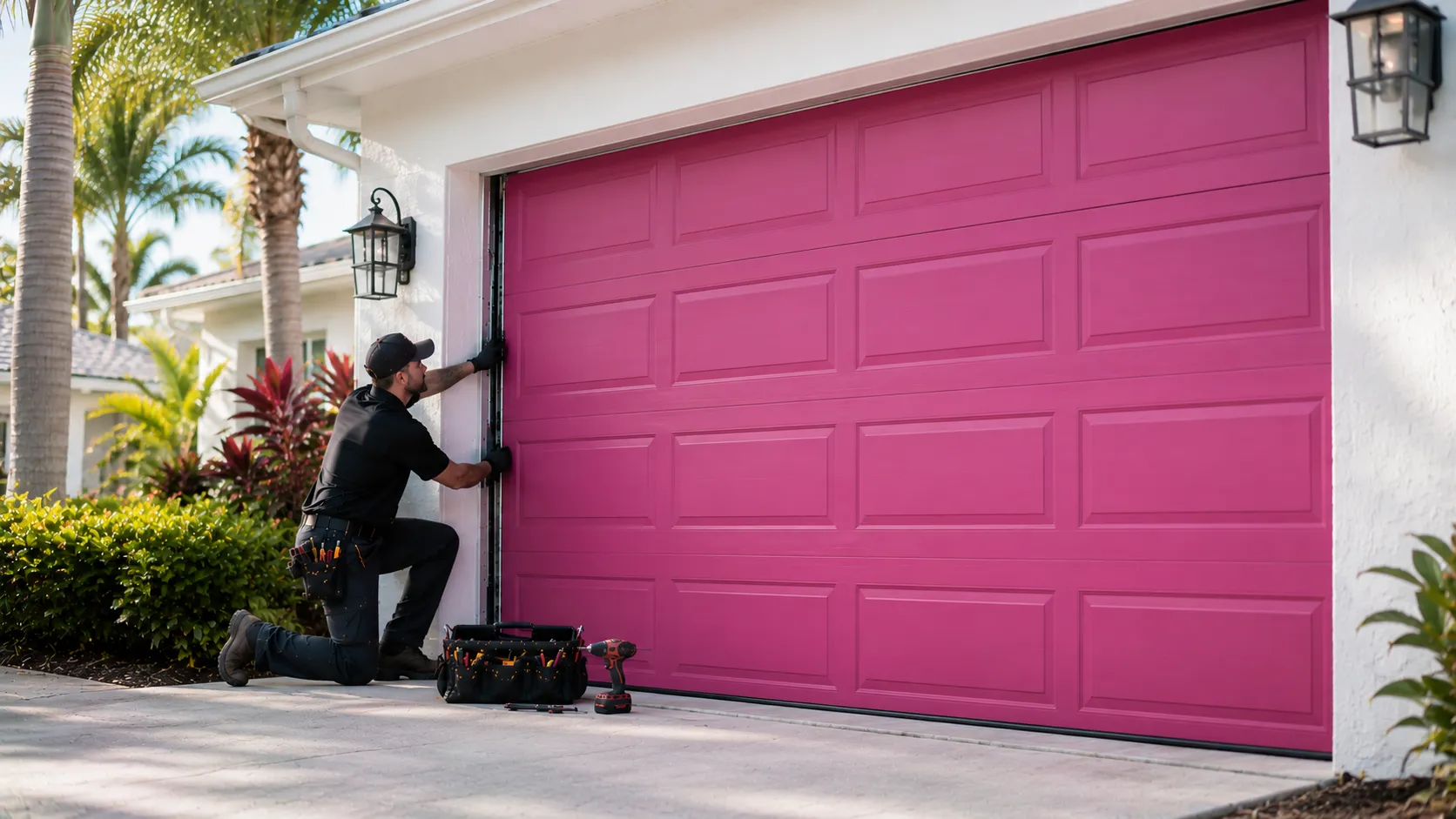
Bald Knob's housing stock centers on 1975, which puts a lot of these garage doors at or past the fifty-year mark on their original springs, hinges, and track brackets. Nobody plans to keep a torsion spring that long, but a lot of homeowners here never had a reason to think about it until the door stopped opening. If your house was built anywhere near that mid-1970s wave, there's a real chance the opener has been swapped once but the spring, drums, and cable never have - those parts don't fail on a schedule, they fail on cycle count, and a fifty-year-old spring has usually seen more open-close cycles than it was rated for. Across the wider service area the build years run from 1975 into the late 1990s, but Bald Knob sits at the older end of that range. That matters because older doors often used lighter-gauge track and smaller-diameter torsion springs than what gets installed today, so a repair sometimes means sourcing hardware to match an older mounting pattern rather than just bolting on whatever is in the truck. It's a small town - 953 households - so we're not chasing a huge volume of these jobs, but the pattern repeats house after house.
How It Shows Up
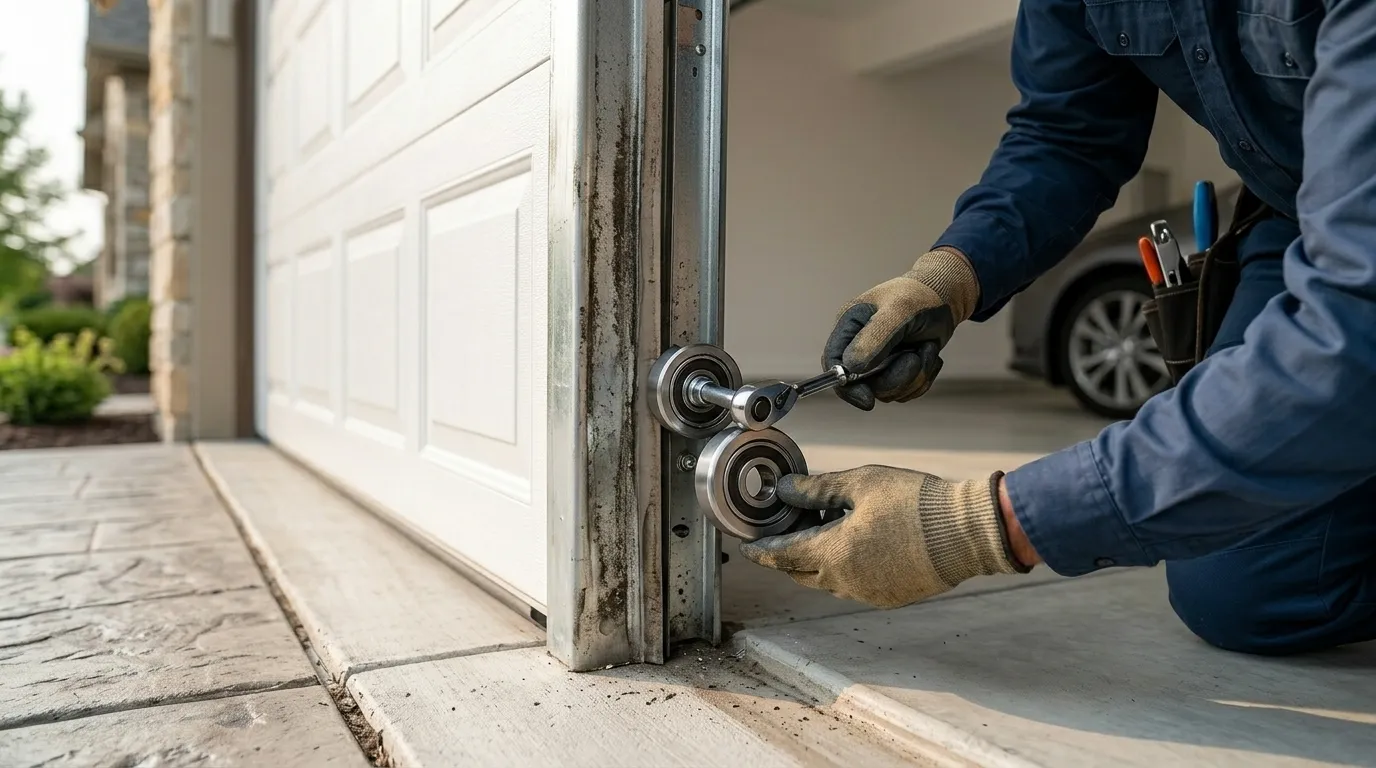
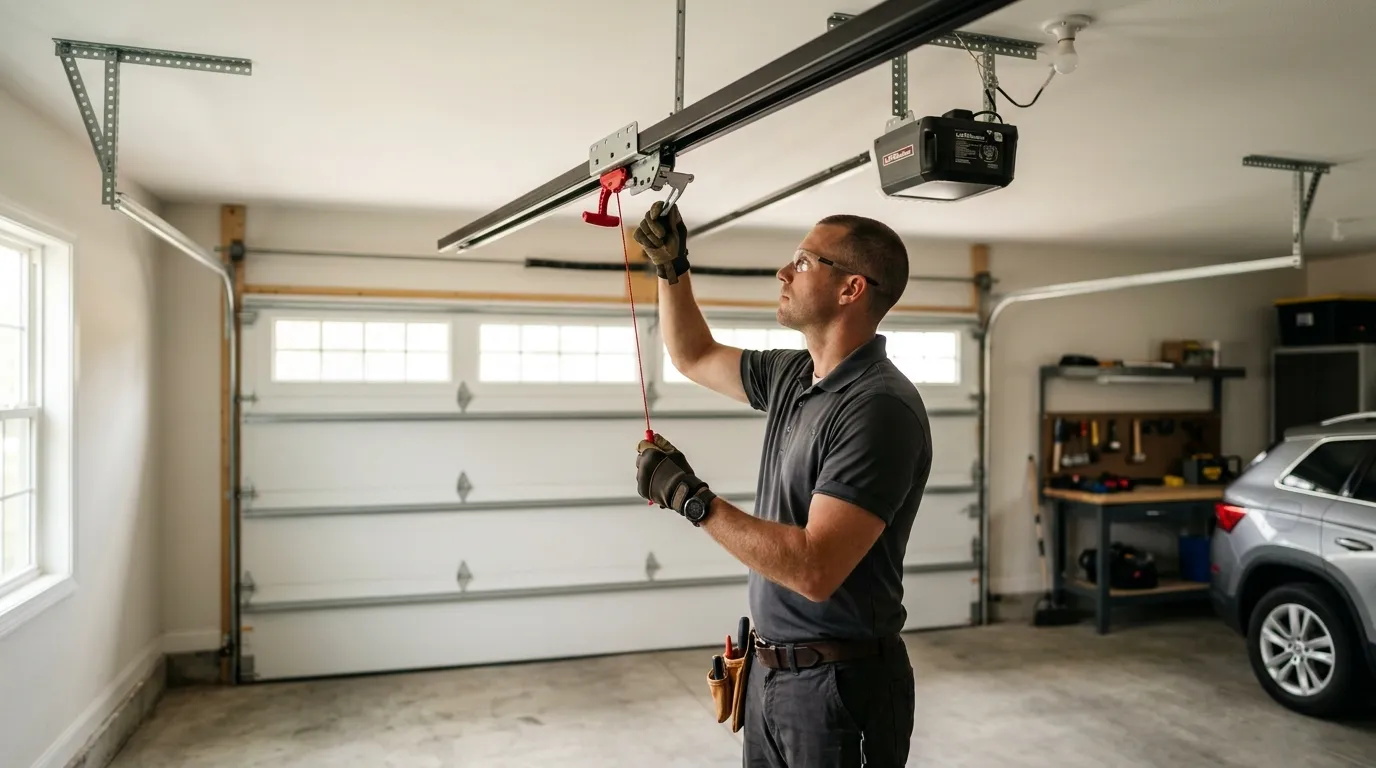
On original 1975-era hardware, the failure is usually one of three things: a spring that finally snaps after decades of cycling, a cable that frays off a worn drum, or hinges so stretched the panels rack sideways when the door travels. Cold-weather stiffening is part of it too - this area sits in a moderate cold climate band, and steel contracts enough on hard winter mornings that an already-tired spring is more likely to let go then than in July. You'll often hear it before you see it: a loud bang from the garage, then a door that won't budge, or one that comes down crooked and binds in the track halfway. Sometimes it's quieter - the opener strains, clicks, and reverses instead of closing, because the spring is no longer doing its share of the lifting and the motor is fighting gravity alone. None of that means the whole door is junk. Most of the time it means the spring, the cable, or the roller set has reached the end of what fifty-year-old steel can do, and the rest of the door - the panels themselves - still has life left in it.
How Long You Are Without the Door
A straightforward spring or cable replacement on original hardware is usually a same-visit fix once we're on-site, assuming the part matches what's on the truck. Where it stretches out is when a house has hardware old enough - genuinely original to a 1975 build - that the spring size or drum style isn't something we stock as a matter of course, and we have to order it in. We won't pretend every part for a fifty-year-old door is sitting on the shelf; sometimes it isn't, and that's the honest lead-time conversation we'll have with you up front rather than after the fact.
What Can Go Wrong
The bigger risk with a door this old isn't the spring itself, it's what a broken spring does to everything downstream. Once the spring lets go, the full weight of the door lands on the opener, the cables, and whoever happens to be lifting it by hand. On original track and brackets from the mid-1970s, that sudden load can bend a bracket that was already working loose from decades of use, or snap a cable that was fraying anyway. We've also seen panels crack when a door drops unevenly and racks in the track. None of that is unique to Bald Knob, but it's more likely here simply because more of the hardware is original than in a newer subdivision.