What It Costs
We can't quote a number here without seeing the door, and any page that hands you a flat price before a truck rolls is guessing. What we can tell you is what drives the decision. Most houses in this service area went up between 1975 and 1997, median build year 1982, which means a lot of doors and openers on the road right now are original or one replacement removed from original. Parts for that era - specific spring wind sizes, older extension setups, certain track widths - aren't always sitting on a shelf, and sourcing them adds labor time even when the part itself is cheap. A newer door with a common torsion spring is usually a quick, contained job. An older door built to specs nobody uses anymore can turn a spring swap into a full hardware rebuild. With median household income in the area around $43,811, we try to be straight about when a repair is genuinely the cheaper path and when it's just delaying a bigger bill. That's a conversation, not a number we can put on a page.
When Waiting Is Fine
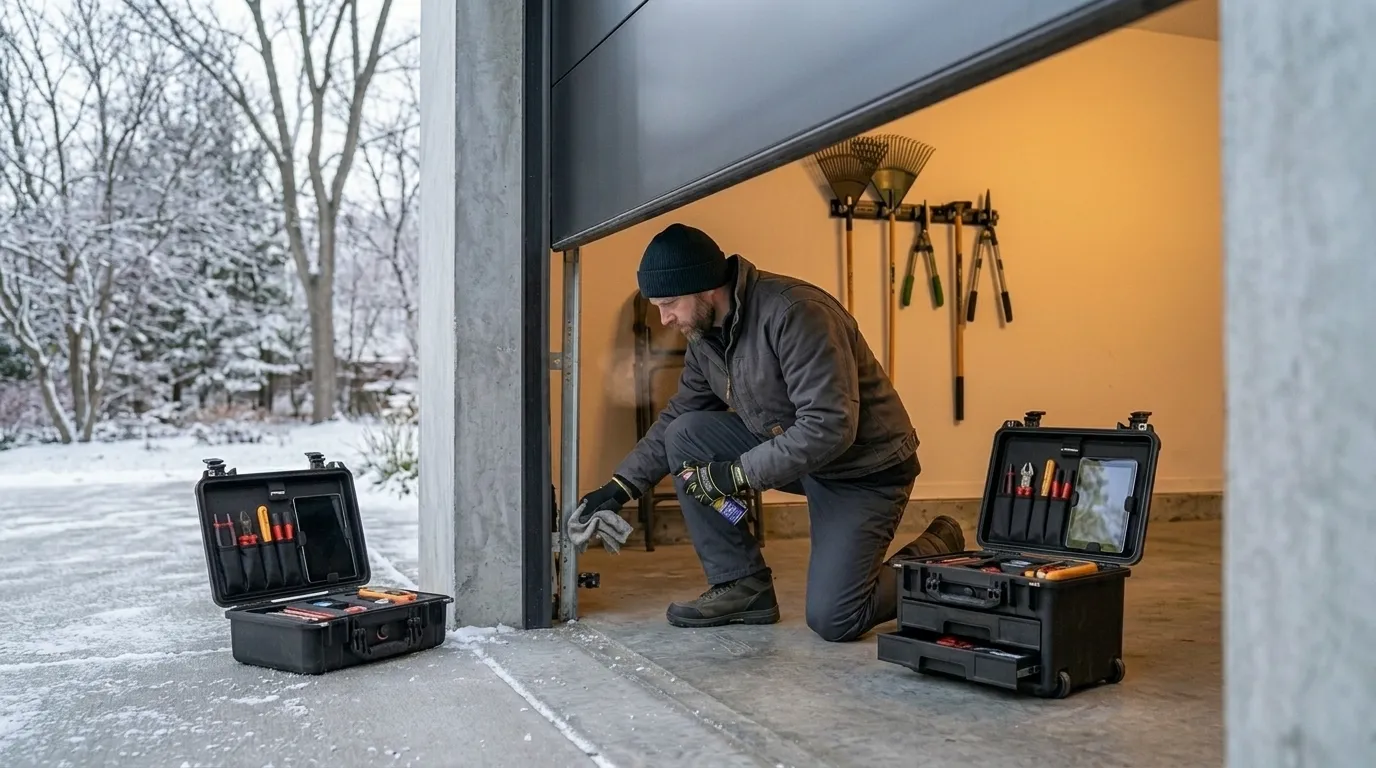
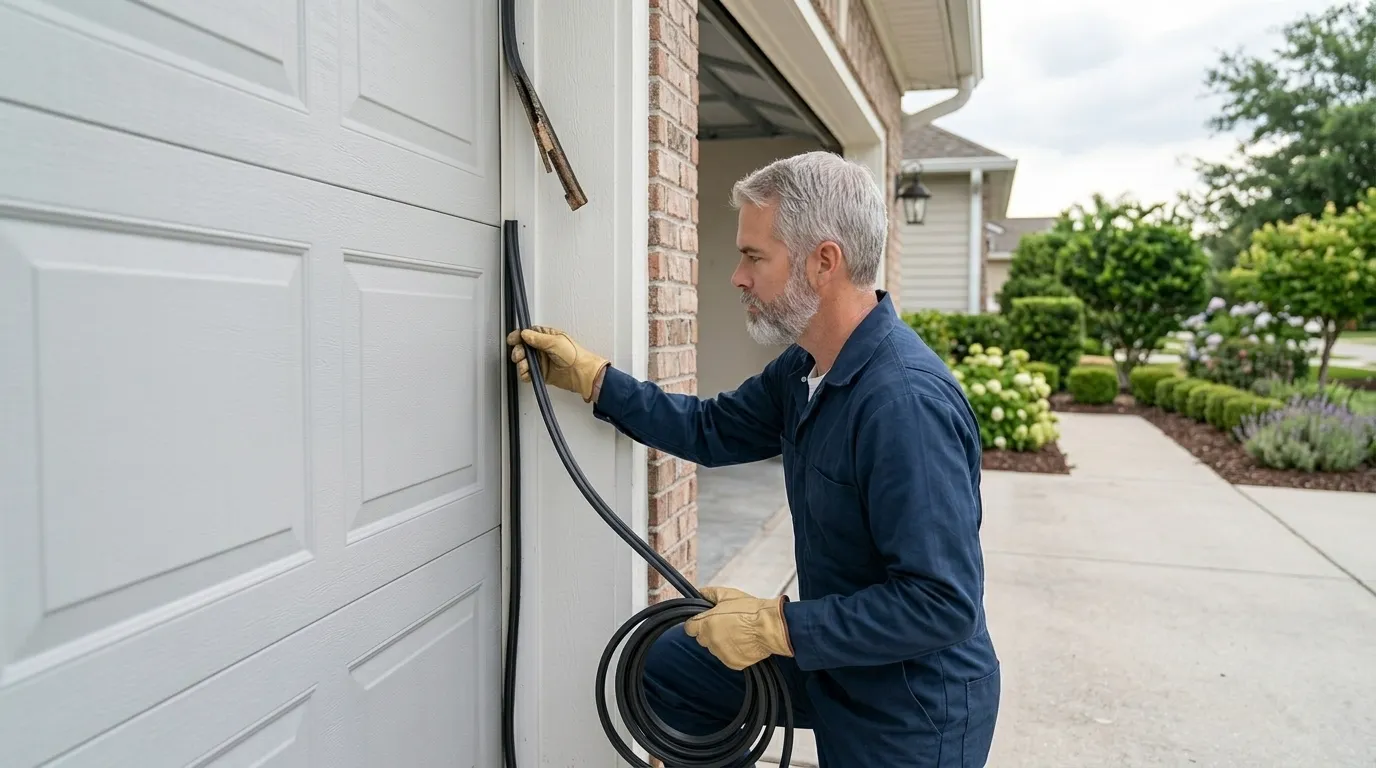
Not every noise means an emergency. A door that's noisy but still opens level, still reverses when it should, and isn't dragging on one side can usually wait a few weeks for a slot, even into winter. Cosmetic panel dents, faded weatherstrip that isn't letting in real drafts yet, or a slightly slow opener motor - none of that needs a same-day call. Given the age of housing stock here, a lot of these symptoms are just a 1980s-90s door telling you it's getting old, not telling you it's about to fail. Where we'd push you not to wait: a cable that's frayed, a door that's stuck halfway, or a spring that's already snapped. Those get worse fast and in a cold snap they get worse faster. If you're unsure which category you're in, that's a fair thing to ask us on the phone before you decide it can sit.
The Problem
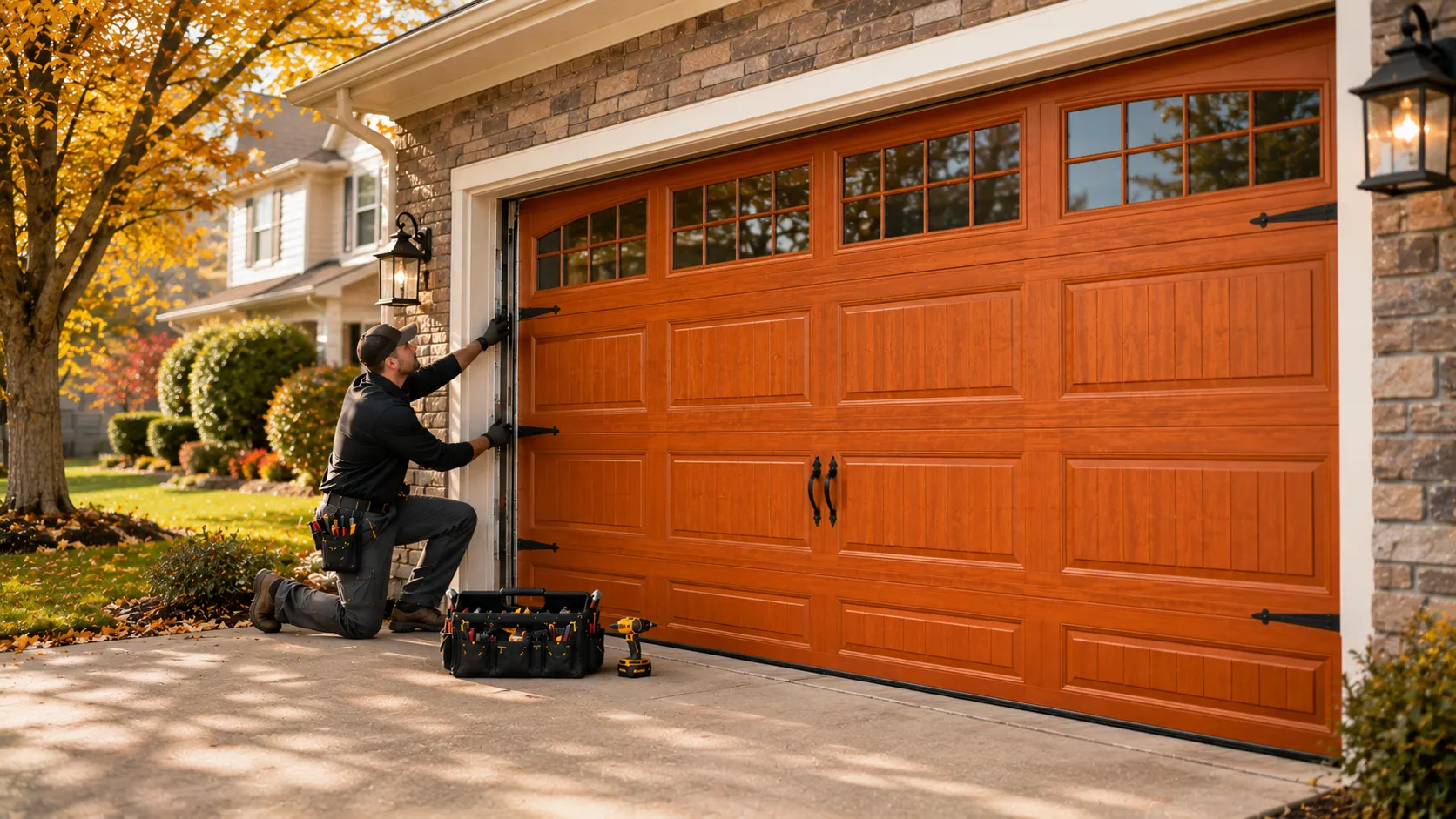
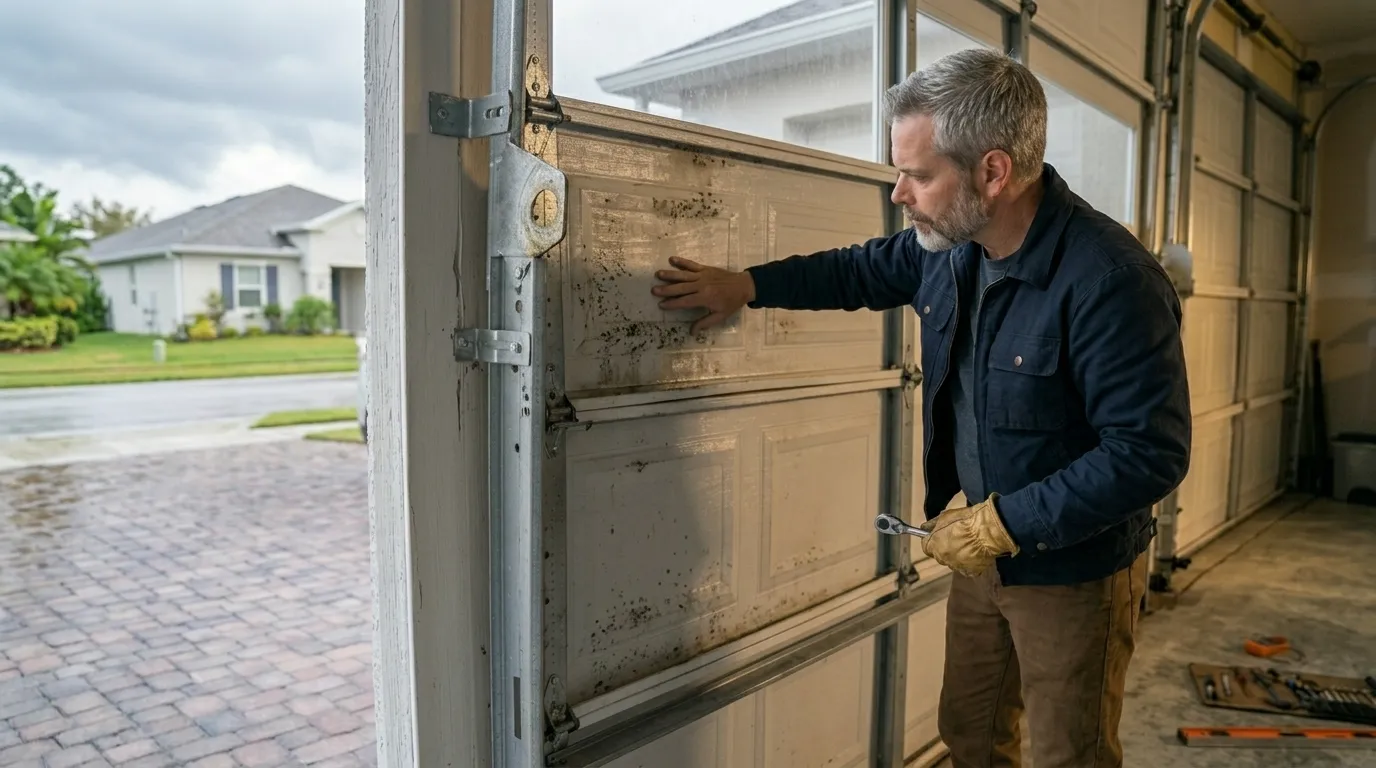
With around 6,049 households in this area and 2,979 of them owner-occupied houses, a meaningful share of the doors we see are the same age as the roof and the water heater - original to a house built sometime between 1975 and 1997. That's the core problem with judging these jobs by a quick look: a door that seems fine on the surface can be running on a spring or a set of rollers that's outlasted its expected life by a decade or more. We work Kensett, Judsonia, McRae, Bald Knob, and Beebe along with Searcy itself, and the age profile is consistent across most of those areas - this isn't a one-street issue. The honest limitation: we can't always tell you over the phone whether your door is a repair or a replacement. Track alignment, spring condition, and opener wiring on a 1980s door sometimes only show themselves once a panel's off. We'll tell you straight once we're looking at it, not before.