What Can Go Wrong
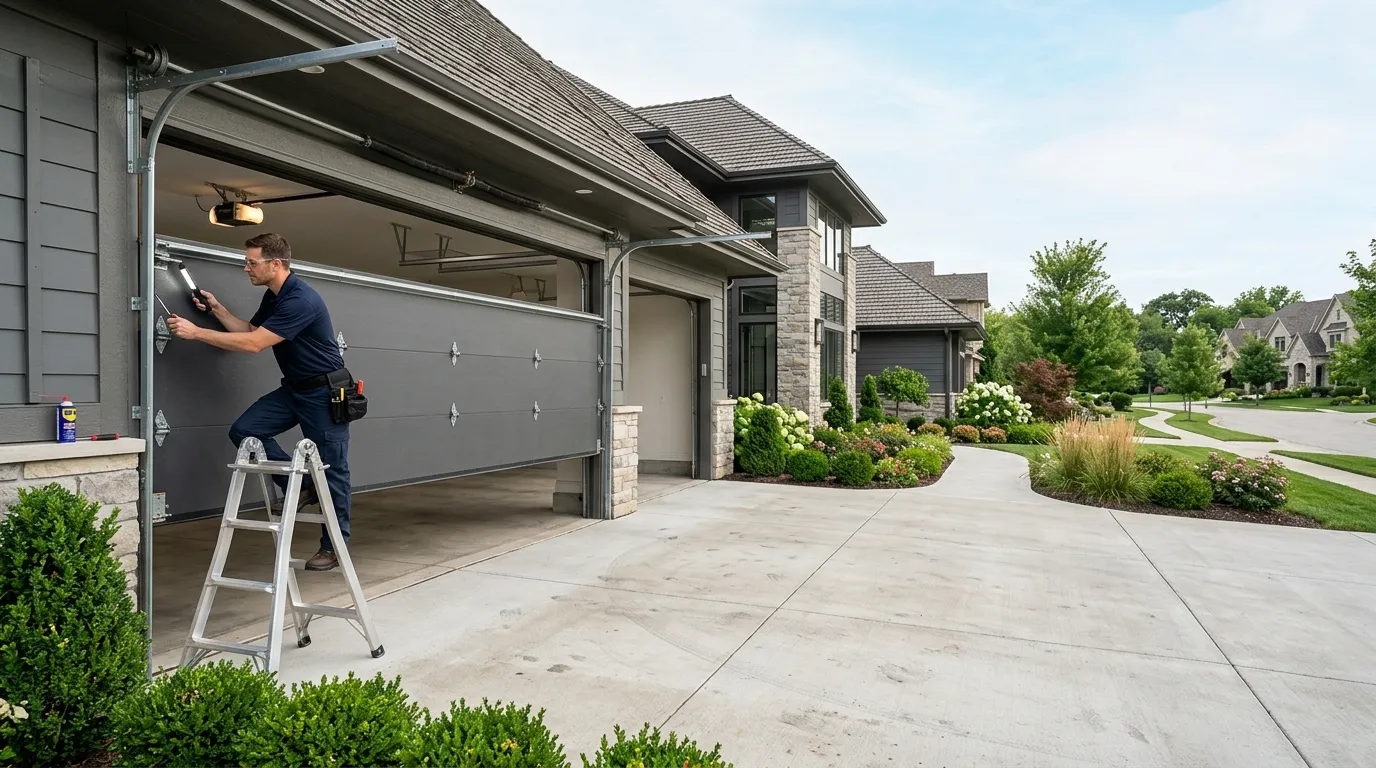
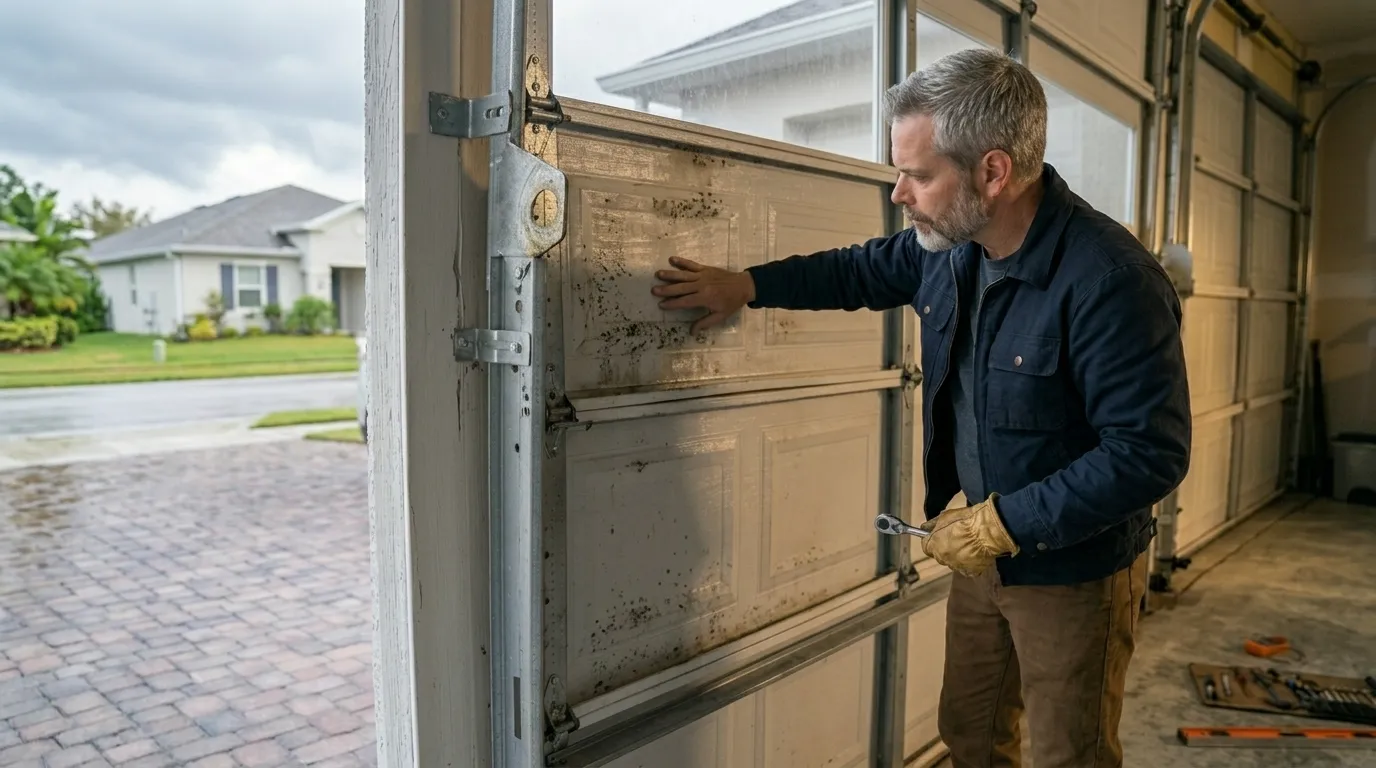
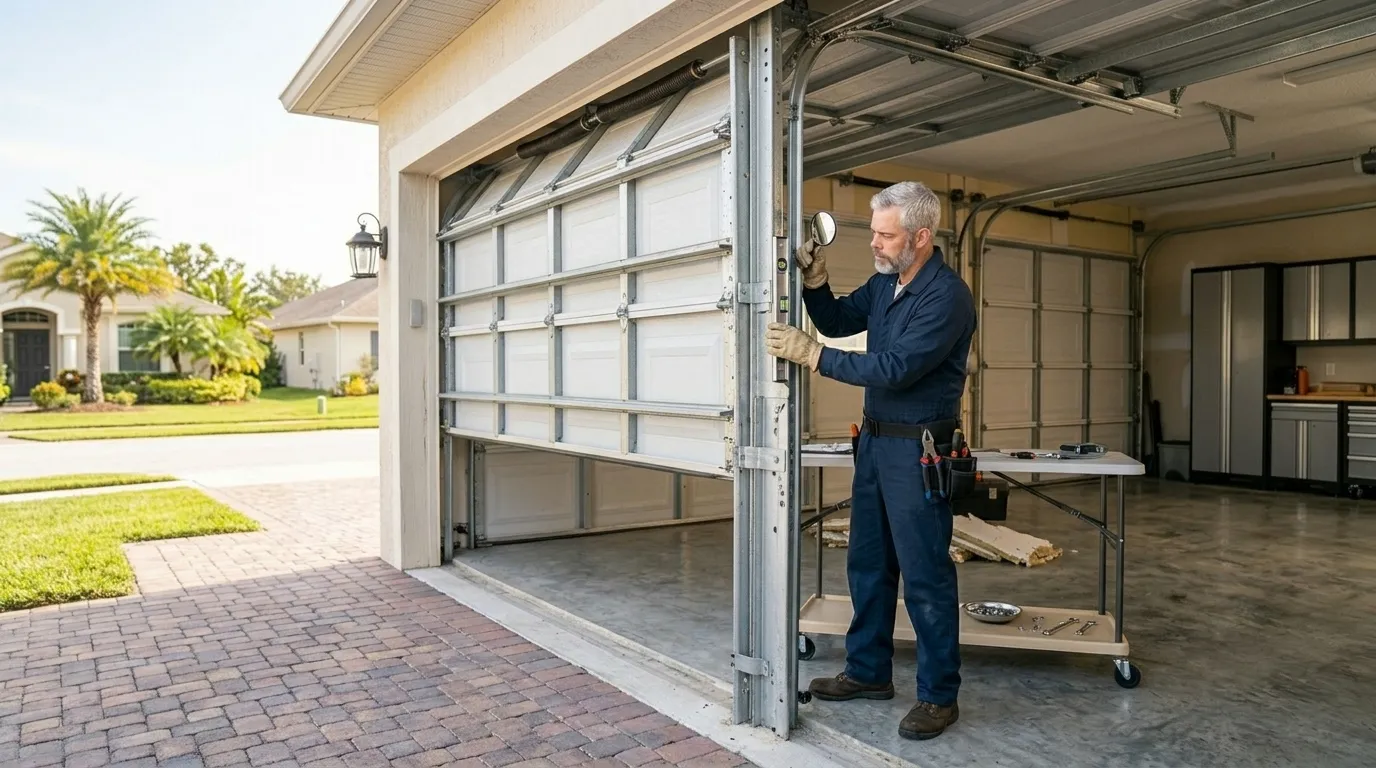
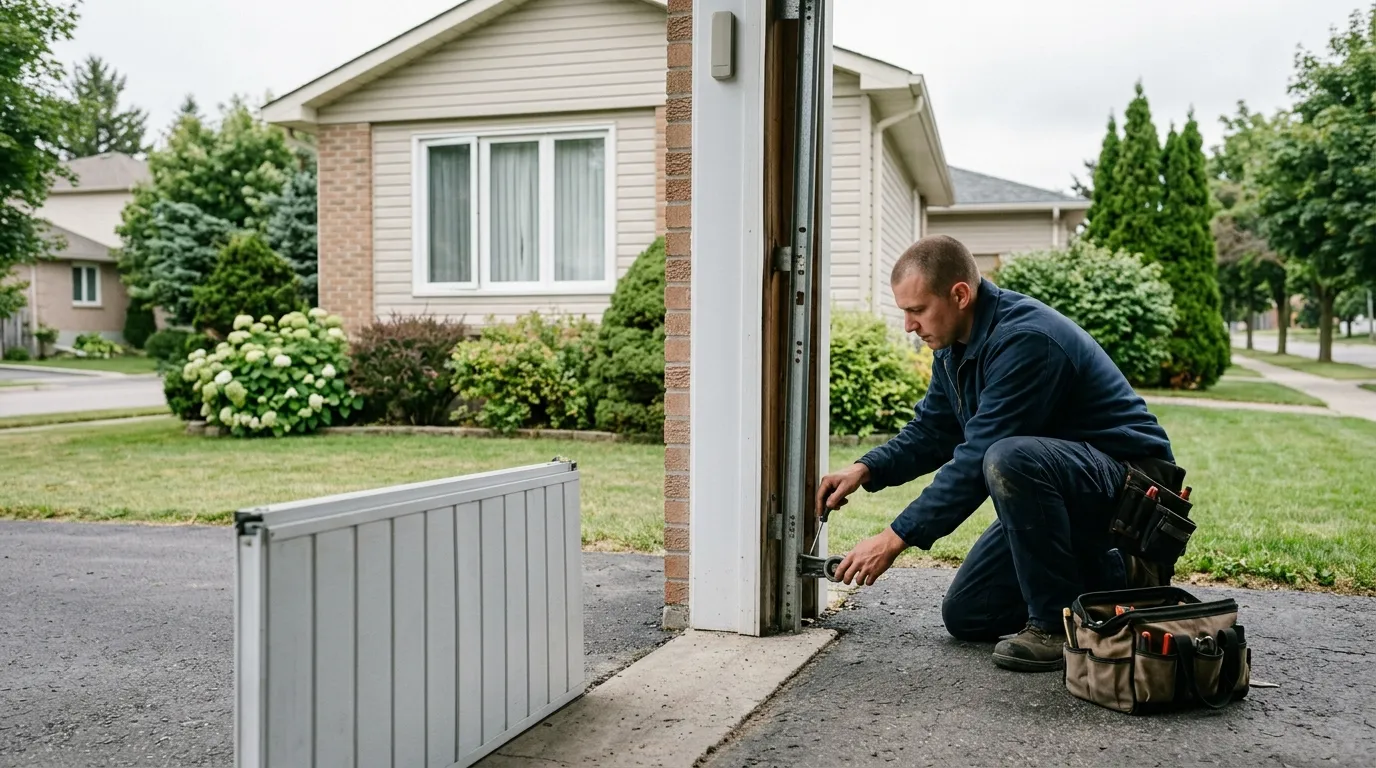
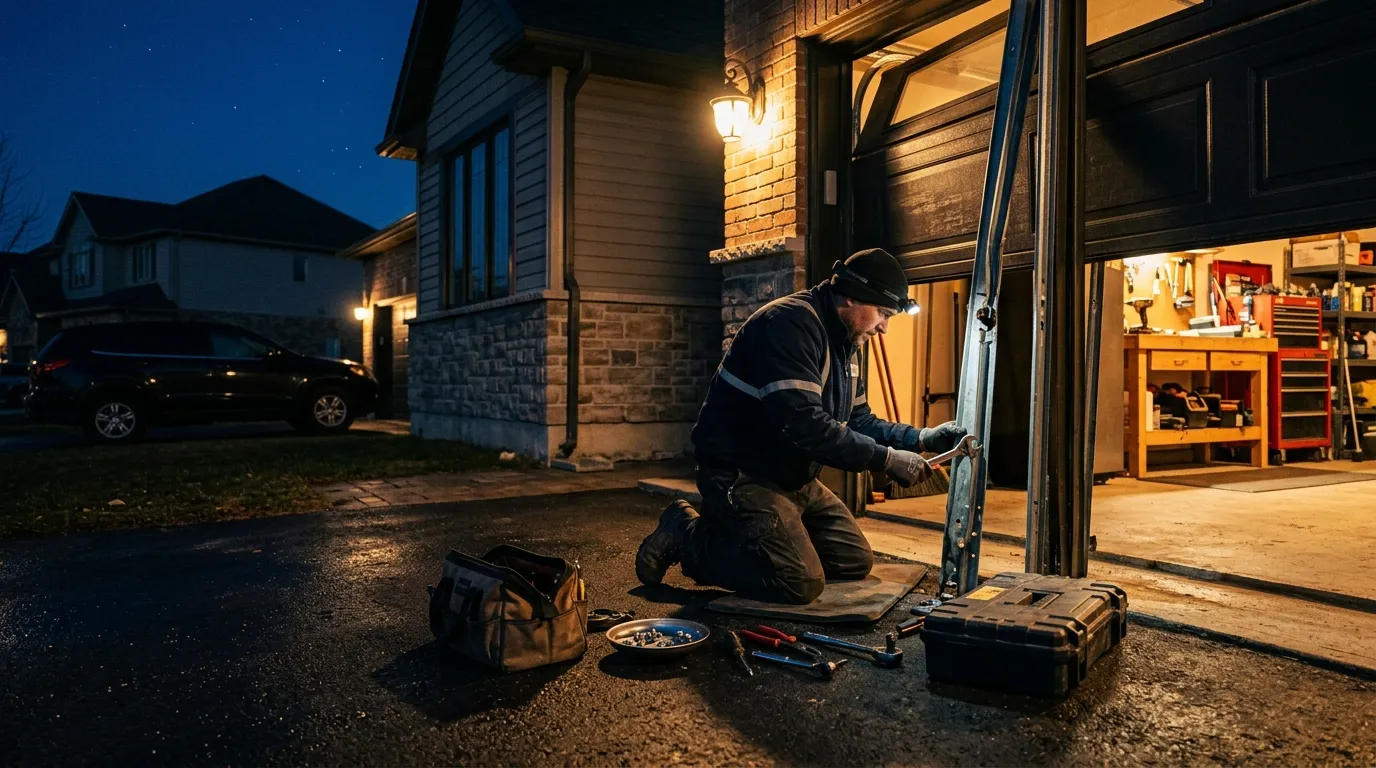
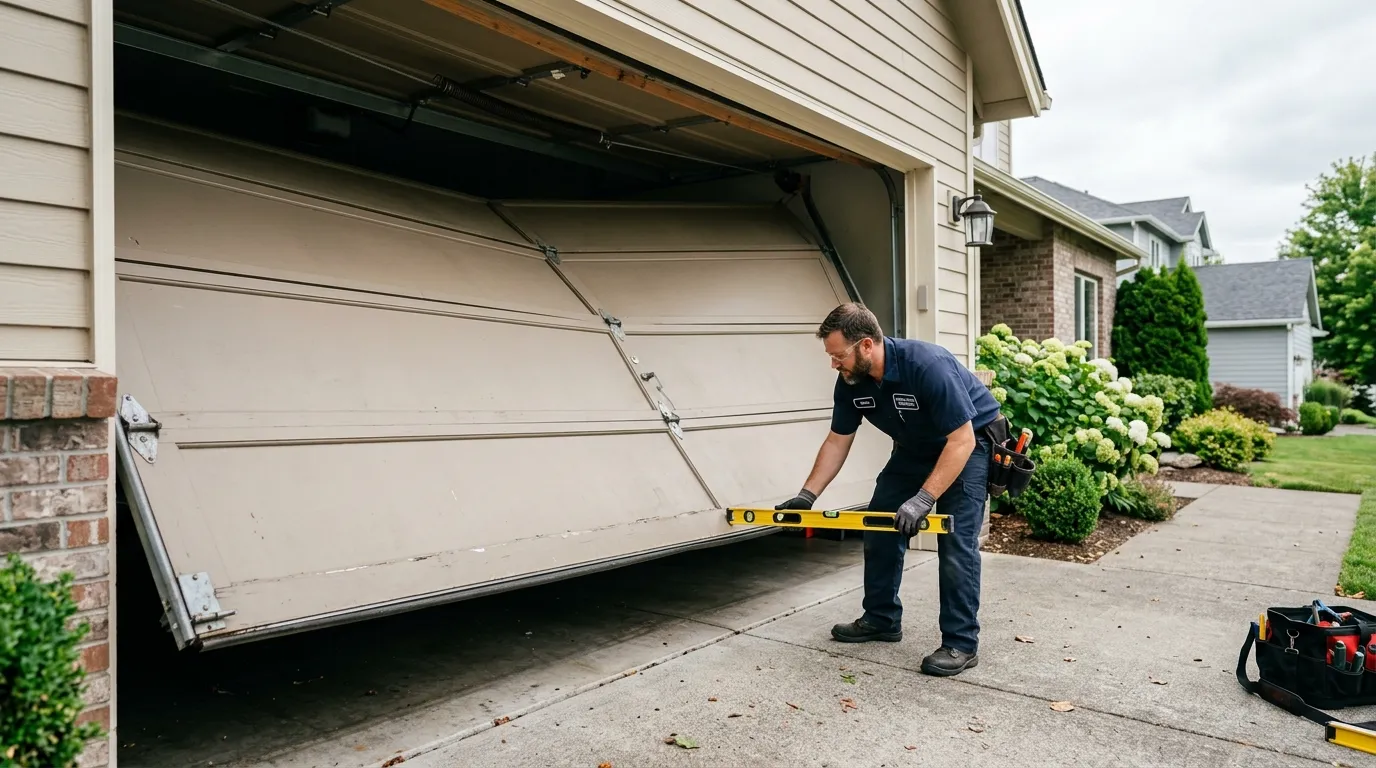
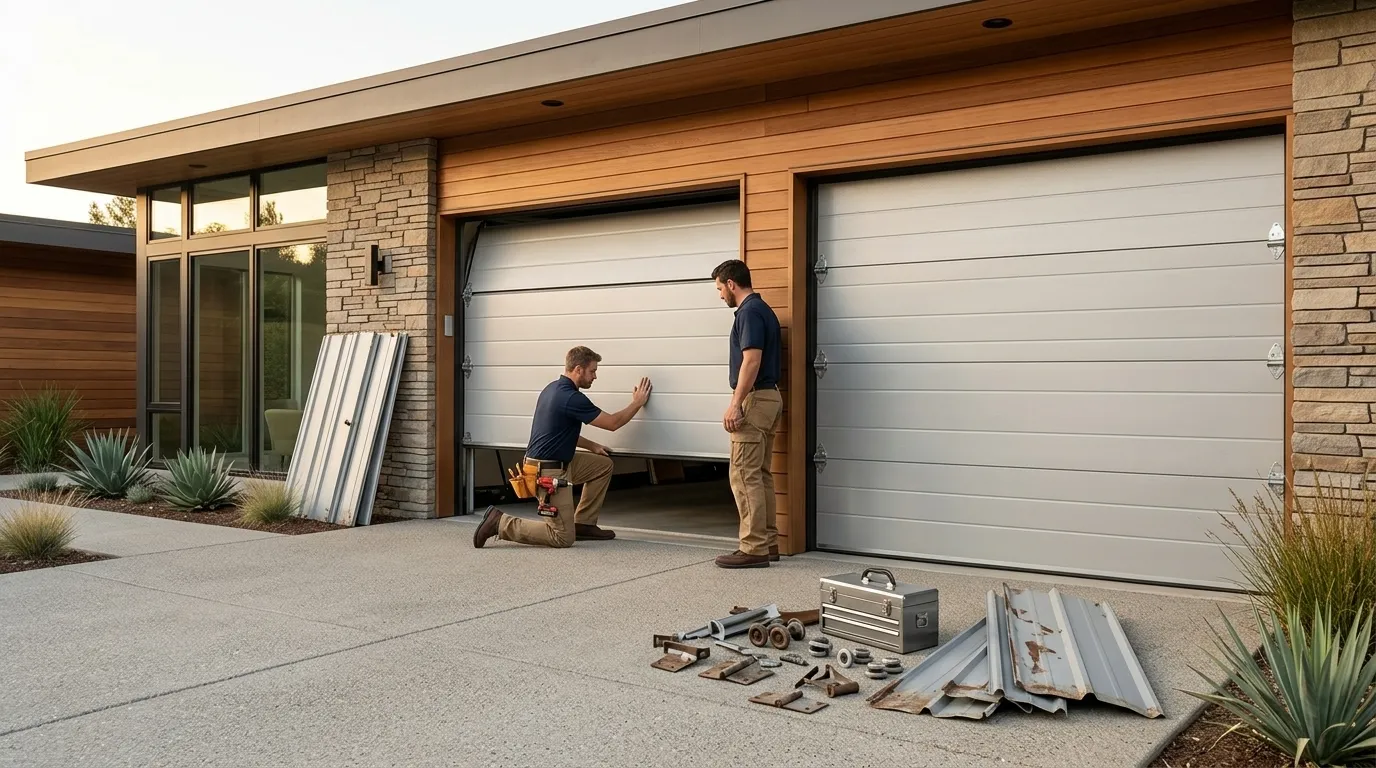
Most of the calls we get trace back to the same handful of parts: a torsion or extension spring that's lost its temper, a cable that's frayed at the drum, rollers that have worn their track grooves oval, or an opener gear that's stripped from age. In a lot of Searcy houses, these are the original parts. With housing here mostly built between 1975 and 1997, a median build year around 1982, you're looking at hardware that's had three to four decades of daily cycling. Steel sectional doors from that era were built with extension springs and lighter-gauge track than what goes in today, and neither holds up forever. Panel damage from a slipped roller or a bent track is common too, especially on doors that have never had the track re-aligned. We also see chain-drive openers from a full hardware generation ago, where the gear kit has gone from plastic to dust and the door reverses halfway up. None of this is unusual for a house this age - it's just what forty years of springs and cables looks like when nobody's replaced them yet.
What It Costs
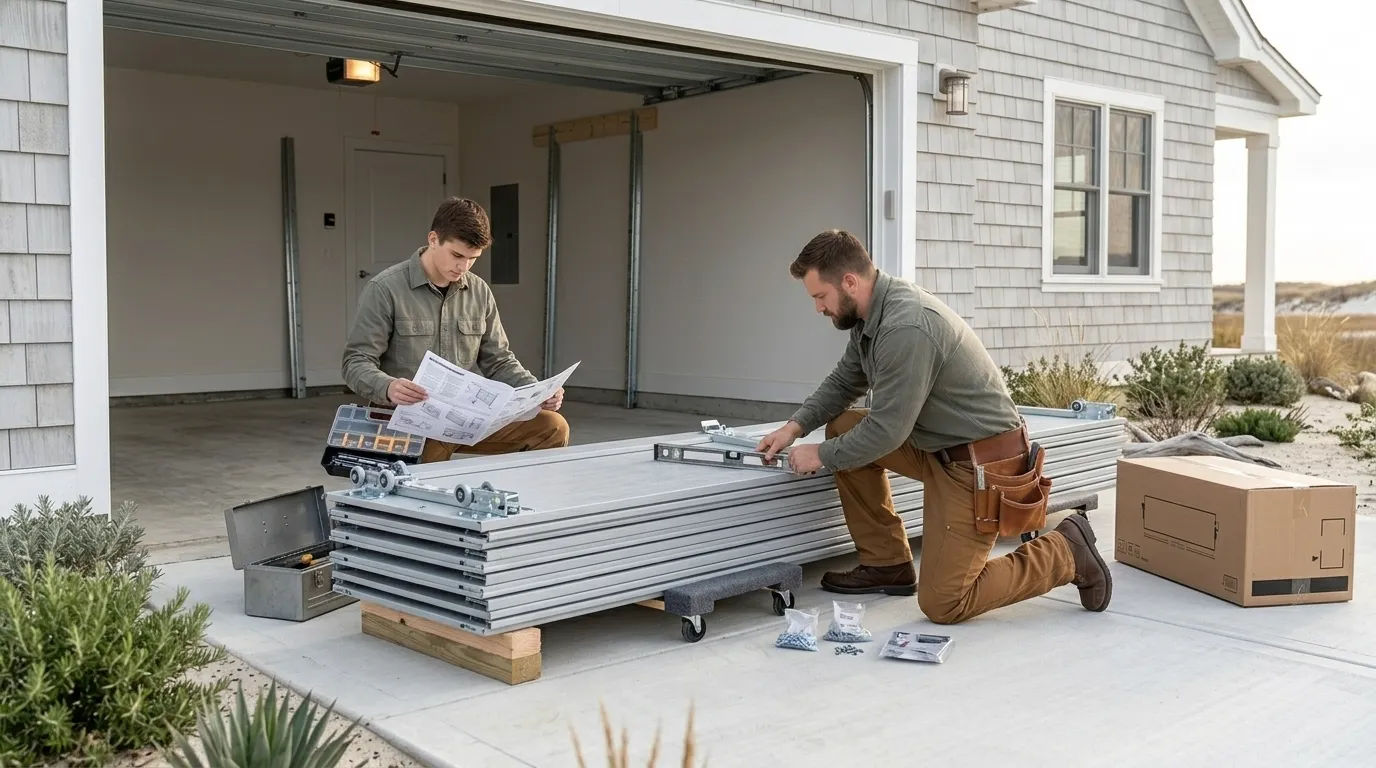
We're not going to make up a number here - what a job runs depends on whether you need a spring, a cable, an opener gear kit, or a full panel, and whether the track is salvageable or bent past straightening. What we will say: with a median household income of $43,811 across the area, most of our customers are weighing repair against replacement carefully, not defaulting to whichever is easier. On a door from the 1975-1997 build era, a spring or cable repair is usually the lower-cost path and the more common one, since the door and track are often still sound even when the hardware isn't. Replacement makes more sense when the panels themselves are dented or rusted through, or when the opener is old enough that parts for it aren't stocked anymore. Ask for the breakdown before you agree to anything - spring, cable, roller, and opener work should each show up as its own line, not folded into one flat number.
Why It Happens Here
Searcy's housing stock across its named areas skews heavily 1980s-90s, and that consistency matters more than people think. A neighborhood built inside a fifteen-year window ages its garage doors on roughly the same clock - which is why we see clusters of the same failure, spring wear and opener gear fatigue, showing up across whole streets at once rather than as one-off breakdowns. Add in a cold-moderate climate, where temperature swings between a humid summer and a hard winter freeze put real stress on steel springs and lubricant, and forty-year-old hardware simply doesn't have much left to give. It's the same story out toward Kensett and Judsonia, both close enough in age and building stock that the same original spring-and-cable setups are common there too. Newer builds elsewhere might not see this for another decade, but a house built when the median here was going up in 1982 is squarely in the window where original hardware starts to fail on its own schedule, not because anyone did anything wrong.